






 Portuguese
  Spanish


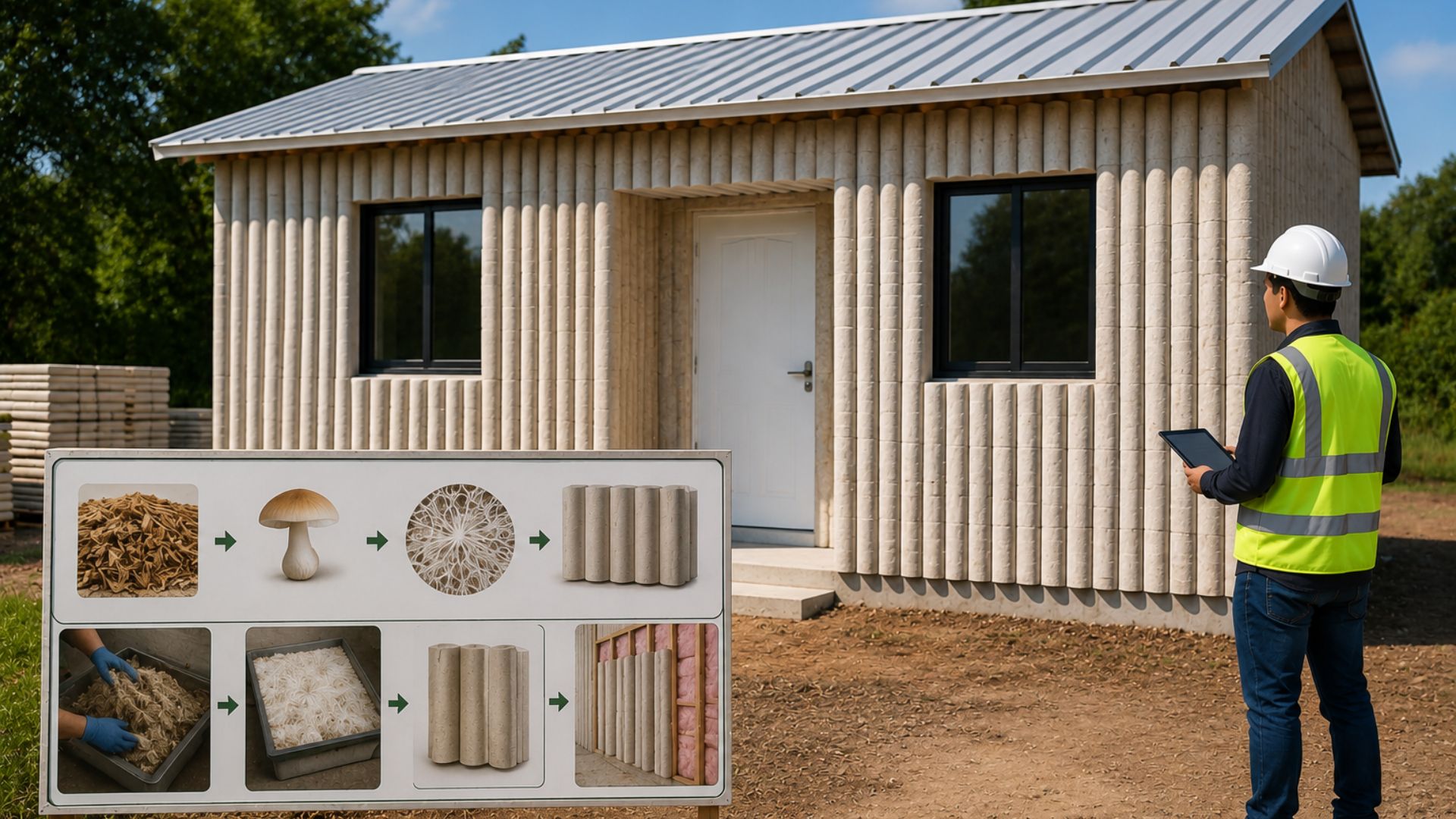

Housing complex in Oakland combines modular construction, biomaterials, and digital tools to reduce costs, speed up construction, and decrease carbon emissions in a project with 316 affordable homes. The use of mushroom mycelium on the facade has transformed the development into an international reference for sustainable urban innovation.
An affordable housing development in West Oakland, California, has attracted international attention by bringing together 316 homes, modular construction, digital tools, and facade panels made with mushroom mycelium, a biological solution incorporated into the strategy to reduce environmental impact.
Named The Phoenix, the complex was presented by MBH Architects as an alternative to build affordable housing at approximately half the cost, time, and carbon footprint observed in similar multifamily buildings in the San Francisco Bay area.
In addition to MBH Architects, the project brings together companies such as Factory_OS, Autodesk, Ecovative, Heintges, and Kreysler & Associates, integrating experts in industrialized manufacturing, digital technology, and the development of lower environmental impact materials applied to housing construction.
-
U.S. City Builds Tiny Home Village on Water Company Land to House 136 Homeless People: Inside the Social Housing Units

-
Woman Turns Shipping Container into Home, Embraces Rural Life to Cut Monthly Expenses to Just Over $330
-
France Revamps 530 Social Housing Units with Large Balconies and Glass Facades Without Demolishing Existing Buildings

-
Facing high rent, couple transforms parents’ garage into a fully functional apartment, creating a complete home at a fraction of the market cost.




The proposal aims to transform an underutilized land into a large-scale residential complex, articulating urban and construction solutions focused on reducing costs and speeding up the production of housing in one of the most expensive regions in the United States.

Covering about five acres, the chosen area previously housed the Phoenix Ironworks Steel Factory, dismantled in the late 1980s.
Since then, the space has remained empty or partially abandoned, even in the face of growing pressure for affordable housing in Oakland and other Californian cities.
Mushroom mycelium becomes a bet on sustainable facade
Among the elements that arouse the most curiosity in the project is the use of facade panels produced with mycelium, the vegetative structure of fungi that has been studied in recent years as a lower environmental impact alternative for different construction applications.
The solution developed for The Phoenix combines an outer layer of fiber-reinforced polymer, known by the acronym FRP, with an insulating core made from mycelium grown on repurposed agricultural waste.
While Ecovative participated in the development of the biological components, Kreysler & Associates was involved in the engineering and manufacturing of the panels used in the facade solution of the housing project.
More than just an experimental resource aimed solely at sustainable aesthetics, the material is integrated into a broad strategy to reduce embodied carbon, improve thermal and acoustic performance, and accelerate part of the construction process of the complex.
Instead of restricting innovation to a conceptual prototype, The Phoenix applies mycelium in a housing complex with hundreds of units, bringing a still little-known biomaterial closer to a concrete and large-scale urban demand.
This movement helps shift the debate on biological materials from the academic field to the real estate market, especially in cities pressured by high construction costs and a shortage of affordable housing.
Modular construction accelerates housing delivery

Another important aspect of the project involves modular construction conducted by Factory_OS, a company specialized in industrialized manufacturing of housing and residential buildings developed for accelerated assembly on the final site.
In this model, modules and components are produced in a controlled environment and later transported to the site, reducing some of the uncertainties associated with the traditional method executed entirely on the construction site.
By concentrating industrial stages in a factory, the system allows for standardizing processes, better controlling the quality of components, and reducing material waste throughout the execution of the housing project.
Furthermore, different phases of the work can progress simultaneously, which helps shorten schedules and reduces the interval needed between the start of construction and the delivery of the homes.
According to MBH Architects and Autodesk, the expected performance for The Phoenix is directly linked to the integration between modular construction, digital tools, and lower environmental impact materials used in the development of the complex.
The goal announced by the partners is to deliver the complex at approximately half the cost, time, and carbon footprint of comparable multifamily buildings constructed in the San Francisco Bay area.
Digital technology guides cost, schedule, and carbon
Digital tools also played a central role in the project’s conception, especially in the urban planning stage, environmental impact assessment, and the definition of architectural solutions used throughout the development.
The team used Autodesk platforms to test deployment scenarios, assess urban noise, estimate carbon emissions, and adjust decisions related to costs and schedules early in the design phases.
With this process, the architects were able to compare alternatives before the construction began, including the distribution of open areas, building positioning, and the expected performance of façade and insulation solutions.

Instead of treating technology merely as an operational tool, the project was presented as an example of integration between architecture, industrialized manufacturing, and environmental analysis based on digital data.
This type of approach attempts to address a recurring problem in the production of affordable housing in high-cost regions, where land prices, construction expenses, and regulatory timelines pressure the budget of developments.
West Oakland enters the sustainable housing map
The location of The Phoenix in West Oakland also reinforces the urban dimension of the initiative, as the site is close to the I-880 highway and a BART rail line, in an area marked by noise, heavy traffic, and pollution.
By occupying a former underutilized industrial area, the development seeks to reactivate a degraded space with affordable and sustainable housing, connecting urban recovery, housing density, and environmental goals in a single project.
Part of the interest generated by the complex also comes from the contrast between scale and materiality, because a set with more than 300 affordable residences using mushroom mycelium on the façade breaks expectations associated with conventional construction.
For architects, public managers, and developers, the case serves as a showcase of a possible route to accelerate housing production without relying exclusively on traditional materials and slower construction methods.
At the same time, the initiative shows how biomaterials can be combined with contemporary industrial systems and current technical requirements, broadening the discussion on alternatives to reduce emissions in the construction sector.
Still presented as a reference project in development, The Phoenix gained prominence for testing, on an urban scale, the combination of industrialized manufacturing, digital analysis, and biomaterials applied to affordable housing production.








