






 Portuguese
  Spanish
  5 min of reading
  0 comments


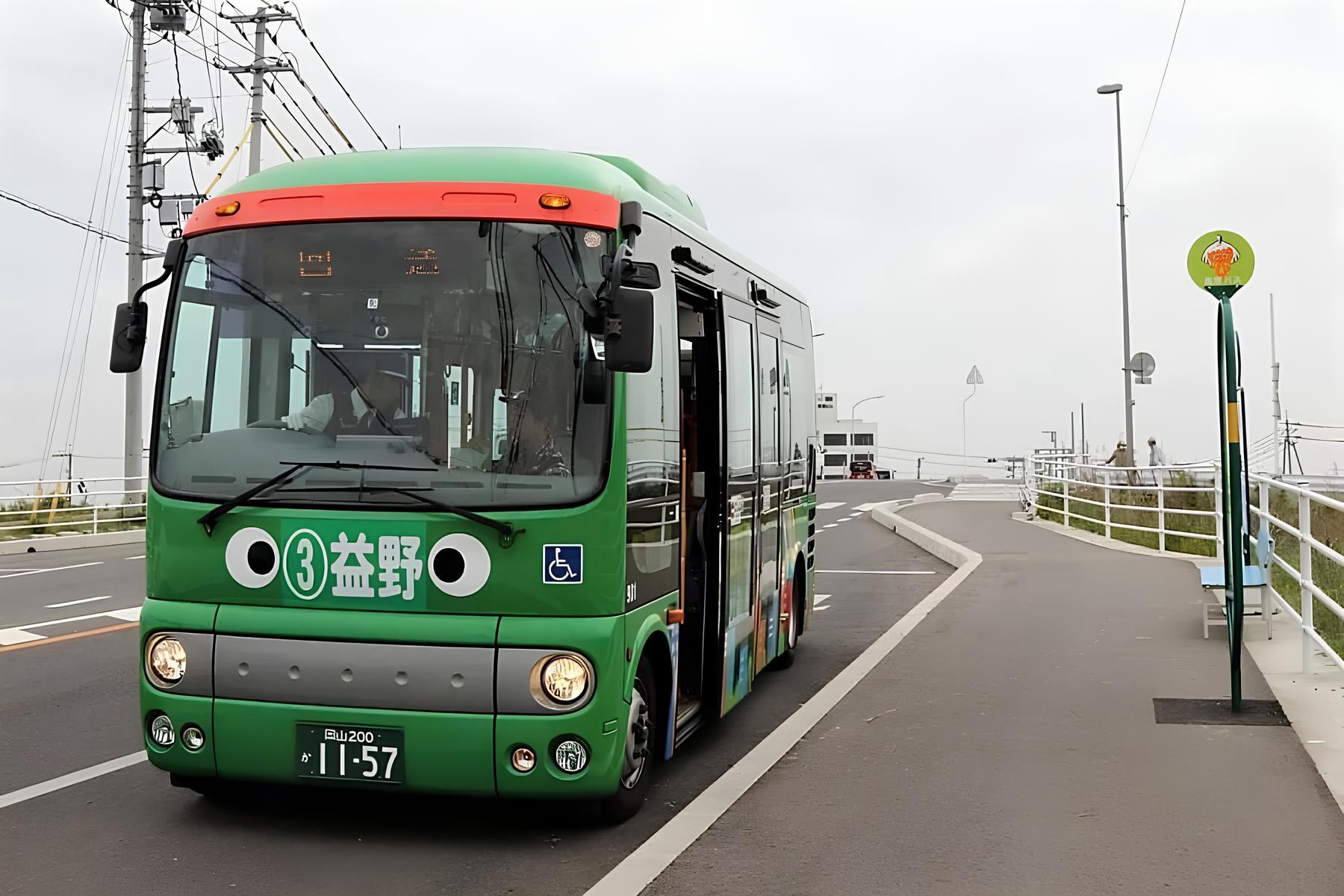
Bus Drivers In Japan Adopt An Unusual Form Of Protest: They Continue To Work Normally, But Stop Collecting Fares To Not Affect Passengers. Understand How This Unique Strike Works And What It Reveals About Japanese Culture.
Amid a global landscape of strikes that frequently disrupt essential services, Japan surprises with a radically different approach. In various cities across the country, bus drivers have resorted to an unusual form of labor manifestation: they go on strike but continue to work — only they refuse to collect fares from passengers. This kind of action, informally nicknamed “reverse strike,” draws attention for its economic impact on companies while completely preserving the rights of users. This protest in Japan exemplifies not only the creativity of local unions but also a profound consideration for the collective — a hallmark of Japanese culture. In this article, you will understand how this strike works without affecting the population, its real impact, historical precedents, and what it teaches us about alternatives for mobilization in the contemporary world.
Strike While Continuing To Work? Yes, This Is How It Happens In Japan!

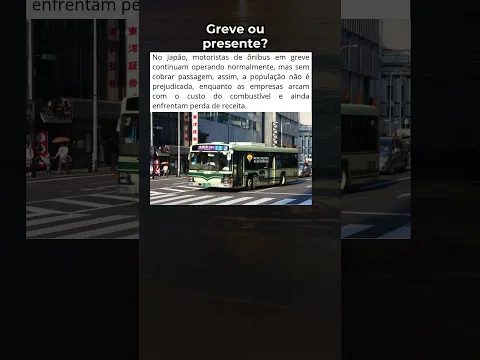
Unlike traditional stoppages, where workers halt their activities in pursuit of better wages or working conditions, this form of protest in Japan inverts the logic of the strike. Drivers continue to drive their buses, adhering to usual routes and schedules. The difference lies in fare collection: they deactivate the payment system or simply refuse to accept payment for fares.
The logic is simple: instead of pressuring the company with service interruption — which directly affects the population — the focus of the impact is solely financial.
-
He started with a jigsaw, his father’s screwdriver, and many drawings made during classes; years later, the young man who built a roller coaster in his own backyard went viral on the internet, was hired by Cacau Park, and now coordinates Brazilian and foreign professionals in the installation of an attraction weighing 737 tons, 55 meters high, one kilometer long, featuring moments of zero gravity and a speed of 120 km/h, in a journey that turned curiosity, calculations, and persistence into a professional career.

-
Between Egypt and Sudan, Bir Tawil is no man’s land that neither country wants on paper, but in practice has gold mining, nomadic tribes, and even fake “kings.”

-
Swimming champion Shavarsh Karapetyan dove about 40 times into a frozen lake in Armenia to rescue a sunken bus, saved 20 lives, and lost his career because of it.
-
Júlia Pimentel, an 11-year-old from Minas Gerais, independently invented a new formula to calculate the square root using simple addition and multiplication, and her method was published in one of the most important mathematical scientific journals in Brazil.


Companies stop collecting from fare sales, accumulating significant daily losses, but without generating discontent among passengers. On the contrary, users often show support for the drivers, as they continue to benefit from free transportation.
Recent Cases That Caught The Media Attention
One of the most emblematic episodes occurred in the city of Okayama in 2018. The drivers of the Ryobi Group went on strike after a series of wage deadlocks and demands related to working hours.
Instead of halting the service, the strikers decided to perform their routes normally, but installed notices on the buses informing passengers that they would not need to pay fares while the strike lasted.
The strategy was widely reported by outlets such as The Guardian, BBC, and Japan Today, and went viral on social media for contrasting with common strike methods in other countries. The protest lasted days and exerted significant pressure on the company’s management, which had to reopen negotiations with the workers.
The Motivations Behind The Strike Without Collecting Fares
The demands of the drivers who adopt this strike model vary: better wages, reduced working hours, improvements in vehicle conditions, hiring more staff, among others. However, what stands out is how these demands are presented to society.
Through the strike while continuing to work, drivers demonstrate commitment to their profession and respect for passengers, creating a striking contrast with the image of strikers who supposedly “disrupt the lives of ordinary citizens.”
The Financial And Political Impact Of This Type Of Protest In Japan
The effectiveness of the strike without fare collection lies in its ability to generate losses without social wear. As transportation continues to operate, there are no negative repercussions in the media associated with the common “urban chaos” in stoppages. On the contrary, there is a gain in public sympathy that reinforces the legitimacy of the movement.
Transportation companies operate with relatively tight profit margins and depend on continuous revenue flows. When dozens or hundreds of buses operate for free for days, the financial impact can be more detrimental than a traditional short-term strike. This forces employers to seek quick solutions, paving the way for negotiations that are more favorable to the workers.
Japanese Culture And The Concept Of Collective Responsibility
Japan is known for its rigorous work ethic, which values effort, punctuality, and a sense of duty. In this context, the reverse strike fits perfectly: workers maintain their commitments to society while expressing their dissatisfaction in a strategic and responsible manner.
This approach reflects an essential value in the Japanese culture, the giri — a sense of moral obligation to the collective. By not harming public transport users, drivers maintain social harmony (wa), another central principle of Japanese society.
The Legality And Limits Of This Type Of Protest In Japan
Despite the creativity and symbolism of the strike without fare collection, the legality of this practice is not guaranteed. In some cases, companies have attempted to sue drivers or unions for breach of contract or financial damages. However, since there is no actual service stoppage, the application of penalties is not always clear.
According to the Japan Transport Workers Union, it is essential that these actions be strategically coordinated and legally supported. In many cases, drivers utilize internal mechanisms within companies to justify the suspension of fare collection — such as simulated technical failures or deactivation of validators — reducing the risk of dismissal for just cause.
International Comparisons: Understand Why This Model From Japan Does Not Repeat In Other Countries
The strike without affecting the population is almost an exclusive phenomenon of Japan. In countries like Brazil, France, the United Kingdom, or the United States, stoppages usually disrupt essential services such as transportation, education, and health.
Some similar attempts have occurred in other countries — such as bus drivers in Australia who refused to collect fares in 2022 — but these episodes are rare. The explanation lies in the differences in union cultures, legal frameworks, and primarily in the confrontation logic adopted by workers’ organizations outside Japan.
What The World Can Learn From Japanese Drivers?
Peaceful Innovation In The Fight For Rights
The strike of Japanese drivers offers a valuable lesson: it is possible to protest intelligently, with strategic focus and respect for society. By targeting profit rather than citizens, workers build a more favorable narrative and increase their chances of success without losing public support.
In times of polarization and social tensions, this type of action can inspire other categories to seek creative solutions for their demands.
The strike without stopping work may not replace traditional protest methods, but it undoubtedly broadens the repertoire of possible strategies for professional categories seeking recognition. The example of bus drivers in Japan shows that it is possible to make noise, create an impact, and achieve advancements — all without compromising the functioning of society.
Instead of wielding banners in the streets or crossing their arms in blockades, Japanese drivers chose to use free fare as a bargaining tool. And, in this silent movement, they earned the respect of a nation — and the admiration of the world.


Be the first to react!