Portuguese
  Spanish


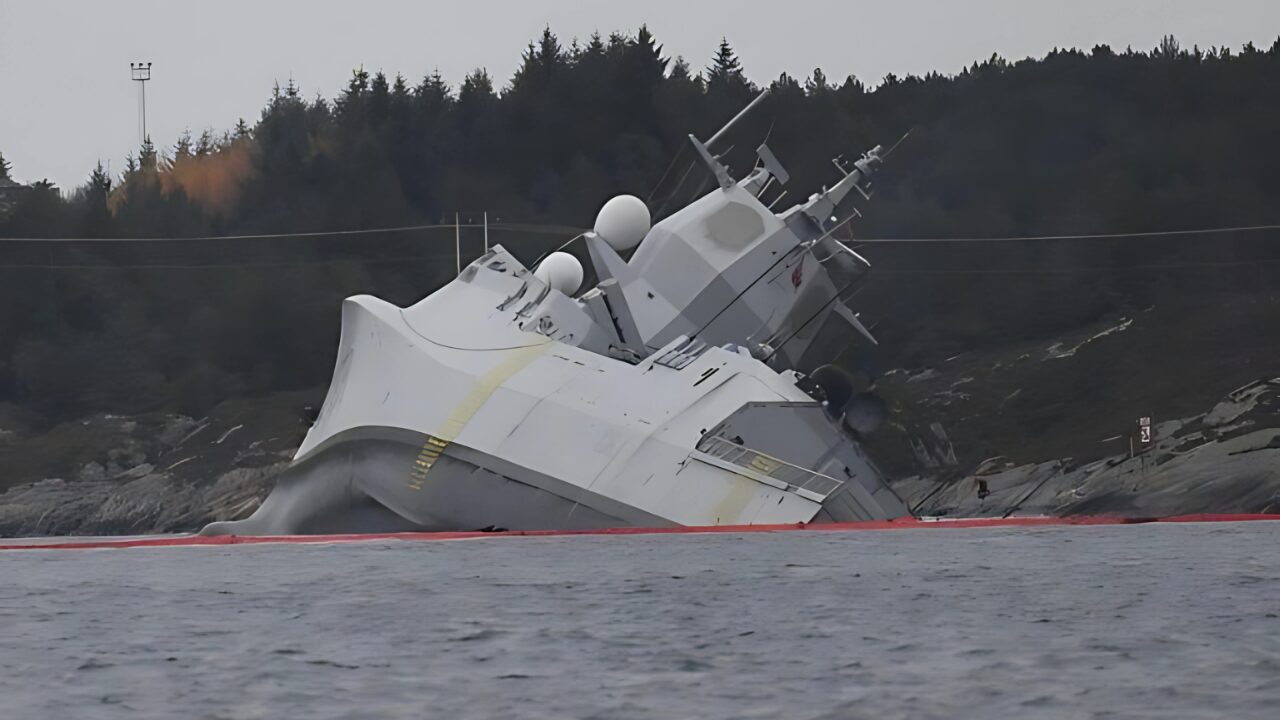

Norwegian Government Seeks Billion-Dollar Compensation for Losses from the Frigate KNM Helge Ingstad, Claiming Construction Failures by the Spanish Shipyard Navantia.
The Norwegian government has filed a lawsuit against the Spanish shipyard Navantia, demanding compensation exceeding 1 billion euros due to the sinking of the frigate KNM Helge Ingstad, which occurred in 2018.
The vessel, which was part of a fleet of five frigates of the “Fridtjof Nansen” class supplied by Navantia, collided with the oil tanker Sola TS near the Norwegian coast, resulting in irreparable damage and the dismantling of the frigate.
Although investigations indicate human error as the main cause, the Norwegian government argues that construction defects were decisive in the tragedy.
-
North Korean Fiasco: Launch of the Largest Warship Ends in Sinking

-
While giant ships still burn heavy fuel and the maritime sector races against climate targets, Maersk and Vale are starting to bet on ethanol as a new route to reduce emissions at sea.

-
China begins construction of the world’s largest LNG ship, a 344-meter giant capable of supplying 4.7 million homes for a month, carrying 271,000 m³ of gas, and placing QatarEnergy in the largest naval order ever recorded in world history.
-
China is designing a container ship with a thorium nuclear reactor that will operate for 40 years without refueling, and the 25,000-container giant from Jiangnan Shipyard will cross oceans without emitting carbon in an industry that burns 300 million tons of fuel per year.



Maritime Accident Exposes Operational and Technical Failures
The collision occurred during a night maneuver, when the frigate KNM Helge Ingstad was returning from a military exercise.
According to the Norwegian Safety Investigation Authority (NSIA), the accident was mainly caused by operational failures of the crew, including communication errors and misinterpretation of navigation signals.
Despite this, the Norwegian Ministry of Defense maintains that technical failures in the design of the vessel exacerbated the situation.
The focus of the accusation is on the sealing of the propeller shafts, which, according to the Norwegians, exhibited critical failures that accelerated the flooding of the ship.
Shipyard Navantia Was Exonerated by Previous Investigation
Shipyard Navantia, responsible for the construction of the frigates between 2006 and 2011, was exonerated of responsibility by the NSIA in 2021.
The agency’s report concluded that the damage suffered by the hull of the frigate exceeded the parameters stipulated in the design and that the sinking could have been avoided with a more efficient evacuation.
However, the new lawsuit filed in August 2024 reopens the debate about the shipbuilder’s responsibility.
Norway is seeking compensation that includes the costs of replacing the frigate, rescue operations, and the decommissioning process of the vessel.
Norwegian Government and Shipyard: Possible Mediation Before Trial
The Norwegian government has expressed interest in resolving the dispute through mediation, but if no agreement is reached, the trial is scheduled to begin on September 23, 2025.
Industry experts point out that the process could set an important precedent for cases of shared responsibility between naval operators and shipyards.
Naval Power