






 Portuguese
  Spanish
  3 min of reading
  3 comments


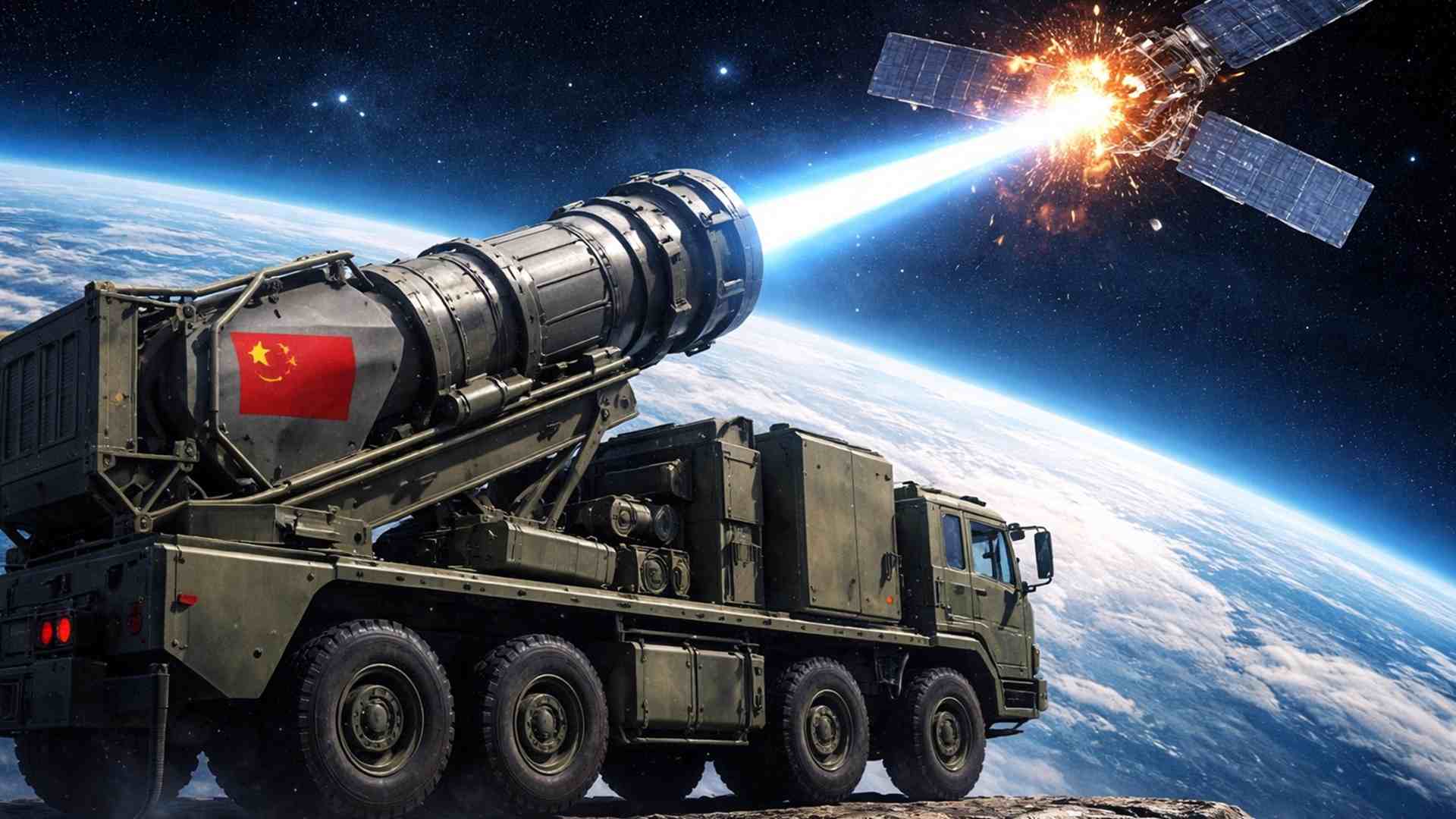


Developed by the Northwest Institute of Nuclear Technology, the TPG1000Cs system achieves 20 gigawatts of continuous power for up to 60 seconds, surpassing previous technical limits of microwave weapons, enabling installation on multiple platforms, and expanding the discussion about the vulnerability of low-orbit satellites
A team of researchers from China developed a core component for a microwave weapon capable of hitting satellites in orbit, delivering up to 20 gigawatts of continuous power for 60 seconds, an unprecedented technical breakthrough in compact systems of this kind with potential impact on space communications.
Development of the TPG1000Cs System and Jump in Continuous Power
The project was conducted by the Northwest Institute of Nuclear Technology, located in Xi’an, in Shaanxi Province. The team was able to create a system capable of operating continuously for a full minute, surpassing the previous limit of about three seconds observed in similar technologies.
Designated as TPG1000Cs, the equipment is described as the world’s first compact driver for a high-power microwave weapon. The breakthrough is directly associated with the ability to maintain extreme energy levels for prolonged periods without loss of operational stability.
-
China and Japan create a brain implant thinner than a hair, with 128 channels and data density ten times greater than any previous hydrogel, which operated for 550 days in rabbits without causing inflammation or scarring.

-
Coffee grounds turn into fuel in just 90 seconds, eliminating the need for drying, removing sulfur compounds, and generating biochar with energy similar to anthracite coal in a process created by scientists in South Korea.
-
Black Hawk transported 300 whole logs with roots in 3 days to return wood to degraded rivers, crossing 8 km per flight and using loads of up to 7,500 pounds in an operation planned to rebuild natural structures lost to industrial exploitation.

-
While Brazilian highways struggle with an excess of trucks, a company removed 82,000 trailers from the roads of Santa Catarina in one year by transporting 6,700 tons per day by sea from São Francisco do Sul.



Dimensions, Weight, and Multiplatform Deployment Possibility
The TPG1000Cs is approximately four meters long and has an estimated weight of five tons.
The mass reduction was achieved through a structure made of aluminum alloy, which enables its installation on trucks, aircraft, and even satellites.
According to the researchers, when mounted on satellites, the microwave weapon could allow for the direct neutralization of other satellites classified as threats. This versatility expands the scope of the system’s use in different operational scenarios.
Pulse Capacity and Accumulated Operational Performance
According to the article published in the journal High Power Laser and Particle Beams, the system is capable of delivering up to 3,000 high-energy pulses in a single session. This performance far exceeds that of comparable devices already known.
The scientists claim that the TPG1000Cs has already accumulated over 200,000 operational pulses during testing, demonstrating stable and reliable performance. This operational history is presented as an indication of technical maturity for future deployments.
International Comparisons and Potential Impact on Starlink Satellites
A report from the South China Morning Post highlights that ground-based microwave weapons with only 1 gigawatt of power could already disrupt communications from the Starlink system or even cause direct damage to the satellites.
In comparison, the Russian driver Sinus7 operated for about one second, with approximately 100 pulses per burst.
Despite its limited capabilities, the Russian system weighed about 10 tons, double that of the TPG1000Cs. This difference reinforces the progress achieved by the new Chinese project in terms of compactness and energy efficiency.
Design Changes and Improvements in the Materials Used
To achieve this performance, the researchers replaced traditional straight tubes with a compact double U-shaped structure. This configuration allows for a more efficient reflection of energy, achieving similar performance in about half the physical space.
Additionally, the switch to a more efficient insulating oil significantly increased energy storage capacity. These modifications resulted in more compact, powerful, and reliable solutions for high-power systems.
Strategic Context and Vulnerability of Low-Orbit Satellites
Chinese authorities have warned that SpaceX’s Starlink satellites pose a threat to the country’s national security.
In this context, China has been developing weapons classified as “Starlink killers,” including high-power microwave systems and lasers.
SpaceX, in turn, has lowered the altitude of its satellites to reduce the risks of collision with space debris. This strategy may also increase the vulnerability of these platforms to attacks by ground-based microwave weapon systems.




Seria bom para parar os bailes funk. E Bares que liga o som alto.
Nada e mais poderoso que o super Kamehameha aumentado vinte vezes
Laser de pouco mais de 60 Watts de potência destrói elemento sensor de imagem de câmera de drones.