Portuguese
  Spanish


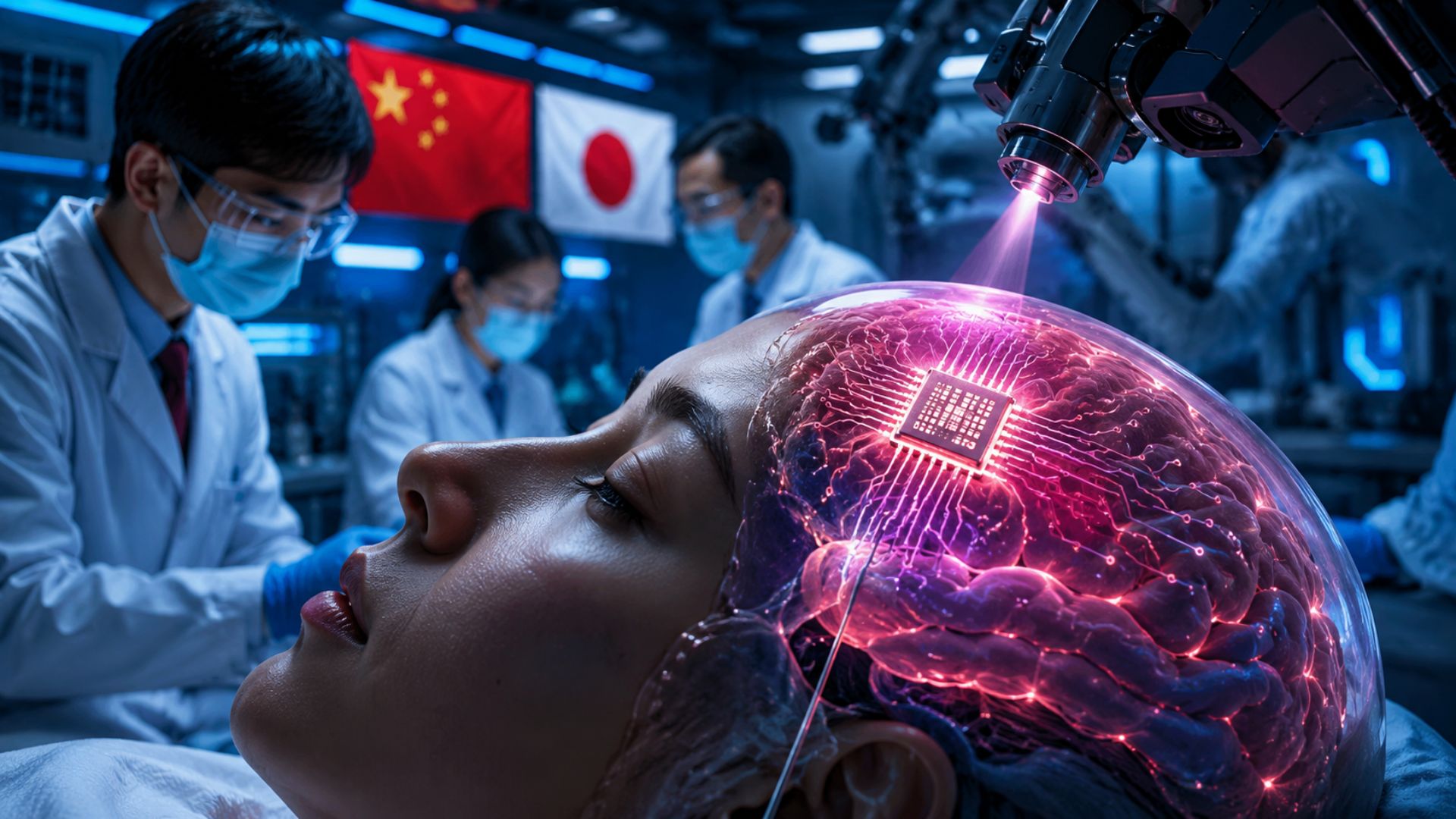

Developed by teams from China and Japan, the brain implant uses an ultraflexible organic hydrogel, is only 9 micrometers thick, and has 128 channels. In tests with rabbits, it maintained 94% of signal quality after 18 months, but the technology has not yet been tested on humans.
Researchers from China and Japan have created a brain implant thinner than a hair, with 128 channels and data density ten times greater than any previous hydrogel, which functioned for 550 days in rabbits without causing inflammation or scarring. The results are detailed in a scientific article and were reported by the South China Morning Post (SCMP).
The device was born from a collaboration between major Asian institutions. According to the study, the brain implant was developed by Tsinghua University in Shenzhen, the University of Tokyo, and the Shenzhen and Hong Kong Institute of Neuroscience, affiliated with the Chinese Academy of Sciences. Made of a conductive organic hydrogel and only 9 micrometers thick, it maintained, in tests with rabbits, 94% of signal quality after 18 months, with almost no inflammation. Nevertheless, the technology was tested on animals, not humans, and addresses a known weak point of brain-computer interfaces.
The problem of the fleshy wall
The major obstacle the brain implant tries to solve is an old one. The human brain is naturally soft, while advanced electrode arrays implanted to read neural signals or restore movements are made of rigid metals, like platinum. This clash between the hard and the soft is what neuroscientists call the problem of the fleshy wall.
-
She spent 73 years breathing inside an iron lung, survived the aftereffects of polio, and became the last woman in the United States dependent on the equipment before dying at 78 years old.

-
Brazilian students created a $1 filter using pine bark, cotton, and 3D-printed parts to clean cassava wastewater, reduce the toxicity of a hazardous waste, and transform contaminated water into biofertilizer.

-
Astronaut from Artemis II steps down after mission to the Moon and decision surprises after a record of 406,771 km, a historic 10-day journey, and an unprecedented achievement for Canada.

-
A fossil kept for years in a small museum in Montreal concealed 450-million-year-old soft tissue, a discovery that has only happened once before in history.


When something rigid is placed against something soft inside a moving body, friction wins. Over time, the brain vibrates, the metal rubs, and chronic inflammation forms a layer of scar tissue. The signals degrade and the implant becomes inoperative, which has always been one of the weak points of brain-computer interfaces, or BCIs.
An organic hydrogel brain implant
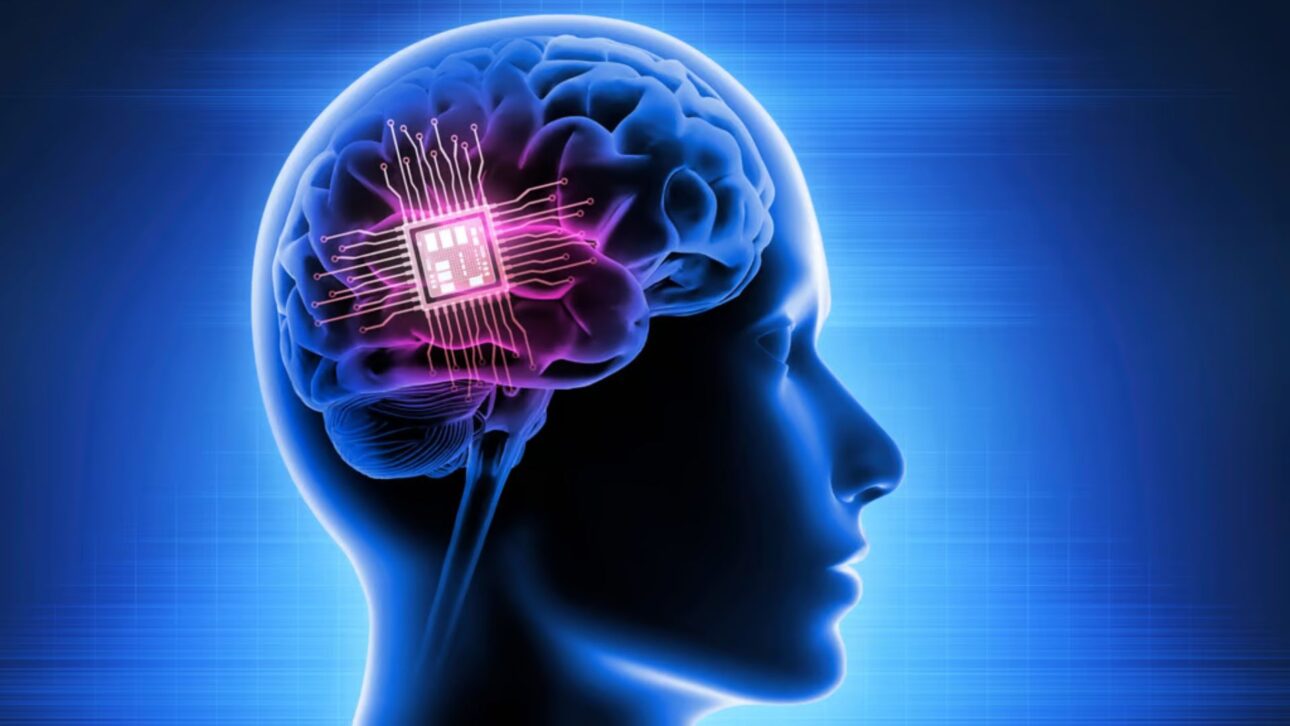
To overcome this impasse, the team from China and Japan bet on a fully organic and ultra-flexible material. The brain implant is based on a conductive hydrogel that the researchers named CHIP, an acronym for conductive hydrogel with interfacial percolation.
Hydrogels are water-swollen polymer networks, biocompatible, but historically problematic for this use. They exhibited low electrical conductivity and tended to swell like sponges in contact with body fluids, distorting the microscopic grid of electrode channels and ruining the microengineering, which for a long time hindered the use of these materials in brain implants.
The fabrication: thinner than a hair strand
The researchers solved both problems with an ingenious manufacturing solution. First, the hydrogel was pre-anchored to an ultra-thin parylene substrate, to completely fix its shape, and then sculpted with high-precision photolithography while completely dry. This is how the brain implant gained its definitive structure.
The result impresses with its scale. The matrix has 128 channels and is only 9 micrometers thick, much thinner than a human hair strand. The microscopic channels were also compacted to achieve a data density ten times greater than any previous hydrogel and, according to the scientific article, the material reaches an electrical conductivity of 2,512 S/cm.
550 days in rabbits without inflammation
To verify if the material would survive the humid environment of a living body, the team implanted the devices in rabbits. For over 550 days, the freely moving animals transmitted clear neural activity, in one of the longest tests ever conducted with a brain implant of this type.
The signal stability was the most remarkable data. Even after 18 months, the signal-to-noise ratio remained at 94% of the clarity of the first day. When the researchers examined the brain tissue with histological staining, they found almost no inflammation, no aggressive immune response, and no thick scar tissue, a result the team described as an adaptation to the cortex surface that minimizes the response to foreign bodies.
Durability and the limits of the study


The endurance tests reinforced the material’s performance. According to the South China Morning Post, which reported the study, the hydrogel withstood 1,000 cycles of 30% tension, the maximum absolute deformation that real brain tissue can tolerate, with a variation of less than 4% in its conductivity over these cycles.
Even with these numbers, it is necessary to note the limits of the result. The brain implant was tested on animals, and not yet on humans, and the leap to clinical use tends to require years of additional research. What the study faces is precisely the historical weak point of brain-computer interfaces: the survival of the implant inside the body for long periods.
Developed by teams from China and Japan, the organic hydrogel brain implant, thinner than a hair and with 128 channels, functioned for more than 550 days in rabbits, maintained 94% signal quality after 18 months, and almost did not cause inflammation or scar tissue, according to the scientific article and the South China Morning Post.
The numbers are from the study itself, and the durability, with 1,000 cycles of 30% tension and less than 4% variation in conductivity, points to a possible solution to one of the biggest weak points of brain-computer interfaces.
Even so, the technology was tested on animals, and its use in people remains a future possibility, in a field that is advancing rapidly, but still needs to bridge the gap between the laboratory and the human brain.
And you, what do you think of this advancement in brain implants? Do you believe it can bring brain-computer interfaces closer to everyday use? Share your opinion and exchange ideas with other readers about science and technology, with respect for different opinions.