Portuguese
  Spanish


Coconut fiber was used in the Philippines in biodegradable barriers against oil in the sea, after spills that threatened mangroves, fishing, and coastal communities. The material extracted from discarded shells absorbs oil, floats, costs less than synthetic solutions, and reveals how agricultural waste can become an emergency environmental tool.
Coconut fiber gained prominence in the Philippines as an alternative to form biodegradable barriers against oil in the sea, especially in local responses to spills that threatened mangroves and coastal communities. In Bataan, in 2024, residents and local teams used coconut husk and fiber to set up oil containment after the accident with the MT Terra Nova.
According to a video published by the channel Simple Discovery, the solution also refers to the history of major environmental disasters in the country, such as the sinking of MT Solar 1, on August 11, 2006, near Guimaras. The ship carried about 2 million liters of fuel oil, and the disaster affected coastal areas, fishing, tourism, and coastal communities dependent on the sea.
Disaster in Guimaras exposed coastal fragility
The case of MT Solar 1 marked the environmental memory of the Philippines. The tanker sank near the island of Guimaras and spread oil in a region known for its beaches, fishing, mangroves, and sensitive marine areas.
-
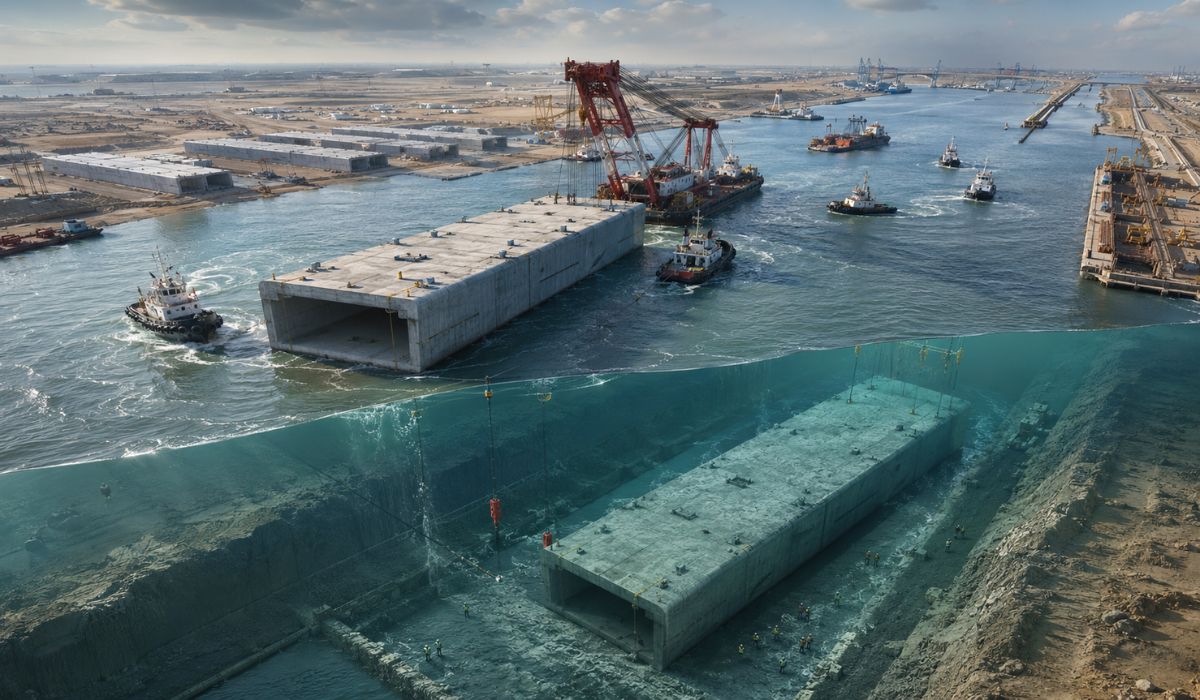
Iraq floats and sinks under an arm of the Euphrates 10 giant concrete boxes of 46,000 tons and 125 meters each to assemble a 2.4 km submerged tunnel and open a new land route between Asia and Europe.

-
Scientists use more than 20,000 artificial birds and solar speakers to “trick” seabirds, reactivate nesting routes, and revive a colony on an island that seemed abandoned.

-
She spent 73 years breathing inside an iron lung, survived the aftereffects of polio, and became the last woman in the United States dependent on the equipment before dying at 78 years old.
-
Brazilian students created a $1 filter using pine bark, cotton, and 3D-printed parts to clean cassava wastewater, reduce the toxicity of a hazardous waste, and transform contaminated water into biofertilizer.



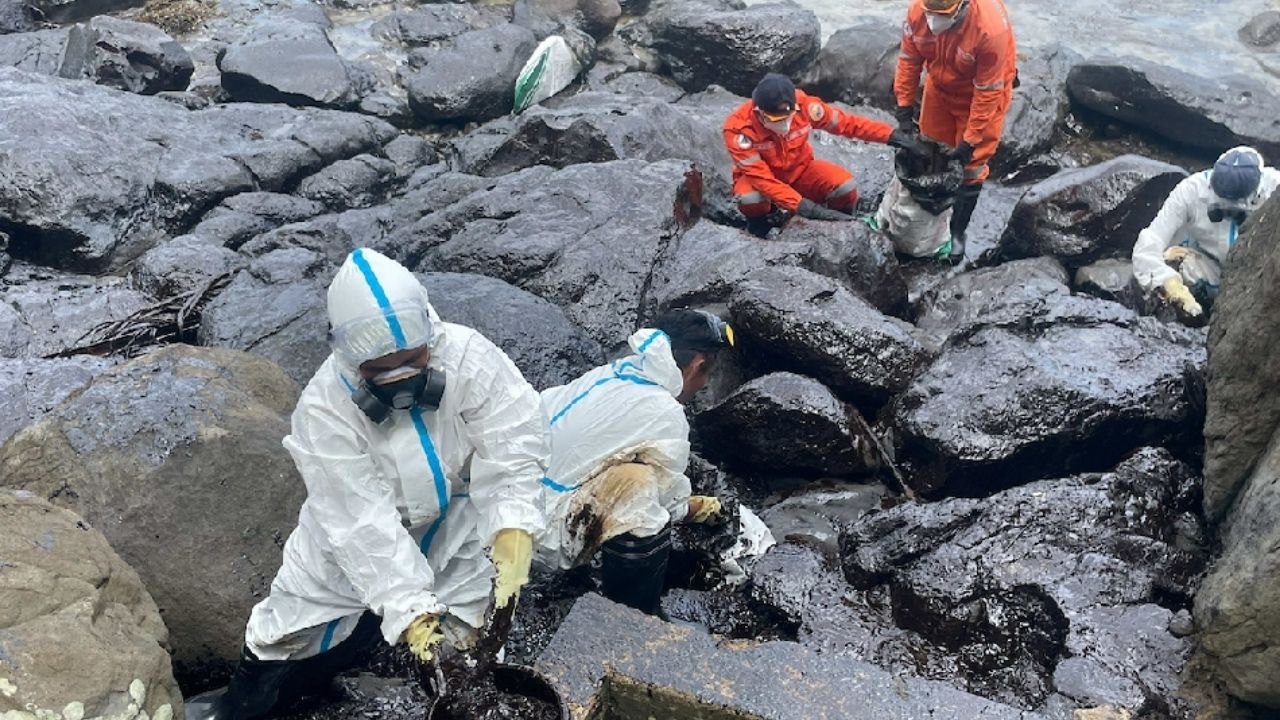
The impact went beyond the visible stain on the water. When oil reaches mangroves, sand, rocks, and reefs, cleaning is no longer just a maritime operation and begins to directly affect income, food, and community life.
Heavy oil is difficult to remove
Heavy fuel oil does not behave like a simple substance on the water’s surface. It can stick to roots, rocks, and sediments, forming thick layers that make removal slower and more expensive.
This type of contamination challenges traditional barriers, mechanical suction, and common absorbent materials. The more the oil mixes with the coastal environment, the harder it becomes to separate the pollutant from the landscape itself.
Philippines faced spills again in 2024
In 2024, the MT Terra Nova sank off the coast of Bataan carrying industrial fuel, according to Reuters. The spill raised concerns among fishing communities, environmental authorities, and residents of the Manila Bay area.
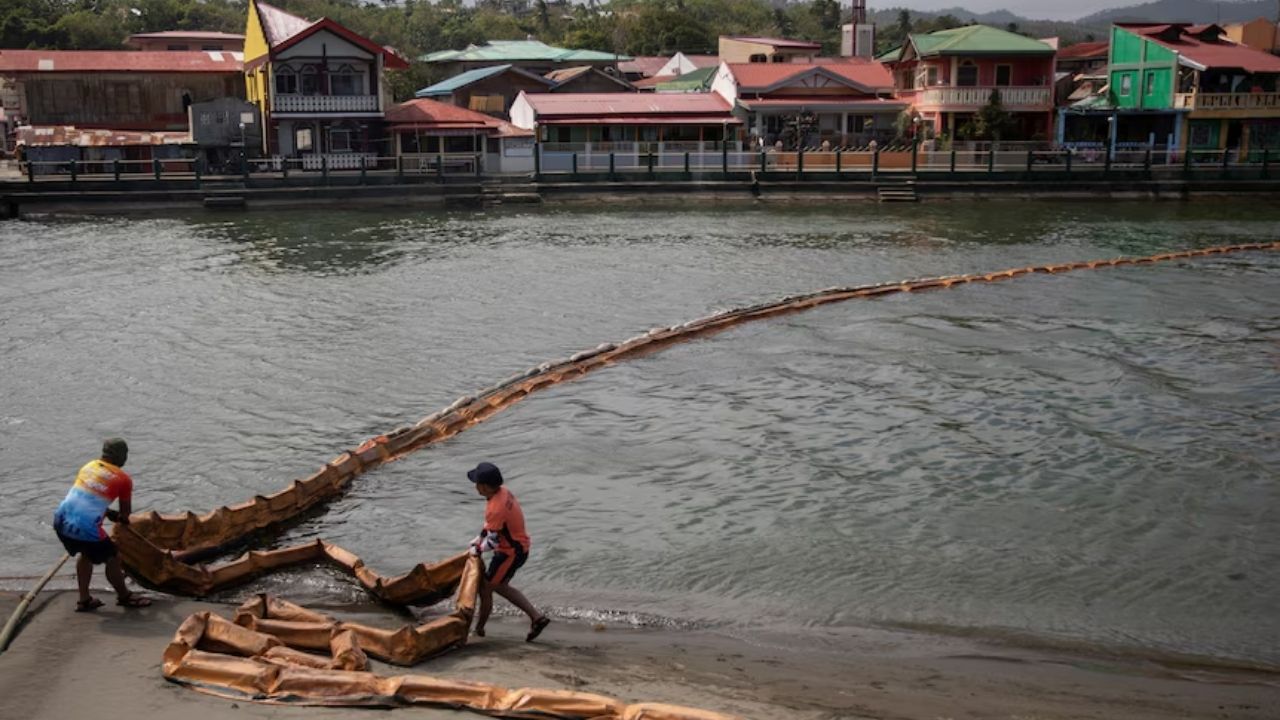
Faced with urgency, local teams began improvising and reinforcing containment barriers with available materials. It was in this context that coconut fiber emerged as a simple, cheap solution adapted to the reality of islands and coastal communities.
Discarded shells became floating barriers
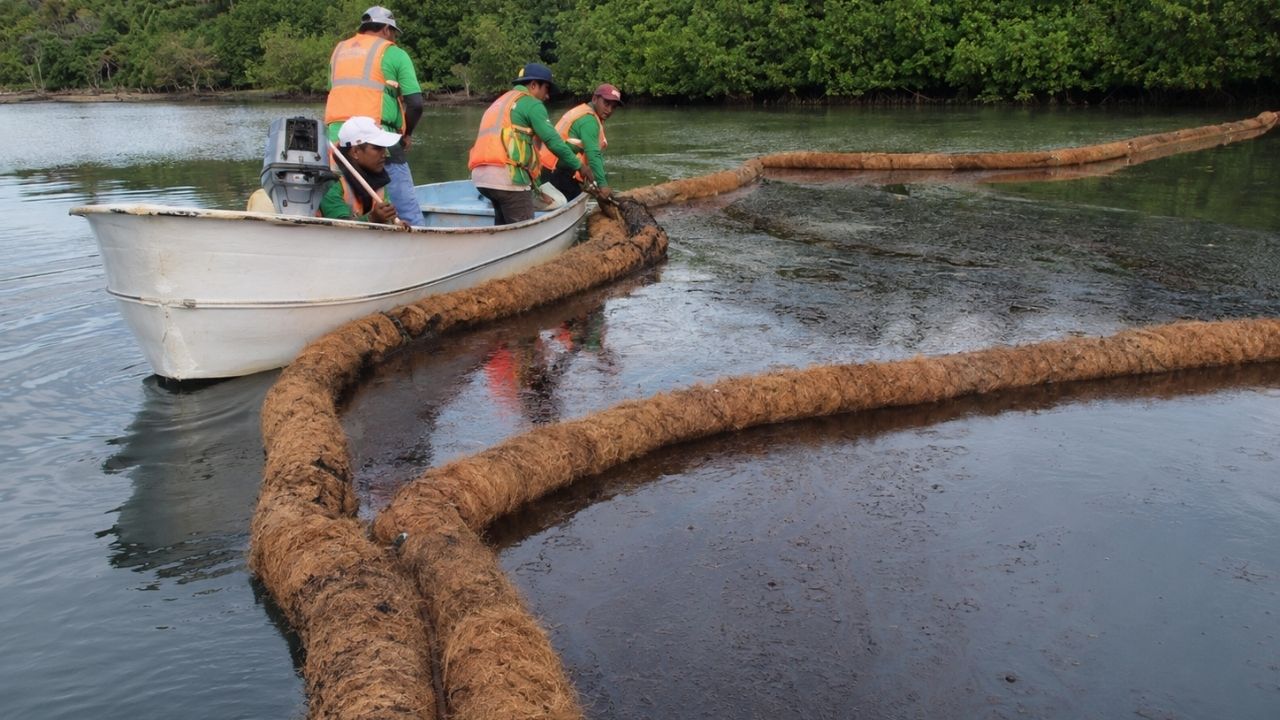
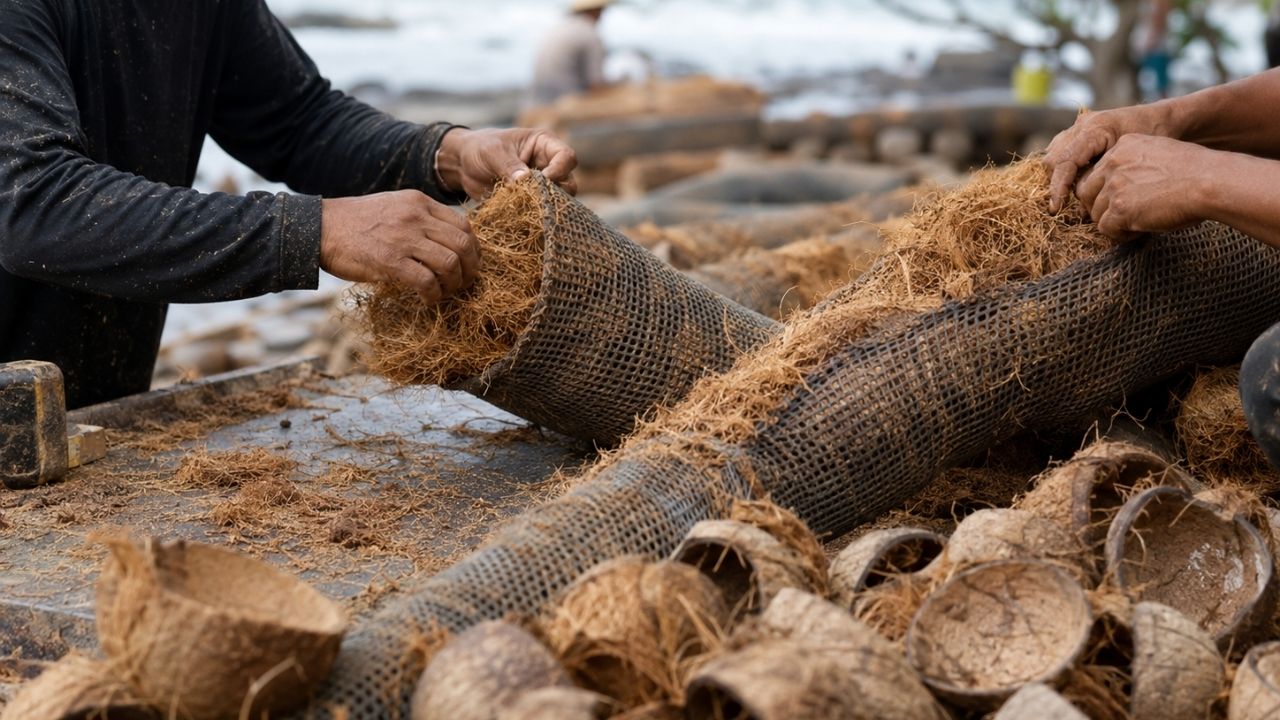
Residents and local teams used bags with coconut shells and coconut fiber to create barriers against the oil. The material was attached to floating structures and placed in risk areas to try to contain the spread of the spill.
The logic is straightforward: coconut is abundant in the Philippines, lightweight, buoyant, and low-cost. Instead of relying solely on expensive equipment, the emergency response utilized an agricultural waste available near the affected areas.
Coconut fiber absorbs oil and repels water
Coconut fiber has characteristics that help in environmental emergencies. It is porous, lightweight, and has an affinity with oil, while also being able to maintain buoyancy in water long enough to act in coastal containment.
This combination makes the material useful in buoys, mats, and simple barriers. Coconut fiber does not replace all spill response technology, but it can serve as a quick reinforcement in places where specialized equipment takes time to arrive.
Biodegradable material reduces dependence on plastic
Many barriers and absorbents used in spills rely on synthetic materials. They can be efficient, but they also increase the presence of plastic waste and require careful disposal after contact with oil.
Coconut fiber offers a biodegradable alternative for some of these applications. The environmental gain lies in transforming an agricultural waste into a containment tool, without significantly increasing the dependence on petroleum derivatives.
Mangroves are among the most vulnerable environments
Mangroves are especially sensitive to spills because their roots retain oil and make cleaning difficult. When contaminated, they can affect natural nurseries of fish, crustaceans, and coastal birds.
Therefore, containing the oil before it reaches these areas is crucial. Barriers with coconut fiber can help reduce the arrival of oil to fragile areas, especially when quickly positioned in risk zones.
Fishing communities feel the impact first
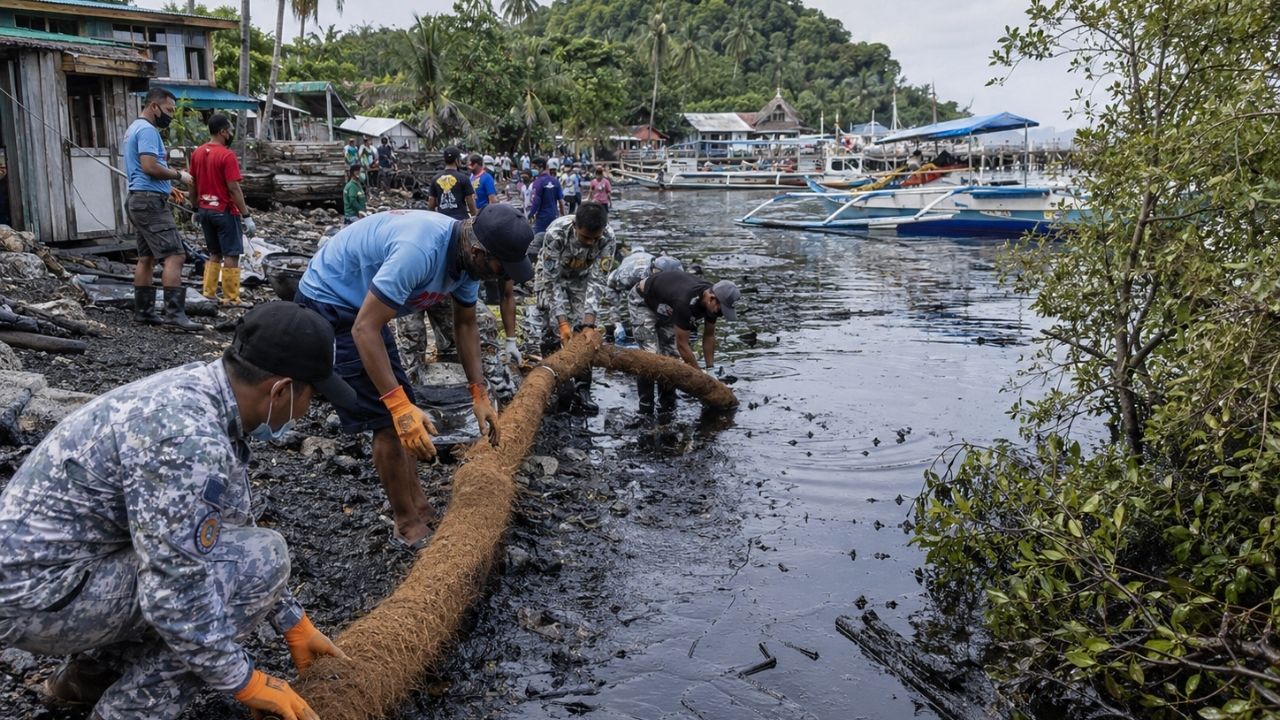
When oil approaches the coast, fishermen are usually the first affected. Even when fishing is still possible, the fear of contamination reduces consumer confidence and lowers local income.
In the Philippines, where many communities depend directly on the sea, this effect is severe. Cleaning up the oil is not just an environmental issue; it is also a race to protect food, jobs, and the survival of entire families.
Coconut is an abundant resource in the country
The Philippines are among the world’s major coconut producers. This makes coconut fiber a solution with logistical advantage, because the raw material can be found in various agricultural and coastal regions.
This availability matters in emergencies. When a spill happens, time is a critical factor, and local materials can be mobilized before large equipment arrives at the site.
Agricultural waste gains environmental value
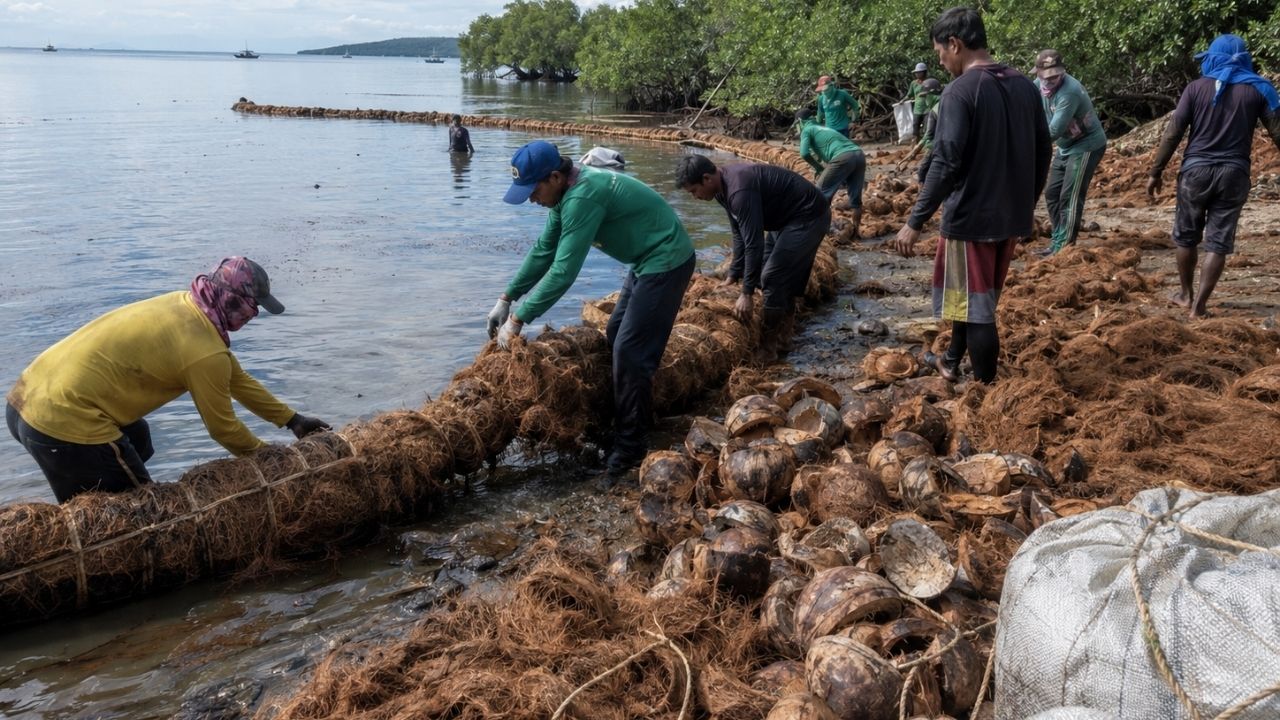
Coconut husk is often treated as a byproduct of agricultural processing. However, when transformed into fiber, it can serve different chains, from agricultural substrates to containment materials and industrial products.
In the case of spills, this change of perspective is central. What would be discarded now has a strategic function in an environmental crisis, creating value where there was only waste before.
Simple solution does not eliminate heavy technology
The use of coconut fiber does not make skimmers, response ships, industrial barriers, aerial monitoring, and specialized teams dispensable. Large spills require multiple fronts of containment and removal.
The difference is that the natural material can complement the response. Instead of competing with heavy technology, coconut fiber acts as an additional layer, especially on shores, beaches, mangroves, and communities with few resources.
Low cost helps in islands and remote areas
In island countries like the Philippines, emergency logistics are more complex. Industrial equipment is not always available near the accident site, and transportation may depend on weather, tide, and distance.
In this scenario, local solutions gain importance. A barrier made with coconut fiber can be quickly assembled, using community labor and materials found in the region itself.
Collected oil still requires proper disposal
Even when the fiber absorbs oil, the problem doesn’t end. The contaminated material needs to be collected, separated, and disposed of safely, because it carries oil and can continue to pose an environmental risk.
This step is essential to prevent the solution from becoming a new problem. Coconut fiber helps in containment, but post-use disposal must follow environmental rules to prevent secondary contamination.
Nature offers a response, but requires management
The strength of the solution lies in its simplicity: a plant fiber used against an industrial pollutant. But simplicity doesn’t mean uncontrolled improvisation. For it to work well, the barrier needs to be positioned, monitored, and collected correctly.
This balance is the most important point. Natural materials can be powerful, as long as they are used with planning, technical supervision, and integration with official response actions.
Spills continue to be a global threat
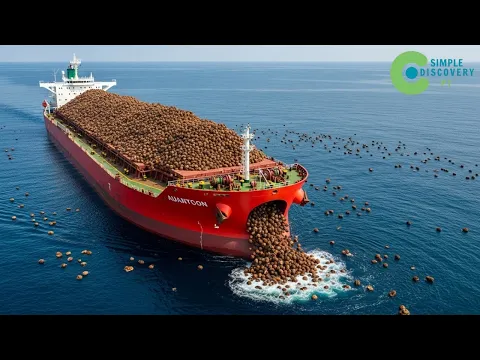

Oil accidents at sea continue to concern environmental authorities in various regions of the world. Larger ships, congested routes, and extreme weather events increase the risk of coastal emergencies.
The Filipino case draws attention because it shows a low-cost alternative within a global problem. Coconut fiber alone doesn’t solve the ocean crisis, but it shows that local solutions can reduce damage while larger responses are organized.
A green weapon born from waste
The story of the coconut fiber in the Philippines shows how an agricultural waste can gain an unexpected role in the face of oil spills. Used in biodegradable barriers, it helps absorb oil, float on water, and protect vulnerable coastal areas.
The case also raises a question for other tropical countries, including Brazil: should natural materials like coconut husk and fiber be part of official response plans for oil spills at sea? Share your opinion.