Portuguese
  Spanish


In three days, a Black Hawk transported entire logs with roots to degraded rivers, using loads of up to 7,500 pounds and flights of 8 km. The river restoration operation aimed to return structural wood lost to industrial exploitation and prepare a new stage in a remote area of Canada with planned aerial precision.
A Black Hawk was used between June 13 and 15 in a river restoration operation to transport entire logs with intact roots to degraded rivers due to industrial exploitation, in the territory of the Tla-o-qui-aht Nation, in the hiłsyaqƛis region, also known as Tranquil.
According to a post by the Redd Fish Restoration Society on LinkedIn, the operation was conducted by a team from Redd Fish and involved flights of about 8 km between the removal area and the delivery points in the river. The goal was to return large wood structures to the river system, in an area where industrial exploitation had removed essential natural elements from the landscape.
Operation began before the helicopter took off
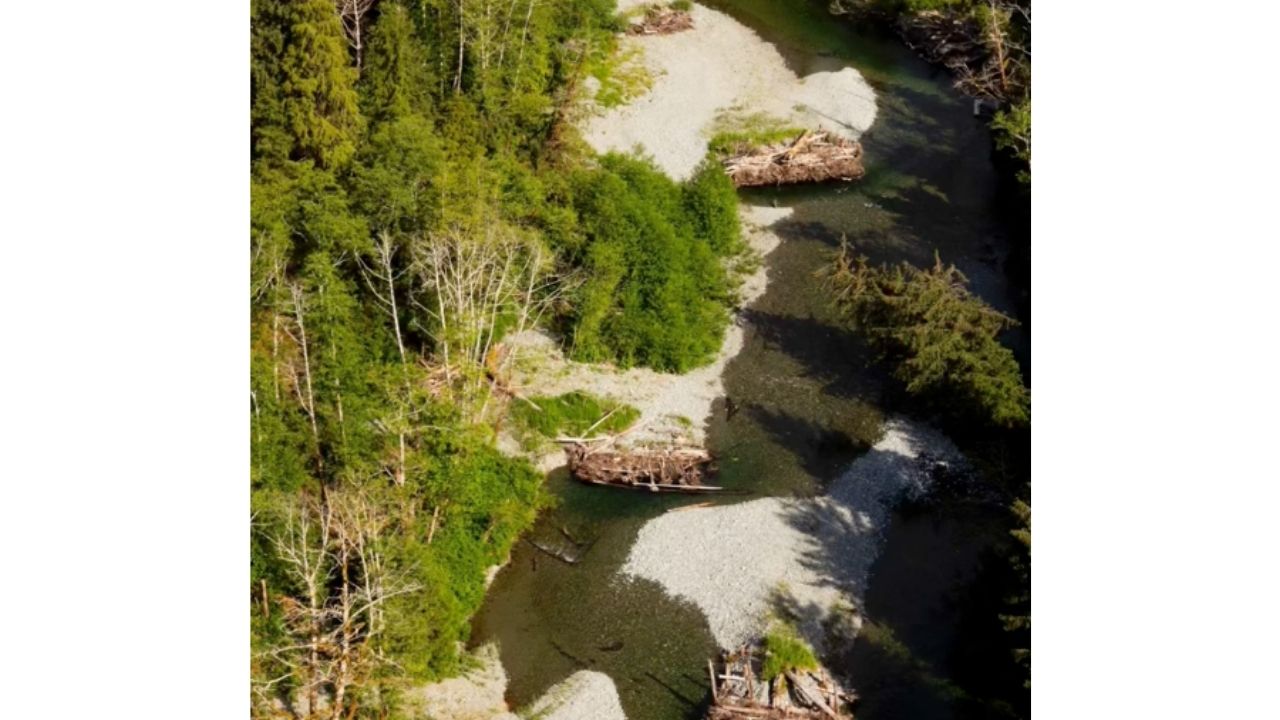
The movement of the logs did not begin in the air. Each morning had safety meetings, route reviews, checks of the removal zones, and confirmation of the drop locations within the restoration project.
-
What is a red flashlight used for, after all? See why it is so commonly used at night.

-
He has never read a line of code, but he already knows how to work: the French company UMA presented in Paris the Northstar, its first AI-powered humanoid robot designed for factories and warehouses, capable of copying tasks just by observing an employee in action.

-
A young Kenyan engineer collects plastic waste from the streets and transforms it into robots that translate physics lessons into sign language in real-time, a machine made with old bottles that teaches what was missing to deaf children left out of science.
-
What is the dark substance found in the sand of Ipanema Beach? Civil Police conduct an examination, collect samples of the material, and initiate an investigation to identify the composition, clarify the origin, and verify if there was an environmental crime.



This planning was crucial because the operation involved weight, speed, remote terrain, and little room for improvisation. When a helicopter carries entire trees suspended by cables, any mistake in preparation can compromise the load, the team, and the delivery point.
Black Hawk was chosen for its load capacity
The Black Hawk used in the operation had a functional hoisting capacity of up to 7,500 pounds. Therefore, each trip needed to be utilized efficiently, balancing weight, safety, and preparation speed on the ground.
The aircraft traveled approximately 8 km between the wood separation area and the drop zone in the river. Each cycle lasted about 8 minutes, which left the ground team with the same interval to prepare the next load.
Whole Logs Required Careful Calculation
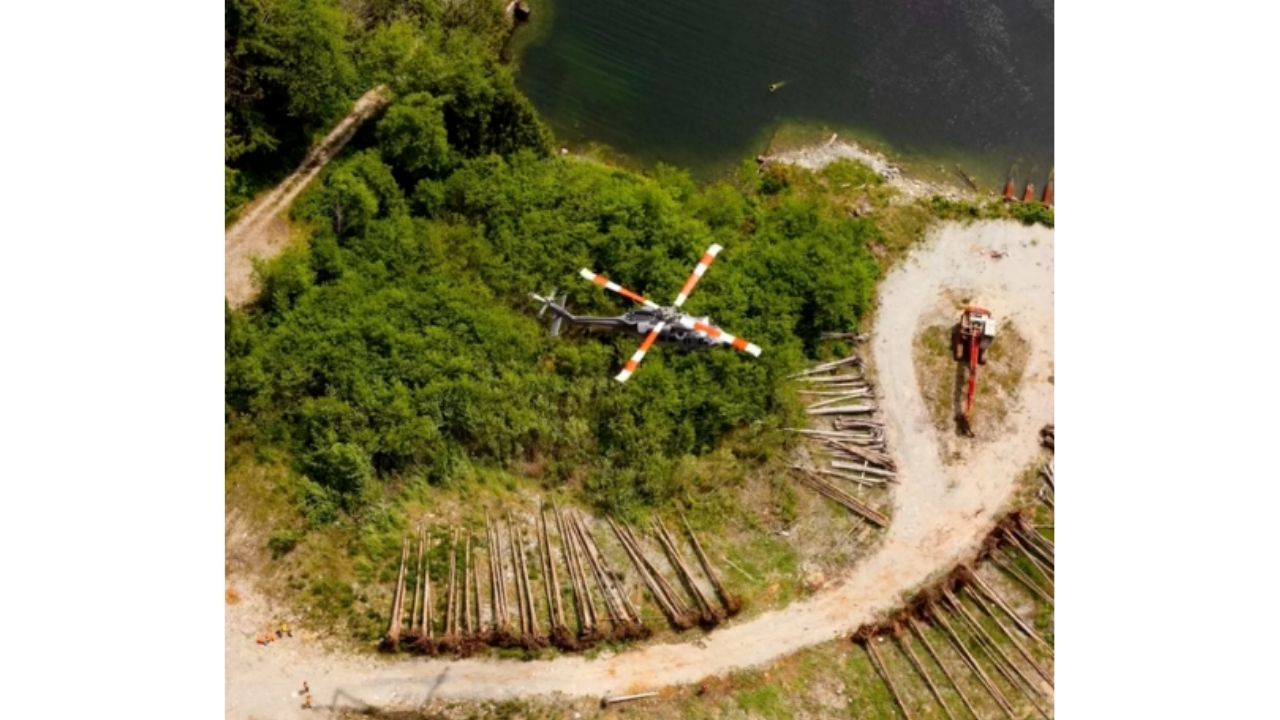
The load was not made up of simple, predictable logs. They were whole trees, with preserved roots, which made weight estimation more difficult and required extra attention before each hoisting.
This detail is important because the root alters volume, mass distribution, and behavior during flight. A whole suspended tree reacts differently from a clean log, especially when it is held by cables and exposed to the aircraft’s wind.
Special Cables Secured Each Tree
Each piece of wood was tied with a heli choker, a type of self-choking cable used for hoisting, along with a shackle. The hook tender connected the line to the helicopter and left the area before the load was lifted.
The sequence needed to happen quickly, but without losing precision. The cable needed to hold the tree firmly, while the team needed to exit the risk zone before the Black Hawk lifted the load.
Eight Minutes Became a Race on the Ground
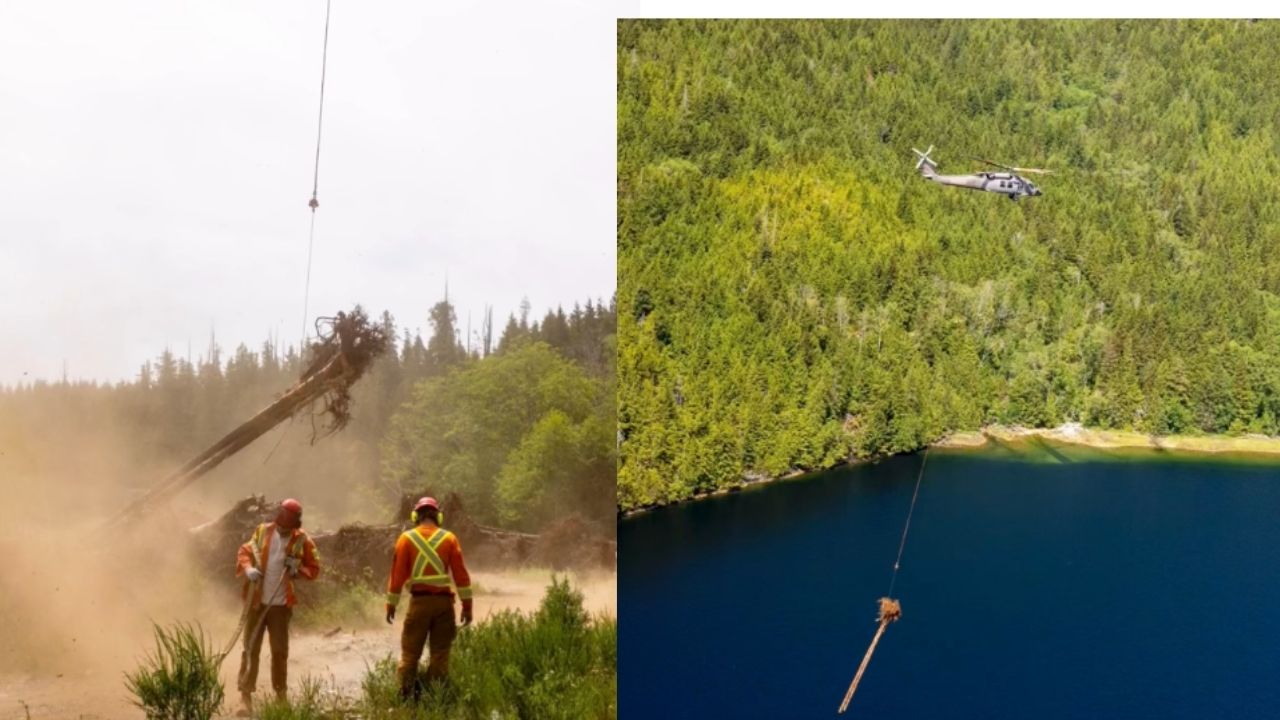
With the helicopter going back and forth in short cycles, the work on the ground became a timed operation. While one load headed to the river, another needed to be ready for the next hoisting.
This rhythm shows why the project required months of preparation. It wasn’t enough to have the aircraft available; it was necessary to synchronize people, cables, loading zones, drop zones, and the removal of equipment after each delivery.
Wood was placed in mapped points
The logs were not simply dumped on the ground. According to the operation’s description, each piece was placed in designated drop zones, previously mapped to meet the design of the river restoration.
This precision changes the logic of the intervention. The wood needed to reach the right place to rebuild natural structures, influence the water flow, and restore physical complexity to degraded sections of the river.
Degraded rivers lost structure due to industrial exploitation
The area had lost an important part of its natural structure after decades of industrial exploitation. The large-scale removal of wood simplified the environment, reducing obstacles, retentions, and natural forms within the river system.
In healthy rivers, large logs and roots create variations in depth, current curves, and sediment retention points. Without this wood, the river can become more uniform, more exposed to erosion, and less capable of reorganizing naturally.
Large wood functions as natural engineering
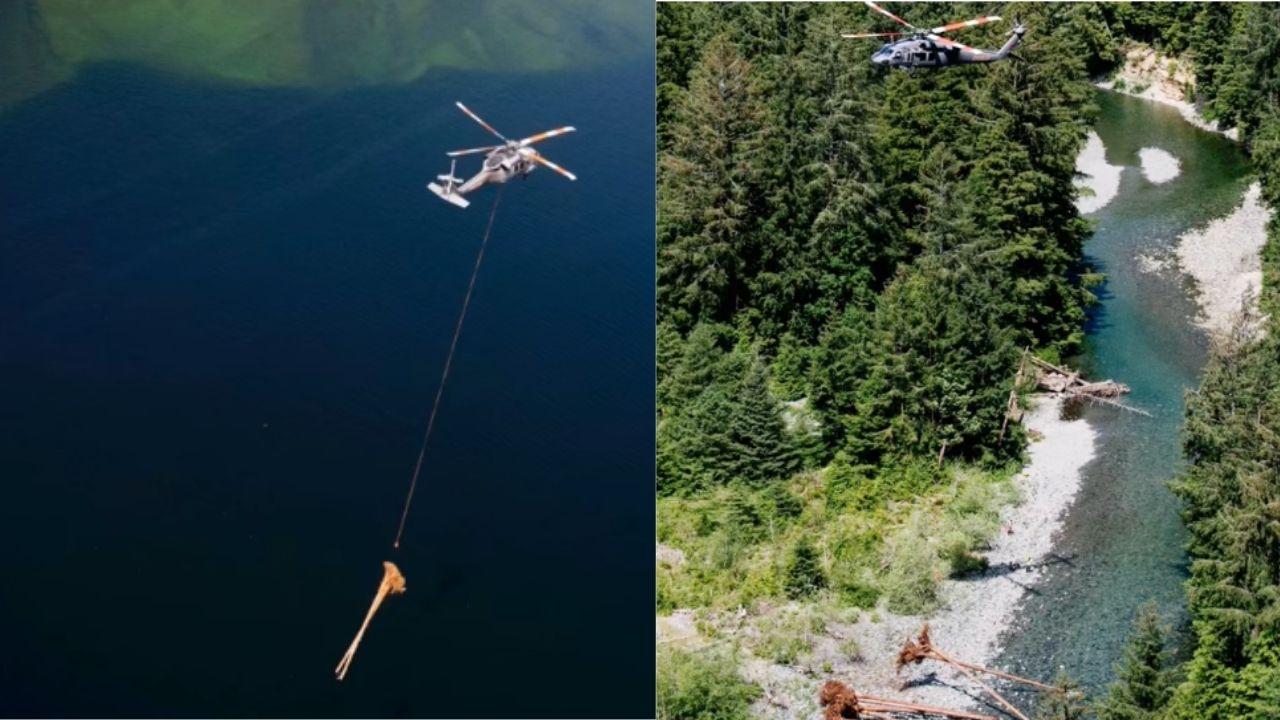
The central idea of the operation was to use wood as a structural piece. Instead of relying solely on concrete, stones, or rigid works, the project returned to the river elements that were already part of the natural dynamics before the degradation.
These whole logs function as planned obstacles. They help break the force of the water, create variations in the bed, and rebuild a complexity that industrial exploitation had removed from the landscape.
Intact roots increase the effect on the river
Keeping the roots on the logs makes the wood more irregular and more efficient as a restoration element. The root increases the contact area, traps sediments, and creates resistance points in the water flow.
For this reason, the trees used in the operation were not treated as common wood. The presence of the roots transformed each load into a more complex piece, useful for reconstructing natural structures within the river system.
Donation reduced part of the project cost
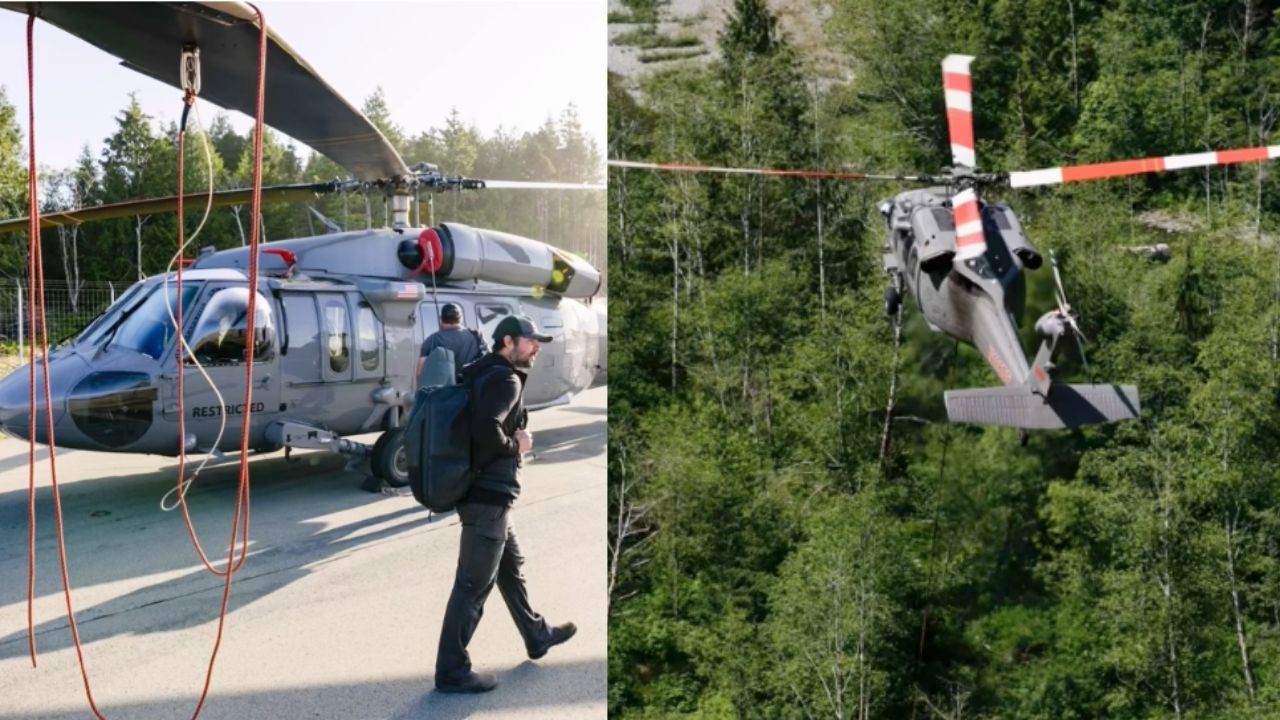
The wood used in the operation was donated by a local developer who was clearing land. In total, 300 logs were transported and returned to the river system.
Even with the donation, the operation remained expensive. The cost was in the planning, the helicopter, the team, the logistics, and the precision required to move heavy loads in a remote area.
High cost required clear environmental justification
The organization itself described the operation as expensive and high-risk. This type of intervention is not done casually, because it consumes resources, requires a specialized team, and depends on safe conditions to occur.
The justification was in the scale of the problem. When a river loses its natural structure due to industrial action, returning large pieces of wood can be a direct way to begin the physical recovery of the environment.
Aerial phase was just the beginning of the restoration
After the transport of the 300 logs, the next phase of the project began. The wood was already in place, but still needed to fulfill its function within the complete restoration design.
This point avoids a simplistic reading of the operation. The Black Hawk did not solve the river’s degradation alone; it only made it possible to bring the heavy material to where conventional machines would hardly reach with the same efficiency.
Helicopter proceeded to firefighting
As soon as the last lift was completed, the Black Hawk went directly to Squamish to support firefighting efforts in the region. This detail shows how the same aircraft can alternate between different environmental missions in a short time.
In one operation, it transported wood for river restoration. In another, it began to support a fire emergency. The versatility of the helicopter helps explain why it is used in missions where access, time, and load are critical factors.
Operation seems simple, but depends on precision
Seen from afar, the scene may look like just a helicopter carrying logs. In practice, there was a complex chain of decisions behind each flight: estimated weight, lashing, route, wind, drop point, and team safety.
The difference between success and accident was in the details. Each log needed to lift off the ground, cross 8 km, reach the correct point, and be released without compromising the aircraft, the terrain, and the people involved.
Restoration uses heavy logistics to rebuild the natural
The contrast is precisely what makes the story strong. A militarily robust machine was used to return natural elements to degraded rivers, recreating structures that once existed without human intervention.
This reversal draws attention because it shows a different type of environmental work. Instead of building something artificial over the river, the operation sought to replace natural pieces that the landscape itself had lost due to industrial exploitation.
An expensive work to return what was taken
The use of Black Hawk to transport 300 whole logs with roots in just 3 days shows how far environmental restoration can go when access is difficult and the load is heavy. The operation crossed 8 km per flight, used lifts of up to 7,500 pounds, and required months of planning.
The scene impresses because it combines technology, high cost, and natural reconstruction in the same image: a heavy helicopter returning wood to degraded rivers. Do you think expensive operations like this make sense to recover areas affected by industrial exploitation, or should the cost limit this type of intervention? Share your opinion.