






 Portuguese
  Spanish


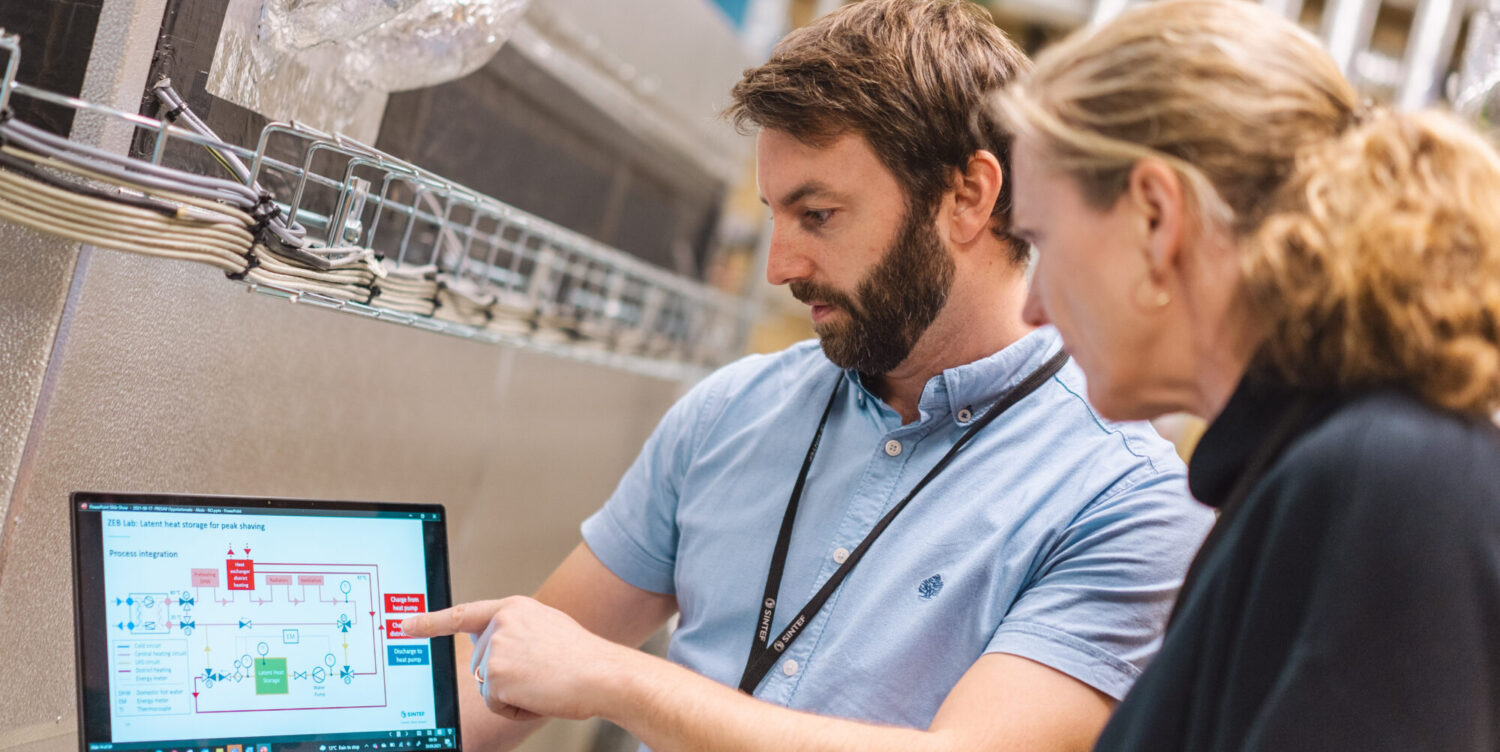

Bio-Battery Is Already in Use and Researchers Are In the Process of Establishing a Company Aimed at Commercializing the New Technology.
So far, it has been a challenge to store the energy from solar panels when the sun is shining and from wind turbines when the wind is blowing. But Research Manager Alexis Sevault and Research Scientist Fride Vullum-Bruer from a lab in Trondheim, Norway, have managed to do just that – and completely without any advanced battery technology.
As you can see in the image below, from the outside, it looks like a metal container with a small round window cut into the side and several tubes that take energy in the form of heat inside and then back out when needed.
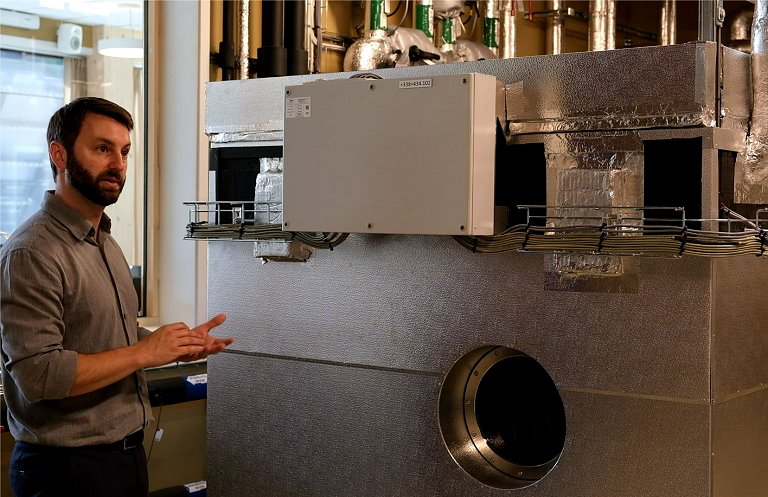
This ‘container’ makes it possible to store heat energy generated by solar panels on sunny days and by wind turbines on windy days, releasing it again when the weather gets colder. The technology driving the system is based on what is called “phase change materials” (PCMs) in combination with heat pumps.
-
Digital Transformation Essential in Energy, Oil, and Gas Industries, But IT Infrastructure Often Overlooked

-
Brazilian Students Repurpose Clay Tea Cups to Create Cooler That Lowers Room Temperature by Up to 10°C Without Air Conditioning or Fans
-
353-Year-Old Mystery Deepens as Archaeologist Arrested with Teeth and Bone Fragment Possibly Linked to d’Artagnan, the Real Musketeer Behind Alexandre Dumas’ Inspiration

-
16-Year-Old Invents CoolTowel, a Fitness Towel That Stays Cold for Up to 2 Hours, Wins Global Alibaba Competition with Over 15,000 Participants, Earning $1 Million




In fact, the energy source can be anything from surplus energy from a wind turbine, electricity generated by solar panels, or even the heat from the sun itself, without the need for solar panels.
Smart Molecules
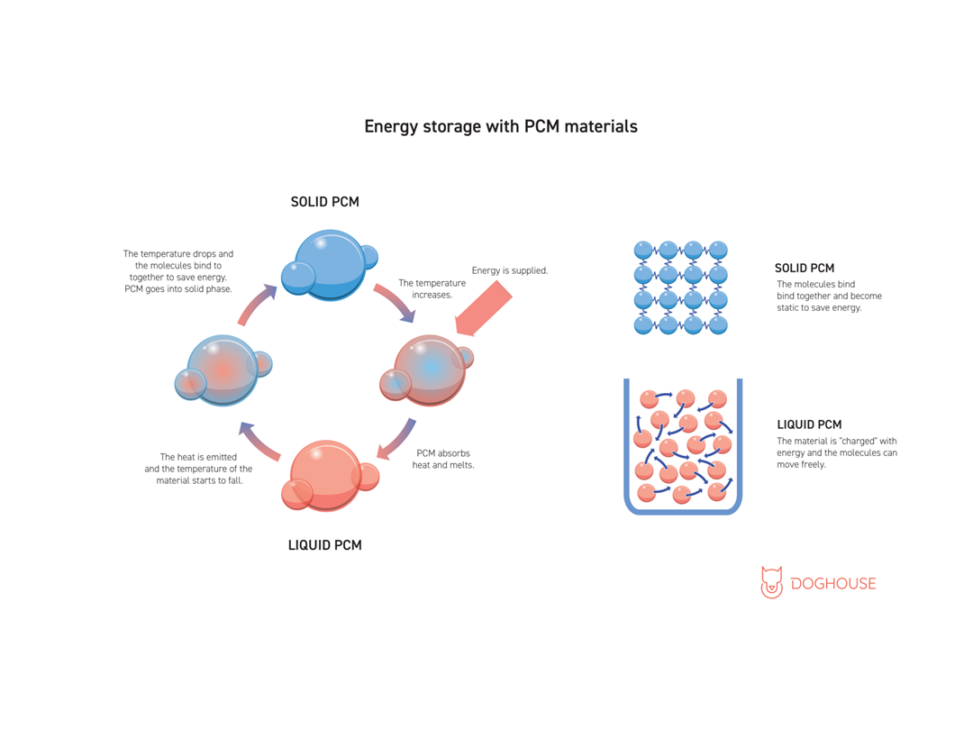
Scientists refer to phase change materials, or PCMs, as materials that behave differently in their various phases and can also store heat.
“The device contains three tons of a liquid bioceramic based on a vegetable oil that cannot be used as food,” says Sevault. “In the same way that water turns to ice, the wax becomes a solid crystalline material when it gets cold enough. ‘Cold’ for this particular wax means below 37 degrees,” he says.
The bioceramic is made up of molecules that behave very economically in terms of heat. To save energy, the molecules organize themselves very closely when the bioceramic is in its solid phase.
Bio-Battery That Captures Energy from Solar Panels and Wind Turbines Has Been in Use for Over a Year!
The new technology has been in use as part of the heating system at the ZEB Laboratory for over a year. “The PCM-based heat storage system is delivering exactly the performance we expected,” says Alexis Sevault. “We are utilizing as much of the building’s self-generated solar energy as possible. We are also finding that the system is very suitable for what is called ‘peak shaving’,” he says.
“By charging the bio-battery before the colder parts of the day, we avoid having the building consume valuable grid electricity at times when the rest of Trondheim is also experiencing high demand,” says Sevault. “This gives us a level of flexibility that can also be used to take advantage of fluctuations in spot prices. We can charge our battery when we have access to energy from the sun, wind, and waste heat, and extract the output when the electricity price is high,” he explains.
New Technology Is More Suitable for Industrial Applications
“This system will be ideal for industrial and office buildings, and in neighborhoods where heat can be distributed,” says Sevault. “The best part about it is that the technology is practically maintenance-free. It will last at least 25 years,” he says.
The researchers who developed the ‘bio-battery’, or PCM heat storage system, as specialists call it, are now in the process of establishing a company aimed at commercializing the technology.
“We ask that after several months of testing at the ZEB laboratory, we can safely launch the concept on its path toward commercialization,” says Sevault. “We have also been in contact with many end-users who are interested in having a pilot system installed in 2023 or 2024. Many of them are industrial companies that have the resources to scale up the concept,” he says.
This research is being conducted by SINTEF in collaboration with NTNU. It is being funded by ZEN (Zero-Emission Neighbourhoods), which is a Center for Environmentally Friendly Energy Research. Together with many other research divisions within NTNU and SINTEF, the researchers have established a Gemini Center called Thermal Energy Storage.
I would love to know what you think about this new bio-battery. Let us know in the comments section if you enjoy this type of news. Don’t forget to enable CPG notifications to keep up with all the latest in technology and renewable energy. Until next time!


Muito bom, se for colocar nas residências no off grid, estou aqui para testar
Me alegro qdo vejo reportagem assim, é sinal que existem gente que se preocupa com o bem estar da humanidade, pena que depois vira tudo em bombas e equipamentos para nos destruir.
A matéria não informa o porquê a cera em pauta serve para este propósito.
Para se ter uma ideia do utilidade desta cera, deveria informar os valores dos calores latentes de fusão e de solidificação (e também da água) para se poder comparar o quanto a cera é superior à água para esta operação.
Como os leitores mais interessados neste canal são de área técnica, as informações deveriam ser direcionadas a eles, considerando sua capacidade em avaliar as matérias apresentadas.
Outra dúvida: num dos últimos parágrafos, é citado o :Centro de Pesquisa de Energia Ambientalmente Acondária.”
O que é “acondaria” ???
Está palavra não consta nem nos dicionários Aurélio nem Houaiss, e nem no google.
O canal responde às dúvidas??