






 Portuguese
  Spanish


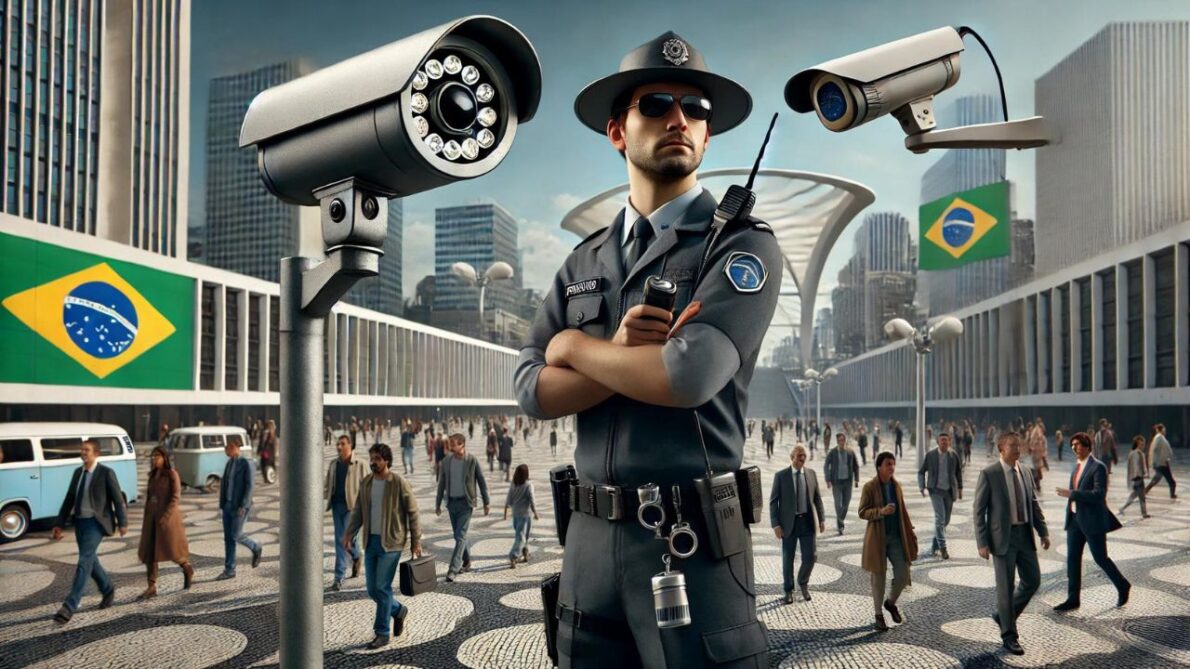
Approved after 14 Years of Debates, the New Private Security Law Establishes New Criteria for the Regulation of Companies, Control of Weapons, and the Creation of Job Positions, Creating Opportunities in Areas Such as Electronic Monitoring and Security for Large Events.
After 14 years of intense debates in Congress, the recently approved new private security law brings changes that promise to transform the sector in Brazil. With the aim of regulating the use of weapons and integrating up to 500,000 informal guards into the formal market, this legislation is expected to create 100,000 new jobs in electronic monitoring and event security.
Imagine a silent army of 597,000 private security agents in Brazil, armed and prepared, but without the necessary regulation. Well, this was about to continue until the new private security law arrived to bring order to this scenario! Approved by President Luiz Inácio Lula da Silva, Law 14,967/2024 is already being seen as the watershed that the sector so desperately needed. In addition to regulating the use of weapons by guards, the new legislation creates opportunities to take up to 500,000 workers out of informality and promises to generate more than 100,000 job openings in the coming years.
What Changes with the New Private Security Law?
The new private security law brings a number of significant changes to the sector. Now, security companies need authorization from the Federal Police to operate, weapons must be stored securely, and transfers between companies require approval. Independent guards are prohibited, a measure aimed at combating informality, which currently affects around 2.5 million guards.
-
U.S. Navy’s Ticonderoga-class Cruiser Becomes a 9,800-Ton Missile Fortress with Advanced Aegis System Capable of Tracking Hundreds of Targets

-
France’s Charles de Gaulle: The Sole Nuclear-Powered Aircraft Carrier Outside the US, Weighing 42,500 Tons and Equipped with Two Atomic Reactors

-
The military spaceplane that almost took the Cold War into orbit: Boeing X-20 Dyna-Soar was designed to re-enter above Mach 20, fly for up to 40 hours, land like a plane, and transform Titan rockets into a gateway to a new era of orbital warfare.
-
FAB bets on national drones and increases investments to strengthen the Brazilian aerospace industry





Another point that deserves attention is the exclusivity of the private sector in the electronic monitoring of large events, such as concerts and football games, which will also pave the way for more job openings.
More Public Security
For many experts, the new private security law is an important step towards public security. By controlling the use of weapons by guards, the risk of them falling into the wrong hands decreases. There is an expectation that private guards will start to collaborate more actively with public forces, creating a safer and more integrated work environment.
Job Opportunities and the Future of the Sector with the New Law
With this new law, it is estimated that the private security sector will expand its operations, mainly with the creation of job openings in electronic monitoring and at large-scale events. This category alone has the potential to generate more than 100,000 new job opportunities in the coming years, according to industry experts.
Although the statute still has points to be adjusted, such as the control of weapons and oversight by the Federal Police, the new private security law is already being celebrated as a victory for workers and entrepreneurs in the sector.
With so many changes anticipated, will the New Private Security Law be able to balance job creation with increased control over the use of weapons, ensuring greater safety for everyone? What do you think still needs to be adjusted in this new regulation?









Be the first to react!