






 Portuguese
  Spanish


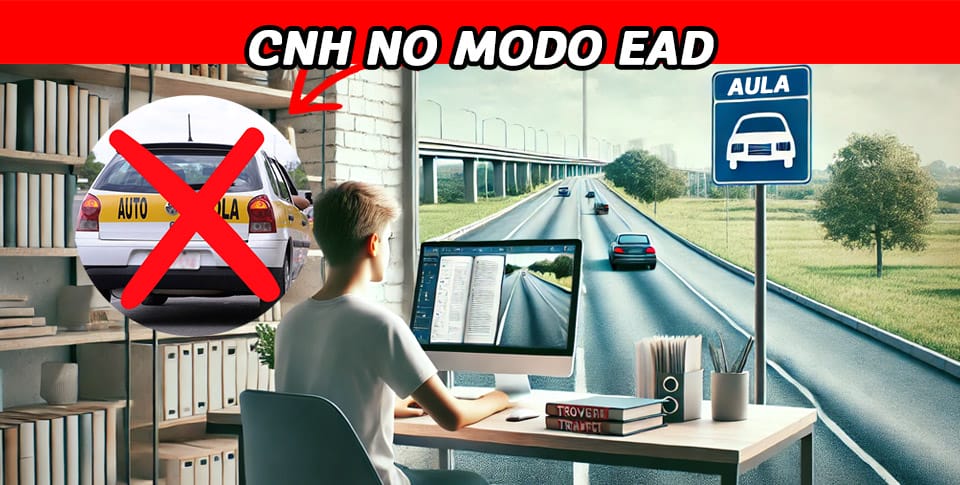


Bill May End The Need To Attend Driving Schools To Obtain A Driver’s License In Brazil. The Regulation Aims To Reduce Costs And Make Driver Training More Flexible. Will This Change Bring More Benefits Or Dangers To Traffic?
Prepare for a true revolution in the process of obtaining the National Driver’s License (CNH). Soon, the entire pathway to your CNH may change drastically.
A New Law Is About To Be Voted On And May End The Requirement Of Driving Schools, bringing historic changes for those who wish to become drivers in Brazil.
But will this really make life easier for future drivers, or will it generate even more doubts? Stay informed about all the details of this transformation!
-
Brazil’s Lula Government Allocates $463 Million Quota for Electric Car Parts, Waives Import Tax Until December, Sparking Competition Among BYD, Automakers, and Unions as Consumers Question Impact on Prices and Local Industry

-
Thinking of Installing LED Headlights? Why Replacing Halogen Bulbs is Still Banned, the Glare Risks Authorities Worry About, and How a New Proposal Could Allow Certified, Safe Installations

-
2027 Toyota Corolla Cross Unveiled: New Design, Enhanced Fuel Efficiency, Reduced Maintenance Costs, Advanced Technology, Connected Services, and Up to 10-Year Warranty
-
Fiat Cronos Precision 2018: Affordable Sedan with Spacious Trunk and Reliable Maintenance




The proposal, which is currently being reviewed in the Chamber of Deputies, is generating much discussion.
If Approved, The New Law Will Allow Candidates To Study Independently And Hire Independent Instructors, eliminating the requirement to attend driving schools.
The Bill 4474/20, authored by Deputy Kim Kataguiri (DEM-SP), may not only completely change driver training in the country but also significantly reduce the costs of the process.
What Changes Practically?
Currently, the process to obtain the CNH is quite bureaucratic and expensive, requiring enrollment in accredited driving schools, medical exams, theoretical and practical classes, as well as rigorous tests.
The total cost can vary between R$ 2,000.00 and R$ 3,000.00, depending on the state and the chosen driving school.
The Ongoing Project Seeks To Make The Process More Accessible, Less Burdensome, And More Agile.
According to the text of the project, candidates would have the option to study the theoretical part independently, using free and available online materials.
The practical classes, in turn, would be taught by independent instructors accredited by traffic authorities.
This Would Eliminate The Need To Pay For Classes At Traditional Driving Schools, making the process more flexible and allowing greater autonomy for future drivers.
According to industry sources, this measure could generate considerable savings for those wishing to obtain their CNH, as costs would be reduced by hiring instructors on an ad hoc basis.
Another important point is that, despite the flexibility, candidates will still have to undergo theoretical and practical evaluations conducted by the Detrans, ensuring that training continues to follow safety criteria.
Impact On The Driving School Sector
This change has caused great unrest in the driving school sector, which, according to experts, may face a strong impact if the law is approved.
If Previously The Driving School Market Was Essential For Those Who Wished To Obtain Their License, Now It May Lose Relevance, since the requirement to attend these institutions would be abolished.
In September 2024, driving school associations mobilized to try to block the project, arguing that flexibility could reduce the quality of driver training in Brazil.
According to sector representatives, practical training without the supervision of driving school instructors could endanger traffic safety.
However, according to proponents of the proposal, quality control would be ensured by mandatory certification of independent instructors.
Moreover, recent data released in October 2024 indicates that the driving school sector is already in decline.
With The Increased Access To Online Teaching Technologies, many candidates prefer to study independently, which makes the requirement to attend driving schools even more questionable.
What’s At Stake?
The Big Question That Arises Is: Will This Change Bring More Benefits Or Risks?
On one hand, the possibility of making the licensing process more accessible and less costly is viewed positively by those wishing to get licensed, especially in times of economic crisis.
On the other hand, there is a fear that the quality of driver training will decline, leading to an increase in the number of accidents.
The measure, which is still awaiting a vote in the Chamber of Deputies, has generated intense debate.
The Brazilian Traffic, Already Known For Its High Accident Rates, May Suffer A Negative Impact If The Driver Training Process Is Not Conducted Rigorously.
However, proponents of the proposal believe that by reducing costs and streamlining the process, it will be possible to train more qualified drivers without losing control over street safety.
When Could This Change Happen?
Currently, the Bill 4474/20 is under review and the vote could occur as early as October 2024.
If Approved, The Bill Could Profoundly Alter The Brazilian Traffic Code, allowing the change to be implemented from 2025.
According To Experts, If The Law Is Approved, Traffic Authorities Will Have Until The End Of 2025 To Adapt The New Driver Training Model.
But The Big Question Remains: Is The Brazilian Traffic Prepared For This Transformation? If The Project Is Approved, Will Driving Schools Have To Reinvent Themselves Or Will They Disappear Completely? What Do You Think About This Change? Leave Your Opinion In The Comments!





Os CFC’s não dão capacidade aos candidatos,quem capacita os mesmos são os instrutores. Então é irrelevante a existência de CFC’S,já que aulas teóricas estão sendo ministradas remotamente já algum tempo…..