Portuguese
  Spanish




Study Shows Accelerated Subsidence in 25 of the 28 Largest Cities, with Rates of Up to 5 Millimeters per Year and Increasing Risks
A study published in the journal Science Advances revealed that the largest cities in the United States are sinking. The phenomenon is not new, but recent satellite data shows it is occurring more rapidly and widely than experts had imagined.
Researchers from Columbia University and Virginia Tech analyzed 28 urban centers and found that the ground is steadily giving way. This change reshapes the urban environment almost invisibly, but potentially dangerously.
Using satellite radar technology, scientists compared images over time and measured the vertical movement of the ground with millimeter precision.
-
Venice Deploys 78 Massive Steel Gates to Shield City from Extreme Adriatic Tides

-
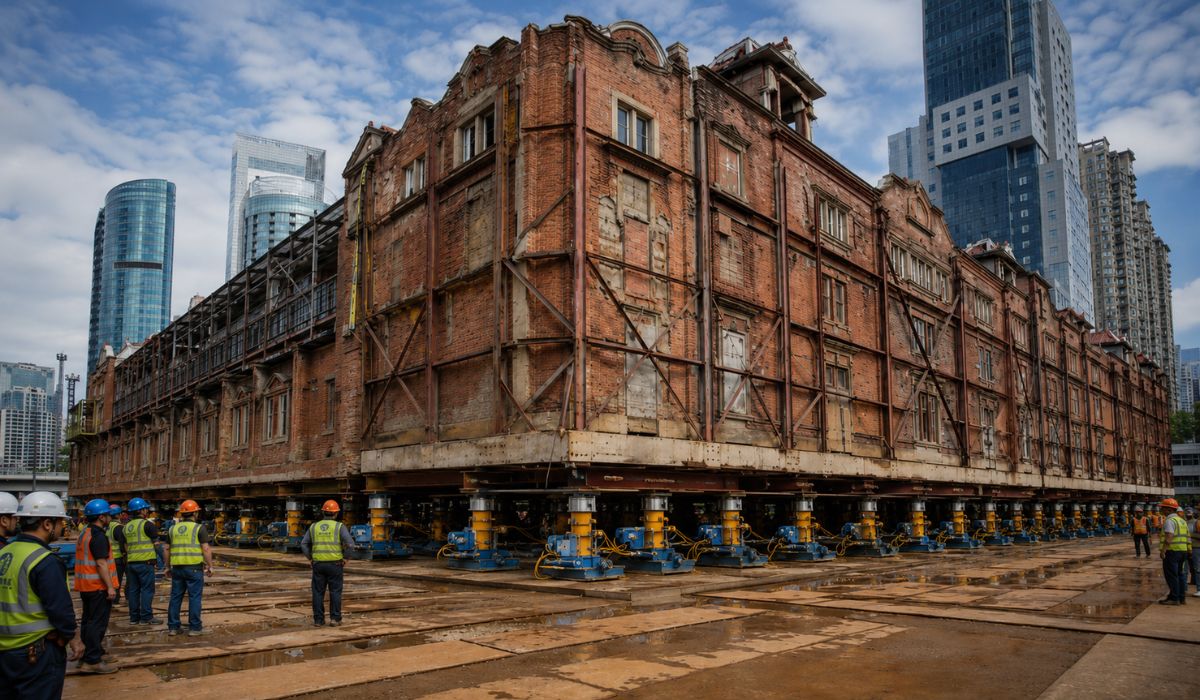
China Uses 432 Robots to Move a 7,500-Ton Historic Building in Shanghai, Preserving Architecture While Creating Space for Underground Center
-
World Cup Ball Chip Uses Technology to Detect Invisible Touches, Confirms Offside, Secures Portugal’s Victory Over Croatia

-
36-Meter Hydrogen-Powered Superyacht Arrives in Brazil to Debut German Engines and Showcase Future of Clean Navigation



The results were alarming: in 25 cities, at least two-thirds of the urban area is sinking.
In places like Houston, the situation is even more alarming. Almost half of the city sinks more than five millimeters per year. In one out of ten areas, the pace is even more accelerated, putting entire neighborhoods at risk.
The researchers identified the main cause of the phenomenon: the extraction of groundwater. When aquifers are depleted, the land above them compresses and collapses.
Leonard Ohenhen, the lead author of the study, stated that cities are growing over areas already prone to sinking. According to him, this can create stresses that exceed the safety limits of the infrastructure.
New York Is Sinking Slowly
The situation in New York follows a different, yet equally concerning pattern. The city has been sinking for years, but new data from NASA, Rutgers University, and JPL-Caltech show that 98% of its territory is experiencing some degree of subsidence.
The average recorded rate is 1.6 millimeters per year, equivalent to the growth of toenails. Although it may seem small, the number shows that the process is constant and widespread.
With high-resolution data from Sentinel-1 satellites, the researchers mapped the entire metropolitan area. They discovered that some regions are sinking faster, such as runway 13/31 of LaGuardia Airport, which sinks 3.7 millimeters per year.
The Arthur Ashe Stadium, where the US Open takes place, shows even higher rates: 4.6 millimeters annually. This has helped explain the need to install a lightweight, retractable roof to protect the structure.
A large part of these areas was built on former landfills. This type of soil is more compressible than natural bedrock, which accelerates compaction under the weight of heavy infrastructure.
This process increases the risk of flooding and structural damage to buildings, roads, and bridges in the city. Although the sinking is subtle, it is spread across nearly the entire metropolis.
29,000 Buildings at Risk Across the Country
The study indicated that more than 29,000 buildings in the 28 analyzed cities are in areas of high or very high risk. The consequences can include uneven roads, cracked bridges, and buildings that shift in the ground.
Without preventative measures, damages could multiply. Researchers advocate for detailed subsidence maps to guide more effective policies and urban development decisions.
Cities may need to review building codes and invest in more robust stormwater drainage. They may also need to better manage the use of groundwater to reduce pressure on aquifers.
In more vulnerable areas, land elevation works or green infrastructure solutions may mitigate the damage caused by the ongoing sinking of the ground.
Ohenhen warned that the problem is likely to grow in the coming years. According to him, although the process is slow and silent, the ground beneath American cities is far from stable.