Portuguese
  Spanish


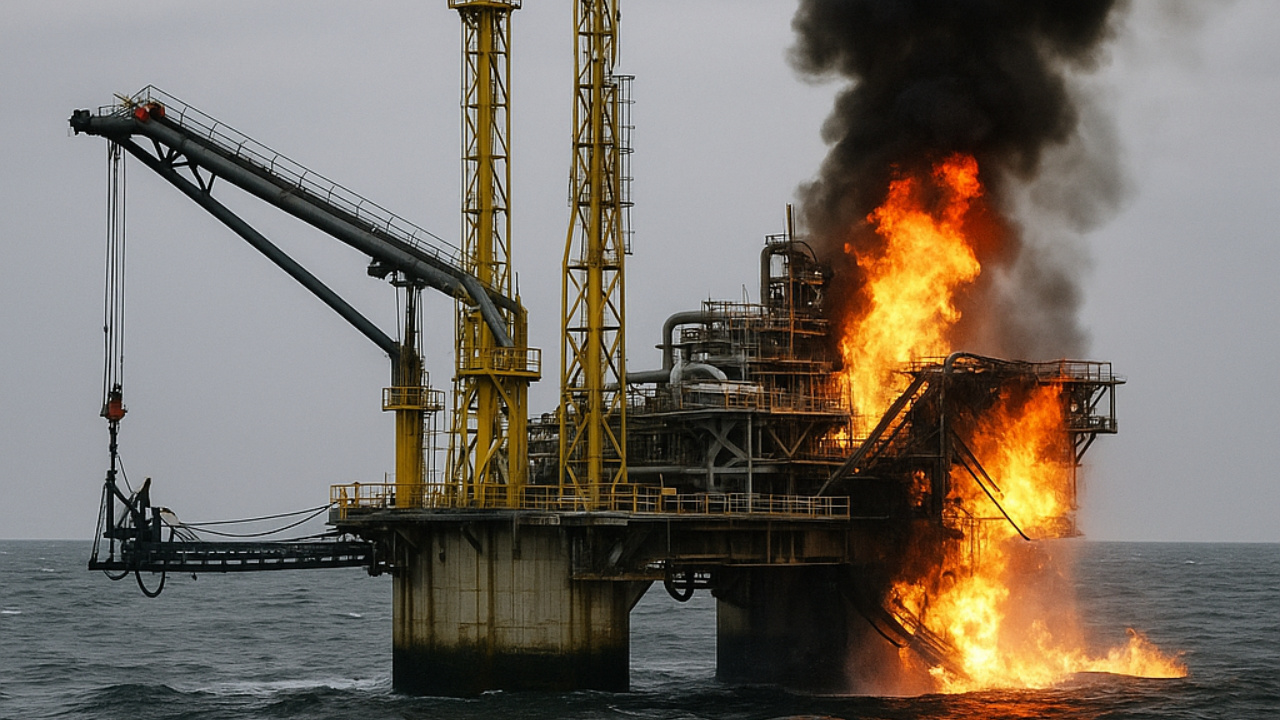


CPC Reports Loading Shutdown in the Black Sea and Kazakhstan Activates Emergency Plan to Maintain Exports.
The CPC reports a shutdown in oil loading in the Black Sea following a new attack that damaged one of the mooring points used to export oil from Kazakhstan.
The incident, attributed to nighttime attacks in the region, was confirmed by the Caspian Pipeline Consortium, responsible for the main corridor for transporting Kazakh oil through Russian territory.
Technicians halted operations early in the morning at the terminal near the Black Sea coast after structural damage was identified that made activity at the site unfeasible.
-
Oil production grows in Rio, but reserve replacement raises a warning sign

-
Petrobras is expected to complete the drilling of the Morpho well in the Foz do Amazonas in August 2026, the first well in the Equatorial Margin, an oil frontier that the ANP estimates at more than 30 billion barrels and could redraw the map of Brazil.

-
Oil returns to the center of concerns with tension between the US and Iran

-
IEA reduces forecast for global oil demand in 2026 after impacts of the Middle East crisis



The emergency measure was taken to ensure safety, as the attack was deemed a direct threat to the operation of critical infrastructure.
As a result, the Kazakhstan government announced on the same Monday that it activated an urgent plan to redirect exports through alternative routes.
The decision aims to maintain production levels while avoiding economic losses and risks to the global energy market.
Damage to Mooring Point Triggers Immediate Suspension
According to the consortium, the attack likely occurred via unmanned vessels, which targeted mooring point 2, one of the three used for loading at the terminal.
According to the official statement:
“As a result of a terrorist attack directed by unmanned vessels,” mooring point 2 was “significantly damaged” and “its future operation is not possible.”
Thus, the consortium emphasizes that operational safety remains an absolute priority.
Kazakhstan Activates Emergency Plan to Maintain Exports
In light of the sudden interruption, the Kazakh government reacted swiftly. According to the Ministry of Energy:
“The situation is under special control of the government.”
To avoid a sharp decline in production and protect revenues from the oil sector, the country began redirecting exports.
The goal is to ensure a continuous flow, even with the instability in the Black Sea.
Meanwhile, mooring point 3 remains under scheduled maintenance, leaving the consortium solely dependent on point 1.
Each point has the capacity to load up to 800,000 barrels per day, highlighting the extent of the operational impact.
Attacks Intensify and Target Strategic Infrastructure
Ukraine did not directly comment on the damage to the CPC equipment. However, the Ukrainian General Staff confirmed a separate attack that took place on Saturday against the Afipsky refinery in the Krasnodar region.
The Ukrainian agency justified the attack by stating that the refinery provides fuel to the Russian Army.
The statement also mentioned additional offensives, including an attack on the oil maritime terminal in Tuapse and on a fighter repair facility in Taganrog.
CPC Infrastructure Considered Vital for Global Energy
International concern has increased because the consortium is responsible for transporting oil from the largest fields in Kazakhstan and part of Russian production.
Its shareholders include giants like Chevron, Exxon Mobil, the state-owned KazMunayGas, and the Russian operator Transneft PJSC. Therefore, any attack affects not only regional flow but also global energy security.
The Kazakh Ministry of Energy classified the episode as serious:
“The CPC pipeline system is an international energy project, and any impact on its facilities poses direct risks to global energy security.”
Emergency Protections Work and Prevent Spills
Despite the damage to the mooring point, the consortium stated that there were no casualties or oil spills in the Black Sea.