Portuguese
  Spanish


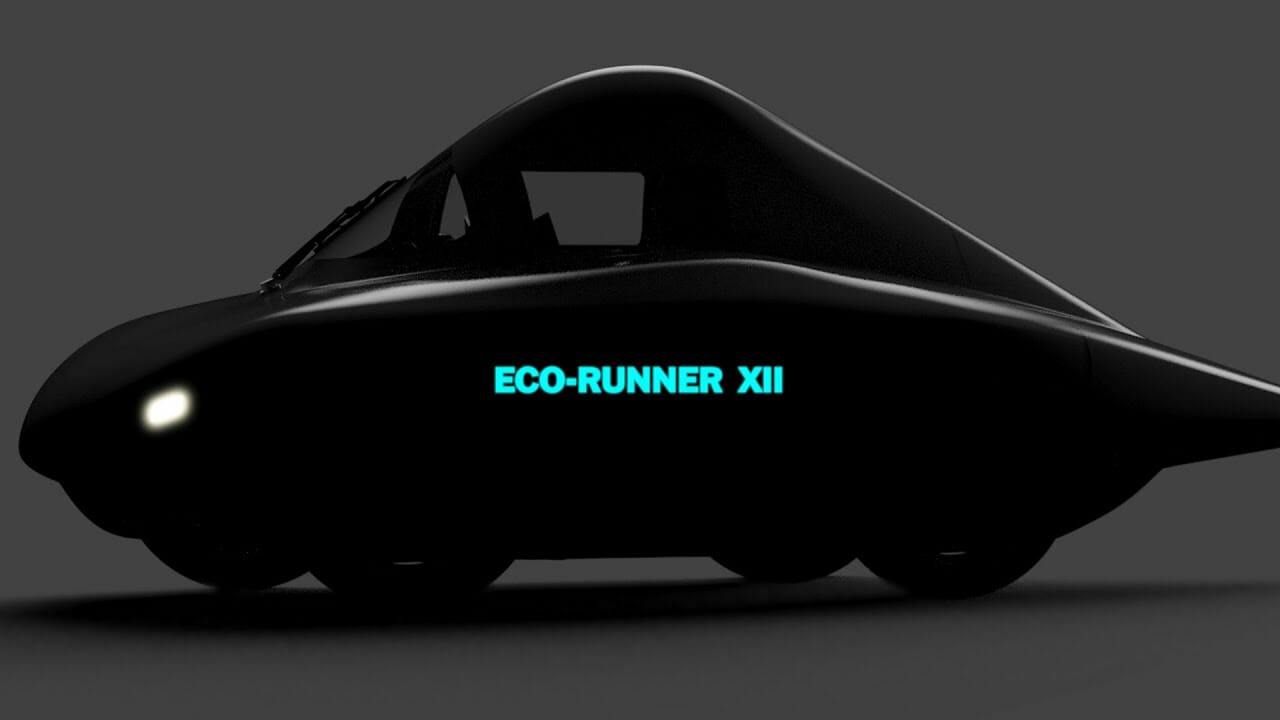

Students Develop Hydrogen-Powered Car That Can Exceed 2 Thousand Km of Range With Only 1 Kg of Hydrogen in Its Fuel Tank.
A group of students from Delft University of Technology, located in the Netherlands, presented earlier this May a vehicle that could soon be recognized as the most efficient hydrogen-powered car in the world. The model, named Eco-Runner XIII, was introduced by Team Delft as a vehicle capable of traveling over 2,000 kilometers on just 1 kg of hydrogen.
Hydrogen-Powered Car Can Reach 45 Km/h
With this autonomy, the students’ hydrogen car should be capable of covering, for example, the distance between Porto, located in Portugal, and Amsterdam, located in the Netherlands, without requiring any refueling.
The ERXIII is a small hydrogen-powered car with a body developed from carbon fiber that weighs about 80 kg and features improved aerodynamics that allows it to reach a top speed of 45 km/h. To move, the car is equipped with an electric generator and uses hydrogen as a power source.
-
Fiat Strada Becomes Top Seller in June, Surpassing Onix, Polo, Hilux, and T-Cross with 107 HP Engine and 732 km Range.

-
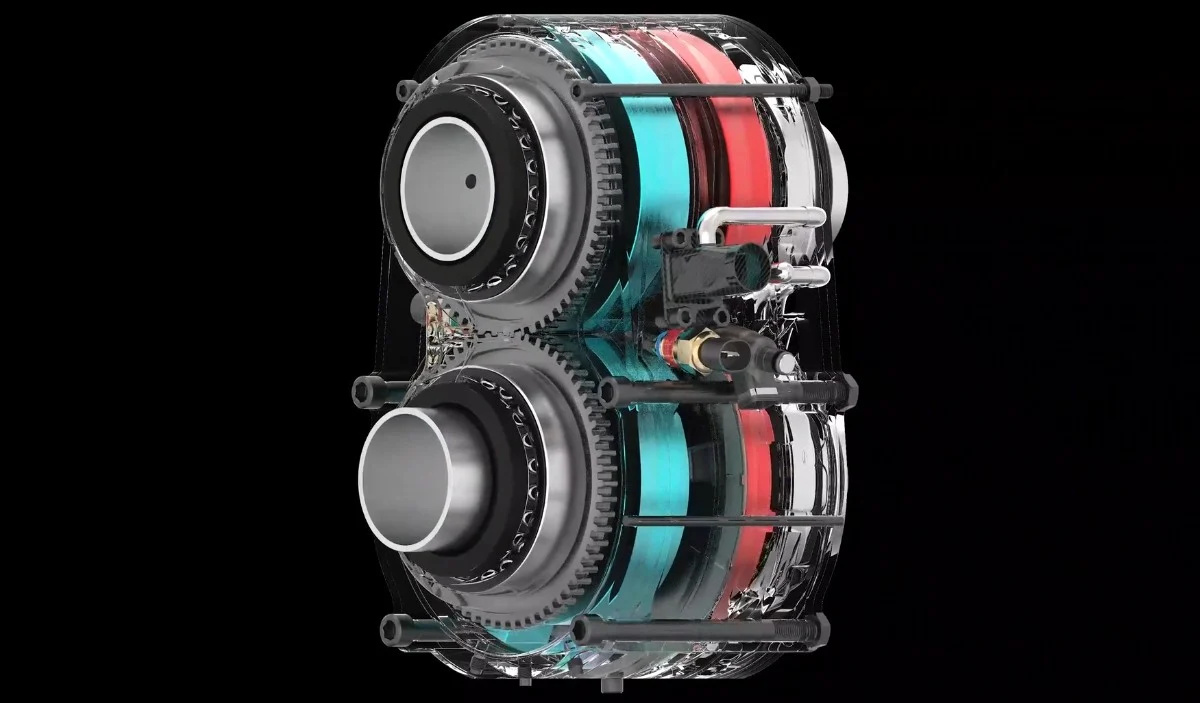
Suitcase-sized hydrogen engine spins at 25,000 rpm, nearly doubling the efficiency of conventional cars and replacing exhaust smoke with water vapor

-
1983 Chevrolet Runs Over 100,000 km Without Gasoline, Powered by Wood Chips, Reaches 125 km/h in Airport Test

-
Workshop Converts Giant Tractor Tire Tricycle into a Three-Wheel Drive Hybrid with 36,000-Watt Electric Motor Capable of Climbing Hills





To ensure that the goal proposed by the team is achieved and to put Team Delft’s name in the Guinness Book of Records, the hydrogen-powered car will participate in the Shell Eco-Marathon, which will take place in June this year in France. The vehicle will compete with cars from teams worldwide. The goal at the event will be to surpass the current record of 2,056 km in just three days, using only 1 kg of hydrogen in the tank.
Although it is a project undertaken by a university and Eco-Runner III is registered for the Eco-Marathon, which is a closed-circuit event, Team Delft assures that the idea is to demonstrate the capabilities of this type of technology and to provide people with better access to efficient and sustainable transport technologies.
How Was the Hydrogen Car Built?
According to the team, while developing the hydrogen-powered car, their main focus was to find a balance between efficiency and robustness. The model needed to be efficient and reliable enough to achieve its ultimate goal, which is to set the world record for the longest distance traveled by a hydrogen-powered urban vehicle on a single tank of fuel.
The Eco-Runner XIII represents the transition that all cars must make, becoming more efficient, whether powered by fossil fuels or not. The Eco XIII pushes the technical limits of this efficiency, making the car smaller, more aerodynamic, and lighter. One example is optimizing the shape of the vehicle to reduce aerodynamic drag and create a load structure that is as light as possible without breaking.
Why Hydrogen?
Hydrogen is currently a key topic when it comes to decarbonizing the energy system.
This fuel, like electricity, is what is called an energy carrier. It is not an energy source, as it occurs naturally on Earth, which means it must be produced first. Hydrogen must be extracted from other molecules, a process that requires energy but results in a highly energy-dense molecule.
As a versatile energy carrier, hydrogen can be used for various purposes, for example, for heat production, fuel, and raw materials. Firstly, due to hydrogen’s high energy density, a lot of energy is released in the form of heat when you burn its molecules. When burned, hydrogen generates no emissions or CO2, producing only water vapor and heat, making this fuel the perfect substitute for natural gas.