






 Portuguese
  Spanish
  3 min of reading
  0 comments


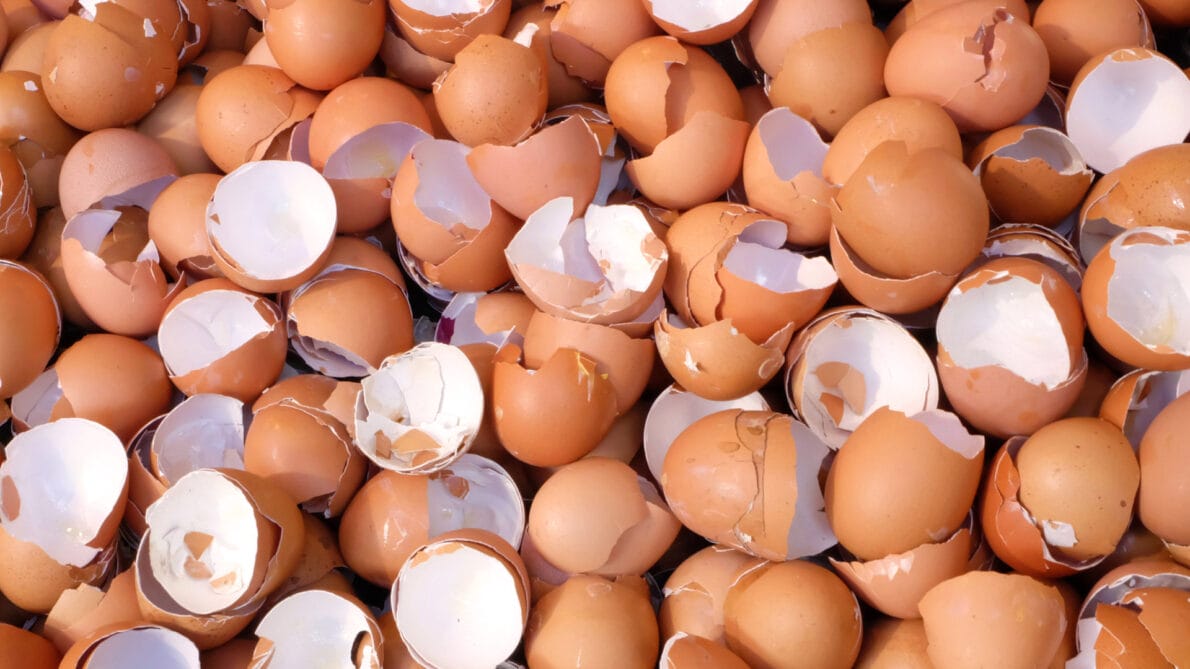
Irish Scientists Team Uses Eggshells to Extract Rare Earth Elements, Essential Materials for Sustainability.
Researchers from Trinity College, University of Dublin, have revealed a groundbreaking method to facilitate the extraction of Rare Earth Elements (REEs) using eggshells. These elements are crucial for producing sustainable technologies, such as hybrid and electric cars. The study highlights the simplicity and efficiency of the process, potentially reducing costs and environmental impacts in obtaining these essential materials. Check out how the extraction of rare earth elements with eggshells works.
Understand How Researchers Are Using Eggshells to Extract Rare Earth Elements
-
Helicopter Drops 180 Tons of Sand and Gravel on Swedish River to Revive Ecosystem Damaged by Decades of Exploitation

-
Brazilian Company Launches Retro Smartphone with 48 MP Camera, T9 Keyboard, and Privacy Features for Social Media-Free Use

-
Self-Taught Chinese Farmer Builds 5-Ton Submarine from Scrap, Launches It in Anhui River
-
Invisible Induction Technology Enables Wireless Power for Blenders, Coffee Makers, and Air Fryers, Reducing Countertop Cables





Despite the name, REEs are not exactly rare, but are usually found in extremely low concentrations and combined with other ores. The process of extraction is very complicated and expensive, in addition to generating a large volume of waste and consuming a lot of energy and water.
This could simply be the precursor to a new, more ecological extraction method, especially compared to the intensive mining processes currently required to extract them from geological layers. In the study using eggshells to extract rare earth elements, chicken egg waste was mixed with a rare earth solution and heated between 25 °C and 205 °C for about three months.
Dublin scientists noted that, at the end of the period, the rare earth elements had spread across the eggshells, extending throughout the calcium carbonate (calcite) and the organic matrix.
The results varied according to the experiment’s temperatures: at 90 °C, neodymium (Nd) formed on the dissolving calcite surface. At 165 °C and 205 °C, the calcite completely dissolved, and at 205 °C, neodymium was replaced by bastnäsite, commonly used in the extraction of rare earth elements for technological applications.
Researchers Comment on the Use of Eggshells to Extract Rare Earth Elements
It is important to mention that the tests were conducted in collaboration with professionals from iCRAG, Science Foundation Ireland, and the School of Natural Sciences at Trinity College Dublin, and the team published their findings in ACS Omega. The article explains that the use of calcium carbonate (calcite) present in eggshells can successfully absorb and separate REEs from water.
The co-author of the study that uses eggshells to extract rare earth elements, Prof. Juan Diego Rodríguez-Blanco, states that by turning these eggshell waste into a valuable resource for recovering rare earth elements, critical environmental concerns associated with traditional extraction methods are addressed, contributing to the development of greener technologies.
According to Diego, throwing away eggshells may not be a good idea, as this study shows their value as potentially ‘green’ for obtaining more REEs that will be sought after with the growing energy transition.
Eggshells Gain New Grounds in the Technology Industry
In addition to this study on the use of eggshells to extract rare earth elements, other researchers are making consistent efforts in search of more efficient and sustainable solutions for energy storage.
Recently, a significant breakthrough was revealed with the discovery that chicken eggshells could play an essential role in developing rechargeable batteries. This innovation promises not only greater safety and sustainability but also a reduction in associated costs, as revealed by recent studies in the field.
Associate Professor at Murdoch University, Manicham Minakshi Sundaram, from the Water, Energy and Waste Center of the Harry Butler Institute, has successfully developed a new mechanism associated with electrode and electrolyte materials, delivering an alternative to the costly and impractical energy storage technologies of the past and present.





Be the first to react!