






 Portuguese
  Spanish
  4 min of reading
  0 comments


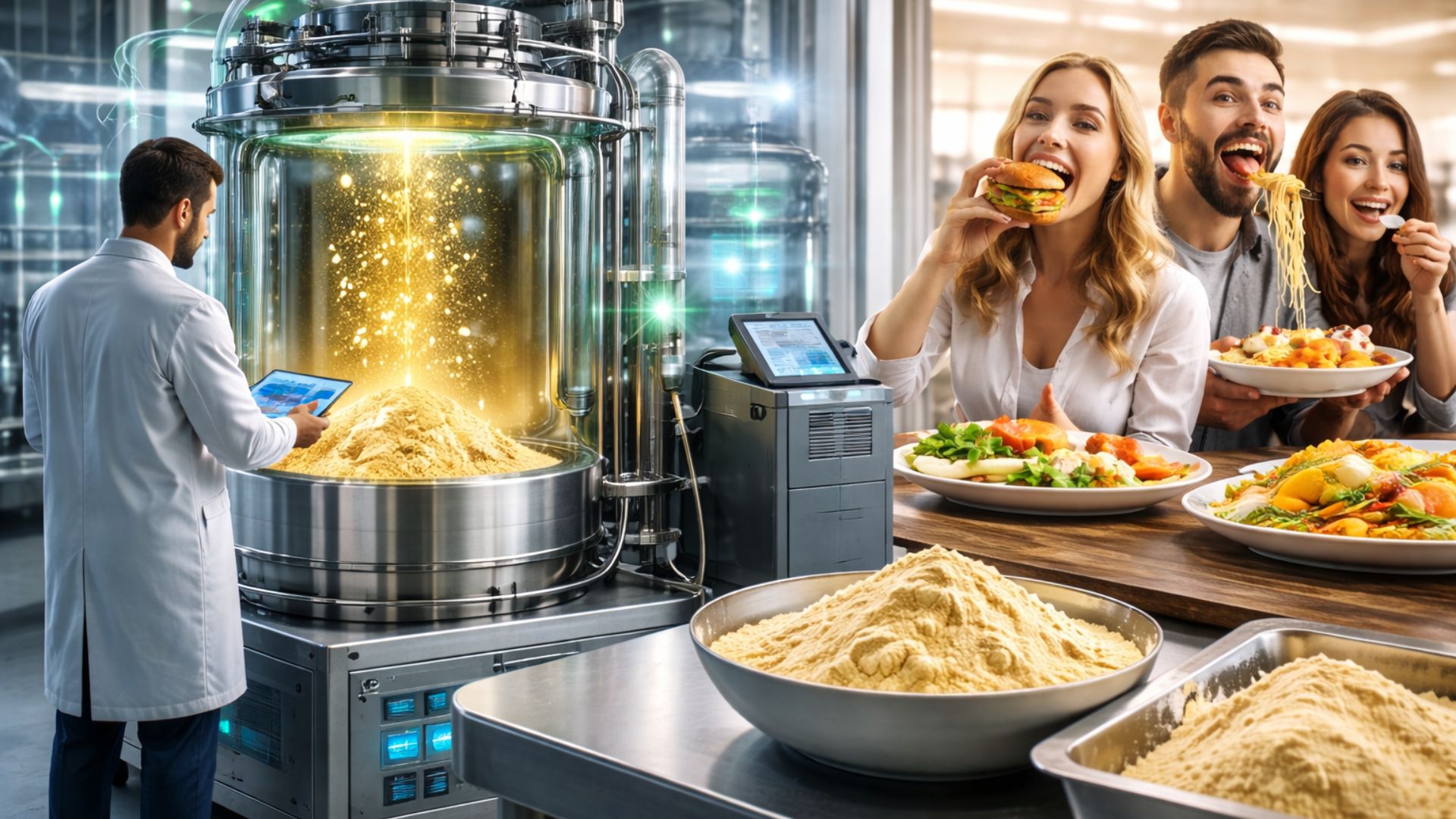
Technology Transforms CO₂ Into Protein With Industrial Production In Finland And Regulatory Approval In Singapore, Marking Progress In Precision Fermentation As An Alternative To Traditional Agriculture And Expanding The Debate On Food Security And Energy Infrastructure.
The Finnish company Solar Foods claims to have scaled up the production of the protein Solein, an ingredient obtained through fermentation in bioreactors and already approved for consumption in Singapore, using carbon dioxide as a carbon source and electricity as a central part of the process.
In statements from the company, the Factory 01 unit in Finland has achieved operational parameters that allow it to run at a design capacity of 160 tons per year of Solein, following the resumption of production at a high pace after a maintenance shutdown during the European summer.
Protein Production In Bioreactors And Precision Fermentation
Instead of relying on soil, climate, and crops, the proposal shifts the start of the production chain to a closed environment, where microorganisms grow under continuously monitored conditions, with control over gases, nutrients, and variables such as temperature and pressure.
-
Helicopter Drops 180 Tons of Sand and Gravel on Swedish River to Revive Ecosystem Damaged by Decades of Exploitation

-
Brazilian Company Launches Retro Smartphone with 48 MP Camera, T9 Keyboard, and Privacy Features for Social Media-Free Use

-
Self-Taught Chinese Farmer Builds 5-Ton Submarine from Scrap, Launches It in Anhui River
-
Invisible Induction Technology Enables Wireless Power for Blenders, Coffee Makers, and Air Fryers, Reducing Countertop Cables





In this setup, the “harvest” does not come from the field, but from the accumulation of microbial biomass, which then undergoes separation, drying, and standardization to become a protein powder intended for use as an ingredient in industrial formulations.
By seeking repeatability, the company approaches practices already established in bioprocesses, where sensors, calibration, and traceability help maintain the final product with consistent characteristics, something crucial for flavor, texture, and nutritional predictability.
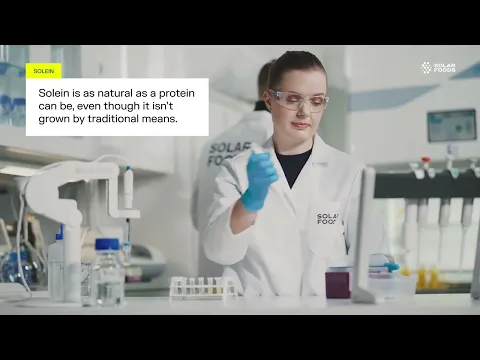

How Protein Production Works From CO₂ And Hydrogen
Although the concept is often summarized as “protein made from air,” Solar Foods itself describes a bioprocess that relies on a specific microorganism and inputs beyond CO₂, in a controlled environment with continuous energy operation.
In public documents, the company reports that the gas fermentation technology uses carbon dioxide and hydrogen as the main raw materials, while electricity is essential to enable the system and sustain the industrial operation of the equipment.
This helps explain why the factory does not operate “just with air”: in addition to water and solutions with salts and nutrients, the process needs to maintain flows of gases and liquids with stability, as small variations can reduce productivity and increase the risk of contamination.
Still within this logic, the goal of the bioreactor is not to produce fermented beverages or traditional foods, but to generate biomass rich in protein and then transform it into an ingredient that industry can apply in products with a consistent standard.
Industrial Scale: Productivity Goals And Annual Capacity
The company reported that Factory 01 achieved a productivity of 1 g/l/h and an energy efficiency indicator published as O2/CO2 of 2.7, parameters presented as sufficient to sustain operation at an annual capacity of 160 tons.
According to the same statement, the factory started operations in April 2024 and, before the maintenance shutdown, maintained continuous production for eight months, indicating a transition from the demonstration stage to a more stable industrial routine.

Solar Foods also compared the daily volume produced at full capacity to what would be obtained from the milk protein of a farm with 300 cows, in an attempt to convey scale to the public and reinforce the idea of production independent of climate and land.
Even so, the company’s own discourse shows that 160 tons is not a final point, as the declared plan is to increase the design capacity of Factory 01 to 230 tons per year by 2026, with gains related to productivity and efficiency.
Regulatory Approval In Singapore And Market Entry
Beyond technical performance, a new ingredient only enters the food chain when it passes regulatory scrutiny, and Solar Foods claims to have obtained its first “novel food” authorization on September 29, 2022, granted by the local authority.
This type of decision typically relies on dossiers with information about composition, process, and quality controls, creating a foundation for manufacturers to use the ingredient in products intended for consumers, within specific rules of the country.
With the authorization in hand, the next step depends less on the laboratory and more on industry and market, as it is necessary to ensure consistent volumes, logistics, and standardization of the ingredient, as well as application tests in real recipes.

Industrial Infrastructure And The Future Of Food Security
In the traditional model, protein production is distributed according to regions with arable land and favorable climatic conditions, while industrial fermentation concentrates manufacturing in smaller spaces, with planning similar to that of a production line.
This contrast fuels public interest because it positions CO₂, a gas associated with emissions, as part of a value chain that ends in a food ingredient, even though the outcome depends on energy and a well-calibrated industrial chain.
Inside the factory, the most sensitive stage is to maintain microbial growth at the right point, with strict cleaning and sterilization protocols, along with constant monitoring of parameters, since any deviation can alter performance and require quick correction.
By publicizing achieved goals and a path for expansion, Solar Foods tries to position Solein as biotechnology applied to food security and production predictability, but widespread adoption still depends on scale, cost, and acceptance in everyday products.
If the industry can already transform CO₂ into protein in bioreactors with process control, which other basic food ingredients might shift from the field to fermentation factories in the coming years?




Be the first to react!