Portuguese
  Spanish


Cashew agroindustry residue has entered Brazilian research on paving to improve asphalt adhesion and reduce damage caused by moisture, bringing together road engineering, materials chemistry, and the use of regional by-products in more sustainable road solutions.
A by-product of the cashew agroindustry has been studied in Brazil as an alternative to improve the performance of asphalt mixtures against the action of water, one of the factors associated with the deterioration of flexible pavements.
Known as Cashew Nut Shell Liquid, or CNSL, the material was analyzed in research aimed at modifying binders used in asphalt mixtures.
The research does not indicate the complete replacement of conventional asphalt with cashew residues but evaluates the use of CNSL as an additive to modify the asphalt binder.
-
Scientists Convert Food Waste into Aviation Fuel, Successfully Test 50% Blend with Conventional Kerosene to Cut Emissions and Promote Sustainable Flights

-
OnePlus N6 Smartphone to Launch in India with 8,000mAh Battery and 45W SuperVOOC Charging, Lasting Up to Three Days
-
Scientists Plan to Release Air Bubbles Underwater to Protect Antarctica’s “Doomsday Glacier” from Melting

-
Chinese R6000 Drone Combines Airplane and Helicopter Features, Carries Up to 12 People for Multiple Missions
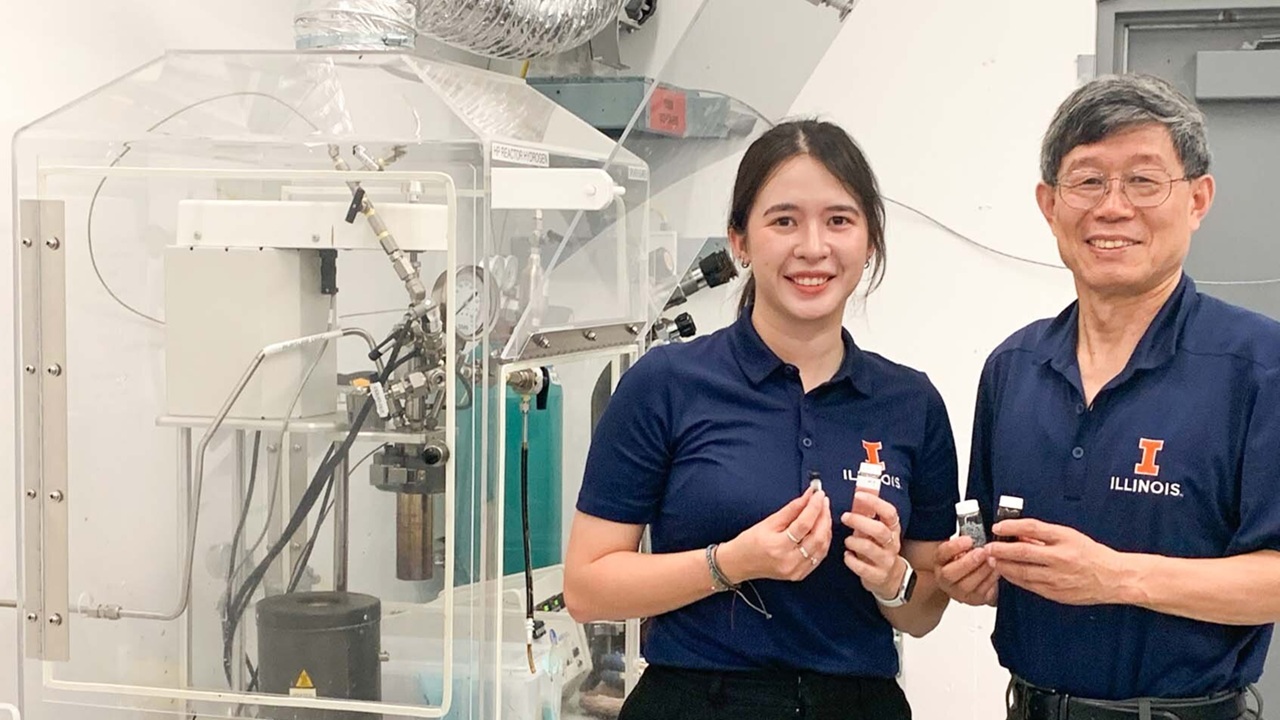



In the study, the objective was to increase the adhesion between the Petroleum Asphalt Cement, the PAC, and the mineral aggregates used in the coating.
Developed at the Federal University of Ceará, the investigation by researcher Edeilto de Almeida Ribeiro analyzed the effect of modifying the asphalt binder with CNSL on moisture damage resistance in asphalt mixtures.
The dissertation was presented in 2011 and treats moisture damage as a factor related to the performance and durability of flexible pavements.
Cashew nut shell liquid in asphalt
Extracted from the cashew nut shell during the industrial processing of the product, CNSL is linked to production chains present in the Brazilian Northeast.
In the field of paving, the liquid began to be investigated as a raw material with chemical properties capable of altering characteristics of the asphalt binder.
In traditional asphalt mixtures, pavement performance depends on the interaction between the petroleum-derived binder and the mineral aggregates.
When water interferes with this bond, the asphalt film can lose adhesion, which favors defects associated with the reduced lifespan of the wearing course.
This process is known as moisture damage and appears in technical studies as one of the occurrences that affect the durability of asphalt mixtures.
Among the effects observed in the pavement literature are loss of cohesion, binder detachment, cracks, and premature wear in areas subjected to rain, thermal variation, and traffic.
For this reason, the adhesion between binder and aggregate is treated in research in the field as one of the relevant parameters to evaluate the behavior of the coating.
UFC Research Targets Water Resistance in Pavement
In the proposal evaluated at UFC, the physicochemical properties of LCC were considered to verify their influence on the bond between the CAP and the aggregates.
The additive is incorporated into the binder, and not applied as a complete substitute for the asphalt used on highways, according to the approach presented in the research.
This distinction delineates the scope of the technology and avoids associating the study with a direct replacement of conventional asphalt with cashew nut shell residues.
Instead, the investigation observes small modifications in the material that coats the roads to evaluate effects on problems related to moisture and pavement aging.
In the transportation sector, binder modifiers are studied to alter characteristics such as rheological behavior, mechanical resistance, adhesiveness, and aging response.
In this line of investigation, LCC appears as an alternative linked to a Brazilian agro-industrial chain, with renewable origin and regional availability dependent on cashew production.
Agro-Industrial Residue with Application in Infrastructure
The interest in cashew nut shell liquid stems from the possibility of technical use of a material originally associated with agro-industrial processing.
In the laboratory, this by-product is evaluated as a component capable of influencing the performance of mixtures subjected to the action of water, load, and temperature.
The connection between agro-industry and paving is relevant for a country with an extensive road network and a significant presence of regional agricultural chains.
By using a cashew by-product, the research brings the investigation on pavements closer to Brazilian production conditions, without relying solely on inputs developed in other industrial contexts.
Even so, research results do not imply immediate adoption of LCC in public works or large-scale application on highways.
Between the laboratory stage and frequent use in paving, cost, standardization, material availability, compatibility with different aggregates, and performance under real traffic must be evaluated.
Sustainability in Highways Without Exaggerated Promise
The use of LCC in asphalt binders integrates the discussion on waste utilization and the development of alternative materials for road works.
Not all innovation in paving involves sensors, solar panels, or electronic systems; in some research, the change occurs in the chemical composition of the material used in the coating.
When an agro-industrial residue receives a higher value-added application, the research expands the possibilities of using renewable raw materials and by-products from regional chains.
In the case of cashew, the relationship with the Brazilian Northeast and the processing of the nut helps explain the academic interest in LCC in studies of materials for paving.
The central point of the research, however, remains technical and depends on performance measurements under different service conditions.
The feasibility of LCC requires consistent results in varied formulations, temperature ranges, types of aggregates, and traffic volumes before any broader application.
Without this stage, the material should be described as a study object in asphalt binders, not as a ready solution for the problems of Brazilian highways.
The research shows that the durability of asphalt can also be investigated with materials available in national production chains, provided that performance is proven by technical criteria.
In a pavement, changes in the binder can influence resistance to water, wear, and premature degradation, according to parameters evaluated in studies of asphalt mixtures.