






 Portuguese
  Spanish
  5 min of reading
  0 comments


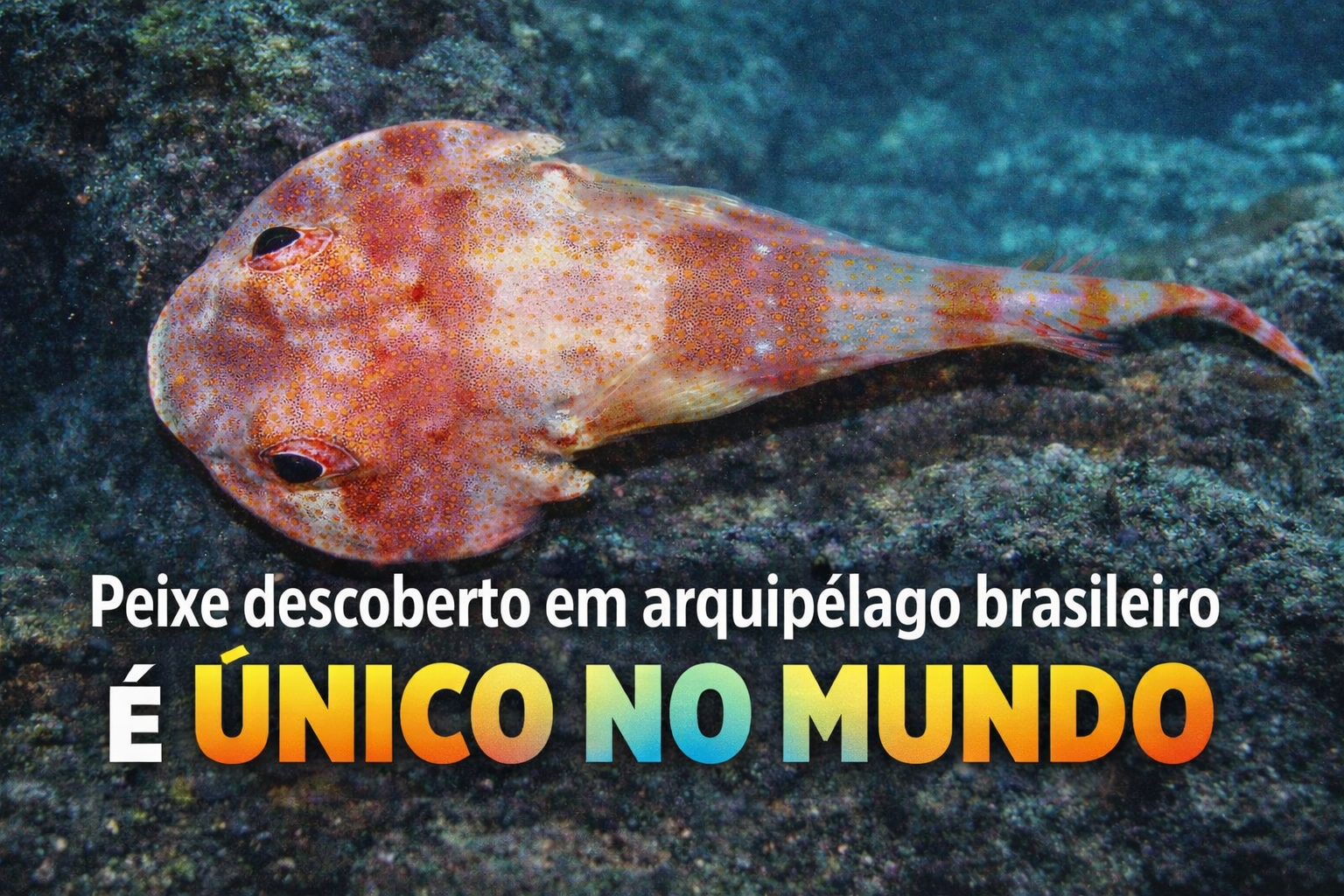
Trindade Island Continues Revealing Secrets: New Species of Rare Fish Found in the Most Distant Archipelago from the Brazilian Coast and Only Exists There. See What Makes This Species Unique in the World.
In the middle of the Atlantic, far from the hustle of the Brazilian coast, a small fish caught the attention of science and put Trindade Island back on the map of great discoveries. In August 2023, Brazilian researchers officially confirmed the existence of a species that lives only there, in one of the most isolated stretches of our oceanic archipelago.
Colorful, rare, and full of curious adaptations, Acyrtus simon has become a symbol of the richness — and also the fragility — of this true natural laboratory under the open sky.
Where Is Trindade Island and Why Is It So Special?
Trindade Island is located about 1,140 kilometers from Vitória, Espírito Santo, being considered the most distant almost uninhabited territory from the coast of Brazil.
-
New Philips Air Fryer Series 4000 arrives with only 24 cm in width, vertical dual basket, and technology that synchronizes the preparation of two different dishes to be ready at exactly the same time.

-
Owner of a 980 m² house in Paraná installs 48 solar panels for R$ 70,000 and sees electricity bill drop from R$ 1,200 to around R$ 200 per month.

-
The largest supermarket chain in the country, Mercadona, opens a semi-automated warehouse worth R$ 320 million with 70 robots and 32,000 m², where products go to employees to speed up to 5,000 orders per day in the new Vallecas hive.

-
NASA reveals the global network that monitors over 41,000 near-Earth asteroids, shares data among scientists worldwide, and has already proven that humanity can deflect a space rock before a collision.



Together with the Martin Vaz Archipelago, it forms an oceanic complex of volcanic origin, with access controlled by the Brazilian Navy.
This extreme isolation makes all the difference. According to ICMBio, isolated oceanic areas favor the emergence of endemic species, meaning those that do not exist anywhere else on the planet. This is exactly the case with Acyrtus simon.
The Discovery of Acyrtus simon in the Isolated Island of Brazil
The new species was described by researchers from the Federal University of Espírito Santo (Ufes) and the University of São Paulo (USP), with support from the Institute of Biodiversity and Sustainability of UFRJ, the California Academy of Sciences, and the Navy itself.
The scientific article describing Acyrtus simon was published at the end of 2022, after years of detailed analysis, and the discovery was publicly announced by Ufes in July 2023.
It is a suckerfish, with pinkish tones, that lives glued to the rocks to avoid being dragged by the strong marine currents in the region. This characteristic caught the researchers’ attention right from the first underwater observations.
More technical details about the genus can be found in the international database FishBase, a world reference in ichthyology.
A Discovery That Took Decades: The First Specimen Was Seen Back in 1995
One of the main names behind the discovery is the Capixaba biologist João Luiz Rosetti Gasparini, a specialist in reef fish and a researcher at Ufes. He shared that the first specimen was seen back in 1995, but the confirmation of the new species took many years.
“In 1995, I observed a specimen. I have been to Trindade eight times. I think, adding all the trips, I stayed almost 100 days on the island conducting autonomous scientific dives with tanks. But only later did we manage to get more specimens and conduct the comparisons and investigations that made it possible to describe the species.”
During this time, the collected specimens were preserved in the scientific collection of Ufes, in formaldehyde and alcohol, while new samples were being sought.
“It stayed in the Ufes collection, in formaldehyde and alcohol. We consult it, take it out of the jar, and look under the microscope. And then, an important trip I made in 2009, along with Hudson Pinheiro from USP, we managed to collect the material that was used in the description and take the underwater photos.”
What Makes This Fish So Different and Unique in the World
The Acyrtus simon has an impressive adaptation: the modified pelvic fin works like a true suction cup.
“It has a morphological adaptation in the belly, where its pelvic fin is modified as if it were a suction cup, hence the name suckerfish. This adaptation is to live in environments with more dynamic water. It attaches to the substrate, sticks, and when there’s current, it does not affect it. It stays there still,” explained the specialist.
This strategy allows the fish to survive in an environment where the force of the water is constant and intense, something common in Trindade Island.
An Archipelago That Still Holds Many Secrets
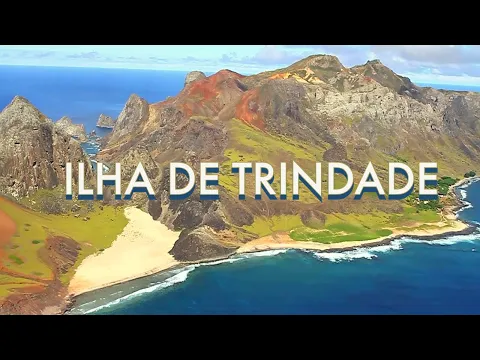

This was the eighth new species described by João Luiz Gasparini in the region. According to him, the Trindade and Martin Vaz archipelago is still far from being fully known.
“The oceanic insular complex is an Eden for research. Home to many endemic species, it may harbor not only fish but also crustaceans, mollusks, sponges, algae… An immense array of marine and even terrestrial beings on the cliffs of the island and in its giant fern forest.”
Recent research from USP and UFRJ reinforces that isolated environments like this are essential to understanding marine evolution. Studies published in databases such as SciELO and CAPES Periodicals highlight the scientific value of these areas.
A Paradise Under Threat: Plastic Turning into Rock
Despite all this wealth, Trindade Island also faces serious problems. In early 2023, researchers identified the formation of rocks composed of plastic, primarily remnants of fishing lines carried by ocean currents.
The study, conducted by Fernanda Avelar, a PhD student in Geology at the Federal University of Paraná (UFPR), was the first of its kind in Brazil. According to the researcher, the phenomenon serves as a serious warning.
She emphasizes that the impact can affect not only marine ecosystems but also fundamental species of the island, such as the green turtle, the only one that breeds on Brazilian oceanic islands, as well as various seabirds.
Importance of Protecting Remote Areas of the Brazilian Coast
The discovery of Acyrtus simon reinforces the importance of protecting remote areas of our coast and investing in science.
Each new species described is proof that we still know little about the oceans — and that losing these environments means losing knowledge before we even discover it.
And what do you think about this discovery? Trindade Island continues to reveal surprises and shows why science needs to go further and further. Leave your comment, share this article, and help spread the importance of preserving our oceans and Brazilian biodiversity.





-

-

-

-

-

-

22 people reacted to this.