






 Portuguese
  Spanish


Oil Rigs in the USA Show Growth and Reflect Historical, Economic, and Energy Impacts on the Global Scenario.
The oil industry has always functioned as an essential barometer of the global economy. Therefore, among the most monitored indicators, the number of oil rigs holds a prominent place. These structures not only represent the productive capacity of companies but also reveal the level of investor confidence in the energy sector.
According to the Baker Hughes report, the United States reached 418 rigs in operation. This number means two units more than the previous week and, at the same time, 70 less than in the same period last year.
Although gas rigs have remained stable at 118 units, this figure shows an increase of 22 compared to the previous year. Thus, combining oil and gas, the USA operates 542 rigs, three more than the previous week.
-
Petrobras to Double Natural Gas Supply in Northeastern Brazil with New Investment

-
Petrobras Approves $1.2 Billion Refinery in Brazil to Produce Aviation Fuel and Diesel from Plants
-
Petrobras Secures $2.2 Billion Contract to Build and Operate Four Support Vessels for Brazil’s Offshore Oil Fields
-
Oil production grows in Rio, but reserve replacement raises a warning sign


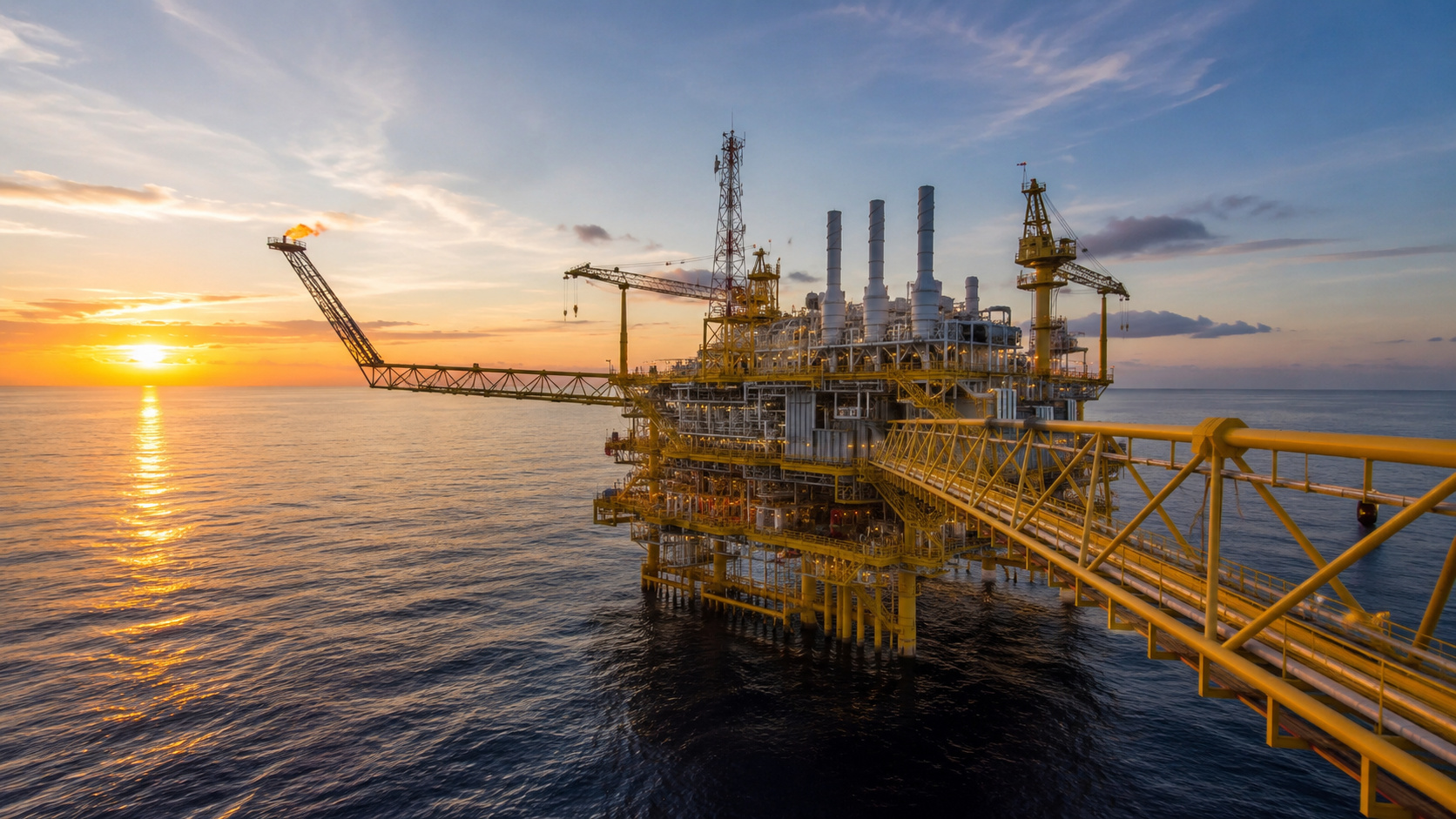
However, this movement still reflects levels lower than those in 2024, although it indicates a slight recovery.
The Historical Role of Oil Rigs
Throughout history, oil rigs have played a decisive role. They have marked significant transformations in the energy matrix and in the global economy itself.
Since the 19th century, when the first land drills occurred, until the arrival of giant offshore rigs in the 20th century, each stage represented significant progress.
In the United States, for example, the growth of production in Texas and the Gulf of Mexico boosted the economy and consolidated the country’s global leadership in the energy market.
Over time, technological development increased efficiency, reduced costs, and allowed for the exploration of more complex reserves. Thus, rigs have become symbols of innovation and resilience.
However, the relationship between these structures and oil prices has never been simple. In times of crisis, such as during the 2020 pandemic, thousands of units were quickly deactivated.
Subsequently, when prices began to rise again, companies returned to investments, demonstrating the direct link between rigs and global supply balance.
Canada and the Expansion of the Energy Sector
In addition to the movement in the United States, Canada also recorded growth in the number of rigs. Currently, the country totals 189 units, three more than the previous week. Among these, two correspond to the oil sector and one to the gas sector.
However, compared to the same period last year, Canada still shows a decrease of 16 rigs.
Historically, the country has established itself as a heavy oil supplier, particularly in the Alberta region. Thus, fluctuations in the rig count reveal not only trends in the local market but also the impacts of international pressures.
While facing the demands of the energy transition and decarbonization targets, Canada seeks to maintain competitiveness against rapidly growing renewable sources.
Therefore, as in the USA, the expansion of the number of Canadian rigs reflects the effort to balance production with sustainability.
This challenge demonstrates that, even in a constantly transforming market, oil exploration remains a strategic pillar for energy security.
Impacts on Oil Prices
The increase in the number of rigs sends signals of greater future supply. Thus, this movement tends to influence the prices of Brent and WTI oil, which serve as global benchmarks.
However, the effects on prices do not manifest immediately. Therefore, companies like ExxonMobil and Chevron adopt a cautious stance and wait to confirm if the recovery is sustainable before increasing investments.
If we look to the past, we see that the number of rigs has always served as a decisive indicator for prices. In the 1980s, for example, high production led to a sharp international decline.
In 2008, at the height of the financial crisis, the reduction of rigs coincided with the collapse of global demand. Therefore, the weekly count continues to be an essential tool for investors and governments.
Thus, each fluctuation recorded by Baker Hughes influences not only future prices but also production and investment strategies.
The Balance Between Supply and Demand
Currently, the energy market is paying special attention to the balance between supply and demand. The recovery of rigs in the United States and Canada may contribute to greater stability, but external factors continue to weigh in.
Among them, the geopolitical tensions in the Middle East, the decisions of OPEC+, and the evolution of consumption in China stand out.
Moreover, the energy transition is advancing rapidly. The growth of solar, wind, and other renewable energy sources already reduces dependence on oil in various regions.
However, this does not mean that rigs have lost importance. On the contrary, they remain fundamental, although now they share space with new energy solutions.
Therefore, the future of the sector depends on how countries can balance traditional exploration and sustainable innovation. This balance may determine not only oil prices but also the pace of the global economy in the coming decades.
Perspectives for the Future of Oil Rigs
Although the transformation of the energy matrix is advancing, rigs are still expected to maintain relevance for several decades. After all, offshore technological development and practices of exploration in ultra-deep waters offer longevity to the model.
At the same time, companies need to align their investments with the commitments to reduce carbon emissions.
In the United States, the number of 418 rigs demonstrates resilience and adaptation in the face of complex scenarios.
In Canada, even with fluctuations, the quest for competitiveness remains evident. Both countries recognize that rigs will continue to play a decisive role in energy security.
Thus, oil rigs cannot be seen merely as metal structures installed in land or offshore fields. They symbolize the connection between the past, present, and future of global energy.
With each new count released, the market finds clues to understand the paths of prices, investments, and power relations in the energy sector.
Therefore, despite the growth of renewable sources and changes in the global consumption profile, oil rigs remain an essential part of the economic and energy machinery that moves the world.


Fantastic beat I would like to apprentice while you amend your web site how could i subscribe for a blog site The account helped me a acceptable deal I had been a little bit acquainted of this your broadcast offered bright clear concept