





 Portuguese
  English
  Spanish
  5 min of reading
  1 comment


With Almost 200 Strategic Bombers and Hypersonic Missiles, China Surpasses the U.S. and Russia and Now Holds the World’s Largest Air Attack Fleet.
The Chinese Air Force, a strategic ally of Brazil within the BRICS bloc, has officially surpassed the United States and Russia in the total number of aircraft classified as strategic and tactical bombers. With almost 200 units in active operation, the Asian power now possesses the largest bomber fleet in the world, supported by an ambitious military modernization program and hypersonic technology development. The Chinese advancement is not only quantitative but also strategic: its air force has evolved from a defensive structure to one of the most complex and expansive on the planet, designed to operate beyond continental borders and in multiple theaters of war.
This impressive leap marks China’s global repositioning in the race for aerial dominance. The Chinese bomber fleet primarily consists of Xian H-6K, H-6N, and H-6J, modernized versions of the old Soviet Tu-16 model, adapted to carry long-range cruise missiles and nuclear armaments.
These aircraft can fly up to 8,500 kilometers with aerial refueling and carry over 12 tons of armaments, including the powerful CJ-10A and CJ-20 missiles, capable of striking strategic targets thousands of kilometers away.
-
The Defense Minister stated that Brazil “is without defense,” admitted concerning military vulnerabilities, and observed tests with drones and new technologies that the Army wants to use against threats at the borders.

-
The Sad End of the Brazilian Marine Corps’ Combat Vehicles: SK-105 Fleet Has Few Vehicles Running, Cannibalized Parts, and Scrap Taken to Auction

-
The Brazilian Army has just unveiled a silent arsenal of drones armed with rifles, grenade launchers, and nuclear sensors capable of operating nearly 300 km away, and this is just a preview of what will be showcased in Rio in the coming months with 33 companies.

-
Brazilian Army presents Force 40 and unveils the strategic plan that aims to revolutionize national defense with artificial intelligence, drones, multidomain warfare, and advanced military power by 2040.


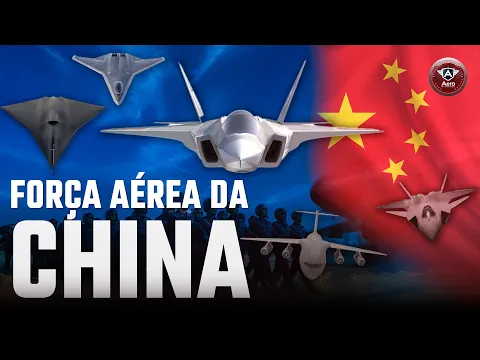
From H-6 to H-20: The Transformation of Chinese Strategic Aviation
What began as a force limited to medium-range bombers has transformed into a robust military engineering program. The major turning point occurred starting in the 2010s when China initiated a series of reforms in its aerospace industry, unifying civilian and military companies under the command of the Aviation Industry Corporation of China (AVIC).
The goal: to develop an air fleet that combines technological autonomy, offensive power, and deterrent nuclear capability.

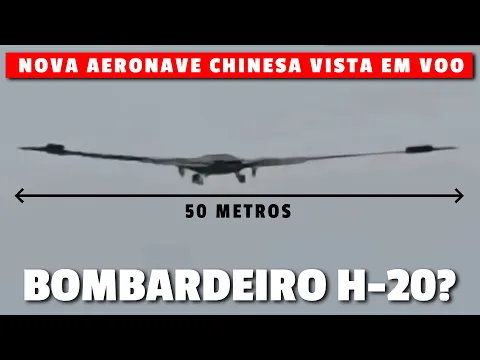
The pinnacle of this revolution is the Xian H-20 project, China’s first stealth bomber, currently in advanced testing phases.
Although the government maintains secrecy about its specifications, analysts from Janes Defence and The War Zone estimate that the H-20 will be an intercontinental-range bomber, with a range exceeding 10,000 kilometers and the capacity to transport nuclear warheads.
Its “flying wing” configuration, similar to the B-2 Spirit of the U.S., showcases China’s ambition to technologically match Western powers. Once operational, the H-20 will place China in the exclusive group of countries with long-range stealth bombers, something that only the United States possesses today.
The Largest Bomber Fleet in the World in Numbers and Capacity
According to reports from the International Institute for Strategic Studies (IISS) and Global Firepower 2025, China maintains over 210 strategic and tactical bombing aircraft, compared to about 140 in the United States and 120 in Russia.
In addition to quantity, the country has been expanding the infrastructure that supports its operations: underground air bases, hangars with electromagnetic protection, quantum communication networks, and centers for command integrated by artificialintelligence.

The Chinese Air Force has also begun to incorporate automated aerial refueling systems, allowing its bombers to reach any point in the Indo-Pacific without relying on intermediate bases.
In 2024, the government confirmed the delivery of new Y-20U aerial refueling tankers, significantly increasing the fleet’s operational range. With this, China has transitioned from a regional power to having a real capacity for global projection, capable of conducting strategic attack missions on any continent.
Hypersonic Technology and the Leap Over the U.S. and Russia
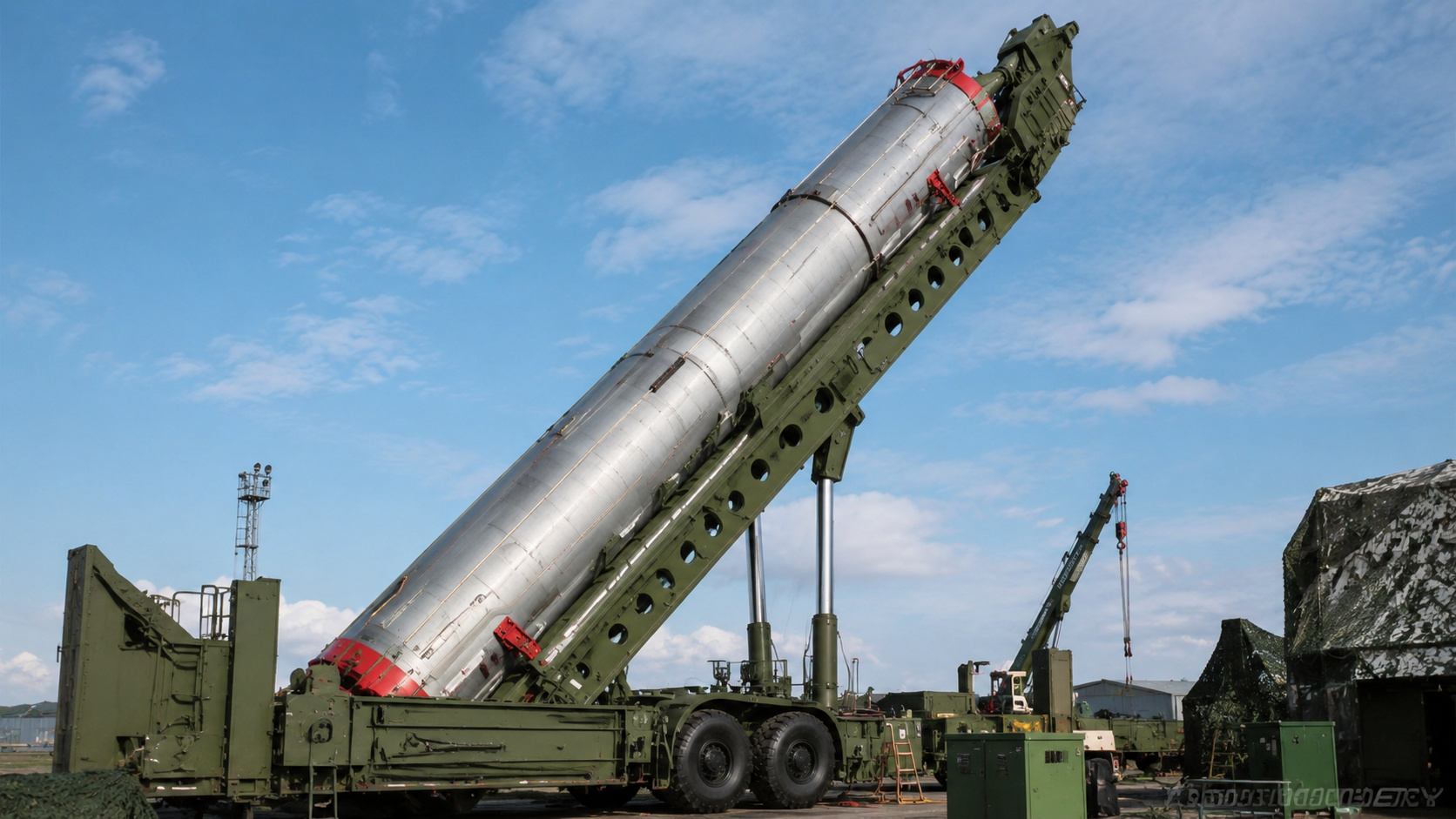
Another crucial point for Chinese supremacy is the massive investment in hypersonic weaponry. The integration of the DF-17 and DF-21D missiles, which can reach speeds exceeding Mach 10, has transformed its bombers into attack platforms virtually impossible to intercept.
These missiles, combined with the BeiDou navigation system, ensure surgical precision on targets up to 2,500 kilometers away, consolidating an advantage that worries Pentagon strategists.
While the United States is still awaiting the entry into service of the new B-21 Raider and Russia faces industrial limitations due to sanctions, China has managed to balance quantity and technological modernization. Its fleet is steadily growing, and new production and testing facilities are being built in Xi’an, Chengdu, and Hubei, expanding industrial capacity and reducing the time between design and operational flight.
An Aerial Power Shaped by the BRICS Strategy
More than a demonstration of strength, Chinese air dominance also has political implications. Within the BRICS, China plays the role of the leading military and technological power, providing technical and strategic support to allied countries, including Brazil.
Cooperation between the air forces of both countries has grown in recent years, with technology exchange in radars, encrypted communication, and precise aerial mapping.
The advancement of the bomber fleet also reinforces Beijing’s geopolitical influence. Starting in 2023, China began conducting joint patrols with Russia over the Sea of Japan and the Western Pacific, sending formations of H-6 bombers accompanied by J-16 and Su-35 fighters. These operations symbolize the new global military balance: the West is no longer the only entity capable of projecting intercontinental air power.
The New Symbol of Asian Military Supremacy
China’s rise to the top of global air power is the result of a long-term plan initiated almost 30 years ago. The combination of mass industrial production, technological innovation, and strategic planning has transformed the People’s Liberation Army Air Force into one of the most modern and influential forces in the world.
Today, with the largest bomber fleet on the planet, China redefines the parameters of military aviation. Its aircraft are not merely instruments of war but also symbols of deterrence, prestige, and technological sovereignty.
The country that once relied on foreign licenses is now developing its own engines, radars, and weapon systems, achieving a level of independence that few nations have attained.
On the horizon, the awaited H-20 promises to consolidate this hegemony, positioning China as the new global reference in air power. With it, the country will be able to conduct precise strikes at any point on the planet without being detected, completing the cycle initiated with the H-6 and sealing its position as the new empire of the skies.






I just wanted to drop by and say how much I appreciate your blog. Your writing style is both engaging and informative, making it a pleasure to read. Looking forward to your future posts!