






 Portuguese
  Spanish
  2 min of reading


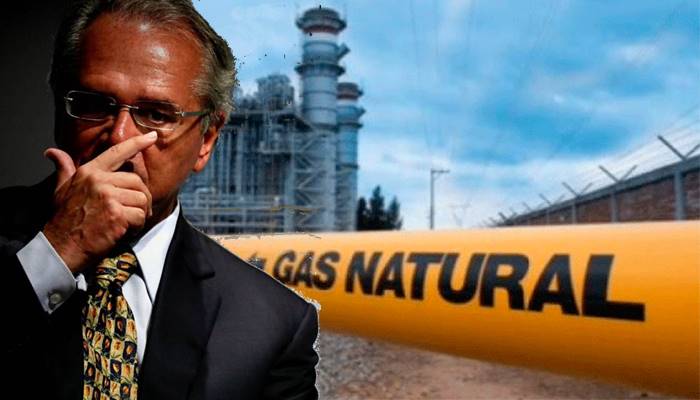
Brazil’s President Jair Bolsonaro Government Will Resume the Regulatory Reform Process That Was Interrupted This Year, and Gas Prices Could Drop by Up to 50%, Says Minister
The Brazilian government intends to relaunch a regulatory reform for the country’s natural gas sector before the end of the second quarter of the year. The natural gas sector in Brazil Is Viewed as Underdeveloped and Over-Regulated, and the reforms are considered vital for the country to explore its commercial resources’ full potential. Operators complain that the abundant natural gas associated with offshore pre-salt fields can sometimes act as an impediment to field development in the absence of well-regulated reforms.
The previous government under President Michel Temer held extensive consultations before the regulatory reform program called “Gas for Growth,” but the political agenda was shaken by domestic political issues, including corruption allegations against Temer that date back to before he took office.
-
A Brazilian city decided to purchase a piece of the Atlantic Forest with more than 153,000 square meters, and owners of preserved areas will be able to submit proposals to transform the forest into a conservation unit.

-
Brazilian siblings aged 11 and 7 read 240 books in just one year and caught attention on social media: while many children spend hours on screens, they turned their family’s routine into an example of reading, discipline, and curiosity.
-
The legendary oak that, according to the story, hid Robin Hood from the Sheriff of Nottingham, died at the impressive age of 1,200 years in England, and the first chilling sign of its end was that no leaves sprouted on the tree this spring.

-
While the world looks at forests, the UN warns that the Earth is also threatened by the silent degradation of natural grasslands and savannas, ecosystems that cover half of the planet, support billions of people, and can exacerbate water, food, and climate crises.


The new government, led by President Jair Bolsonaro, has made few changes to the pro-investment policies for the oil sector that were implemented by Temer.
The Minister of Mines and Energy, Bento Albuquerque, confirmed on Thursday that reforms to the natural gas system will also continue, although the name will change to “The New Gas Market.”
The reform will be developed and implemented in coordination with the Ministry of Energy and will be led by the Minister of Economy, Paulo Guedes, who advocated measures to stimulate the entry of cheap and accessible gas into the domestic market.
Albuquerque did not confirm reports that the federal government intends to use pre-salt revenues to subsidize the construction of natural gas pipelines.
He was also more cautious than Guedes, who stated that the reforms could reduce gas prices by 50%.
“I don’t know if it will be a 50% reduction because it’s very difficult to quantify this, but the goal is if the price of electricity generated by natural gas is competitive,” said the Minister of Energy.
Why Is Brazil’s Natural Gas So Expensive?
Marcelo Gauto, Specialist in Oil, Gas, and Energy, states that the basic reasons are: 35% of the gas is imported and our gas production is predominantly offshore, with high logistics costs. In 2018, distributors purchased gas from Petrobras at prices ranging between US$ 6.0 and US$ 8.0 per MMbtu FOB and resold it between US$ 10.7 and US$ 19.0 per MMbtu to the end consumer. The break of Petrobras’ monopoly on gas infrastructure, which many experts point to as a solution to lower prices, is just the tip of the iceberg.





Be the first to react!