






 Portuguese
  Spanish
  3 min of reading
  0 comments


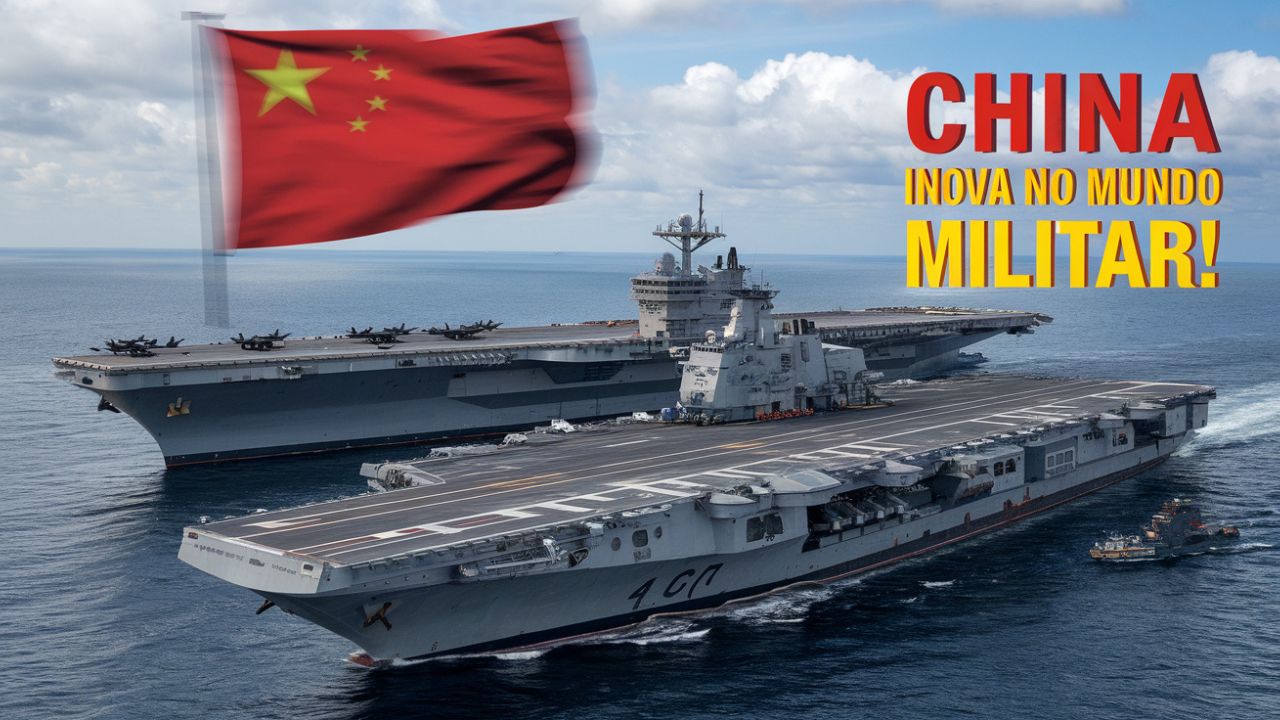
With 40,000 Tons, Sichuan Combines Cutting-Edge Technology, Aircraft Transport, and Troop Disembarkation Capability, Consolidating China’s Military Development as an Unmatched Global Force.
In recent years, China’s military development has surprised the world with advancements that challenge traditional powers. Among them, the launch of Sichuan, the largest amphibious assault ship in the world, is an impressive milestone. With its construction completed in record time, the ship reflects the ambition of the Asian giant to solidify its position as a global military power.
But what makes Sichuan so special? And what are the implications of this advancement on the global balance of power?
Sichuan: A Milestone in China’s Naval History
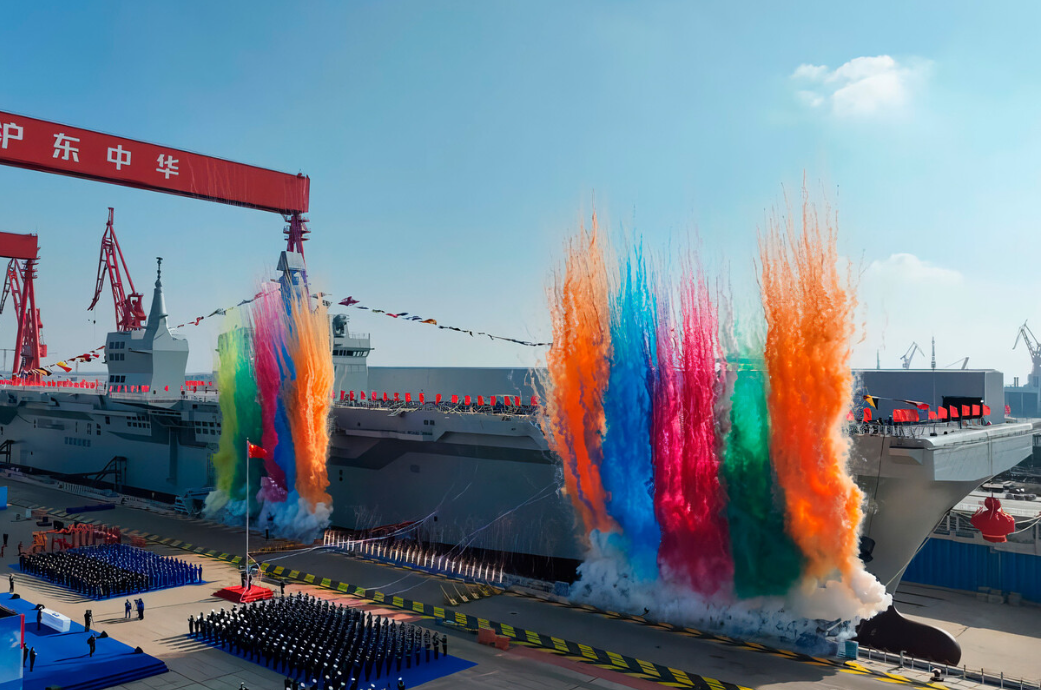
Sichuan boasts an impressive 40,000 tons of displacement when fully loaded; it combines features of aircraft carriers and amphibious assault ships. Its complete cockpit and innovative electromagnetic catapult place the ship on an advanced technological level, allowing the launch of larger and heavier aircraft, something previously associated with American vessels like the SS Gerald R. Ford.
-
Without a mansion, without high investment, and without a traditional classroom, a teacher living in a 22 m² house taught students to build a 9 m² studio apartment with the equivalent of R$10,000.

-
Without her own home and pressured by rent, a 25-year-old bought a small 15-meter boat, gradually renovated the interior by herself, transformed the interior with paint, new flooring, a larger bathroom, and started living on the canals, paying much less per month.
-
Long before sustainable construction became a trend, China built earthen fortresses with multiple floors, a central courtyard, and the capacity to house up to 800 people living in a community.
-
He got tired of renting, bought an old school bus, removed the seats, modified the roof, reinforced everything with steel, and created a two-story mobile home that looks small on the outside but houses two bedrooms inside.




Capable of transporting helicopters, drones, and fixed-wing aircraft, Sichuan is a true “wild card” in China’s arsenal. Its hangars are designed to disembark boats and accommodate hundreds of marines. This operational flexibility significantly enhances China’s ability to project power in conflicts beyond its borders.
Strategic Implications of the New Ship
The development of Sichuan marks a new chapter in China’s military strategy. This ship allows the country’s Navy to operate in distant scenarios, such as in the Pacific and even the Indian Ocean, expanding Chinese influence in unprecedented ways.
The technological similarities with the Gerald R. Ford aircraft carrier are not coincidental. Both use electromagnetic catapults, but China adds its own mark by innovating in loading and unloading systems, optimizing its logistics for quick and efficient operations.
Challenges and Future Goals for Sichuan
Although the launch of Sichuan has been a significant advance, there is still a long way to go before it is fully operational. Equipment testing, final adjustments, and commissioning processes may still take months or years.
Sichuan is just one piece in the ambitious puzzle of China’s military modernization plan, aimed to be completed by 2035. The country is not only building advanced ships but also developing new frigates and expanding its land and air capabilities, solidifying itself as a threat to U.S. military hegemony.
The Impact of China’s Military Development on the Global Stage
The introduction of Sichuan is a warning for the global stage. As China continues to challenge Western powers with technological advancements and strategic capability, military competition intensifies. This raises important questions: Is the world prepared for a future where China can directly rival the United States in military power?
China’s military development, symbolized by Sichuan, demonstrates the country’s determination to redefine the global balance of power. As the world watches closely, one thing is certain: the Asian giant is not just preparing to compete, but to lead. The future of military supremacy is at stake, and Sichuan is just the beginning of this new era.








-

-

-

-

-

-

13 people reacted to this.