Portuguese
  Spanish


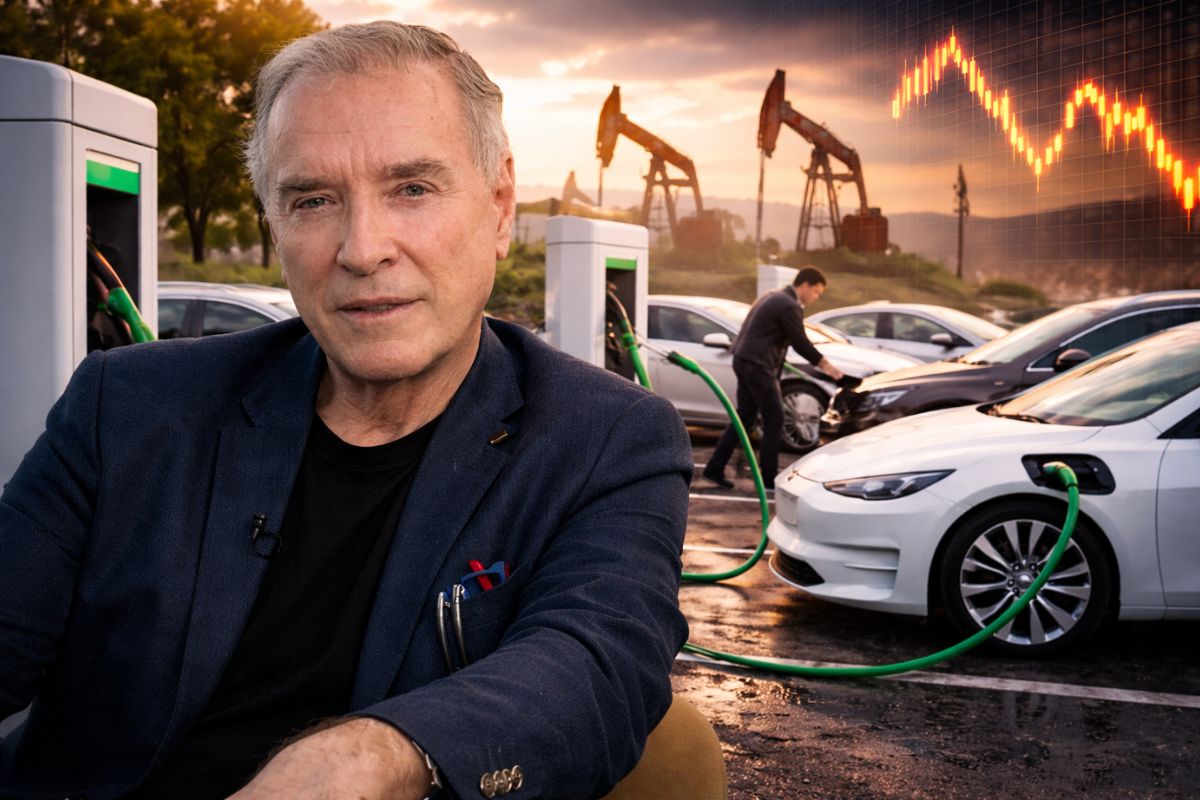

Eike Batista Claims That Electric Vehicles Already Influence Purchasing Decisions, Pressuring Oil Prices and Accelerating Automakers’ Portfolio Reviews; For Him, Public Policies, Charging Infrastructure, and Environmental Goals Define the Speed of the Transition, Which Will Still Coexist With Combustion Engines in Markets Around.
Eike Batista returned to the energy debate by associating the expansion of electric vehicles with a concrete change in the market. In his view, electrification has moved beyond the “experimental” phase and started to interfere with consumption decisions, industrial strategies, and even oil prices.
The central point of his speech is that the transition does not happen on its own: public policies, charging infrastructure, and environmental goals act as triggers that accelerate or slow down the transition. Still, Eike Batista emphasizes that combustion engines remain relevant in the short term, while the sector reorganizes.
When “Experimental” Becomes Buying Behavior
Eike Batista’s assessment starts from a simple signal: electric vehicles have ceased to be a niche observed from a distance and have begun to compete for the attention of those deciding to switch cars.
-
Brazilian Startup Turns Coffee Grounds into Plant-Based Leather, Cutting Water Use by Over 50 Times for High-Impact Sustainable Fashion

-
Eco Invest Auction Aims to Unlock $10 Billion in Investments, Focusing on Green Fertilizers, Critical Minerals, Batteries, and AI for Clean Industry in Brazil

-
Half of Brazilians Prefer Lower Taxes with Private Health and Education, While 44% Opt for Higher Taxes for State-Provided Services, Datafolha Survey Reveals

-
Brazil’s Most Expensive Toll Rises to R$ 40.60 on Route from São Paulo to the Coast, Nearly Matching Bus Fare to Santos




When consumers change the comparison of costs and convenience, the market changes alongside, even if part of the fleet continues to use combustion for years.
He also points out that environmental regulations and the expansion of electric alternatives push this behavior.
Instead of a homogeneous adoption, the trend appears as a mosaic: where there are public policies and charging infrastructure, the transition tends to be quicker; where there are none, the transition becomes a promise and not a routine. This difference, according to Eike Batista, explains why 2026 may be a more symbolic milestone than a uniform one.
Oil Prices Under Pressure and the Domino Effect on Automakers
In relating electric vehicles and oil prices, Eike Batista suggests a mechanism of indirect pressure: the more space electric transport gains, the more oil loses its psychological and economic centrality in long-term planning.
This does not mean the disappearance of oil, but rather a loss of monopoly over the imagination of transport.
This shift forces automakers to redo their portfolios.
The automotive industry, he claims, has responded with investment in electrification technologies and adjustments to meet increasing demand.
The reflection appears in product and factory decisions, but also in communication: combustion cars continue to generate financial volumes, but they need to coexist with electric lines that go from being “prototypes” to strategies.
Public Policies and Charging Infrastructure as Triggers That Separate Winners
In Eike Batista’s diagnosis, public policies do not enter as details; they enter as engines.
Tax incentives, investments in charging infrastructure, and environmental goals would be the tripod that accelerates the adoption of electric vehicles, as it reduces price barriers, increases predictability, and creates a “rule of the game” for industry and consumers.
Charging infrastructure appears as the most visible point of this tripod.
Without charging infrastructure, the debate about electric vehicles remains in the realm of intention, and everyday experience becomes friction: fear of range, uncertainty of availability, and delayed decisions.
For Eike Batista, it is this bottleneck that makes the transition unequal between markets and explains why public policies and charging infrastructure are cited as triggers, not as details.
Environmental Goals, Technological Coexistence, and What 2026 Really Measures
Environmental goals enter the discussion as the timer of change.
When environmental goals become requirements, and not slogans, automakers adjust portfolios and governments accelerate charging infrastructure.
The point is that the “global transition” may be less a single moment and more a sum of small decisions, aligned by policy and business strategy.
Still, Eike Batista insists on coexistence. Electric vehicles are advancing, but combustion cars remain relevant in the short term, especially where public policies and charging infrastructure do not keep pace.
For 2026, the reading becomes clearer: what is measured is not only technology, but rather the ability to coordinate price, convenience, and public rules without creating a transition for the few.
Eike Batista’s return to the energy debate repositions the discussion in practical terms: electric vehicles already influence industrial strategies, pressure oil prices, and force automakers to adjust their portfolios.
At the same time, he points out that public policies, charging infrastructure, and environmental goals are what transform trends into routine.
In your city, does the charging infrastructure make you believe that electric vehicles are a real option in 2026, or does it still seem distant? And when you hear “public policies” and “oil prices,” what convinces you more: savings in your pocket, environmental pressure, or the feeling that the market is just changing owners?