






 Portuguese
  Spanish
  4 min of reading
  0 comments


Suspension of Activities at Traditional Sugar Mill in São Paulo’s Interior Raises Alarm About Jobs, Industrial Contracts and Economic Stability of the Sugarcane Production Chain in Ribeirão Preto Region.
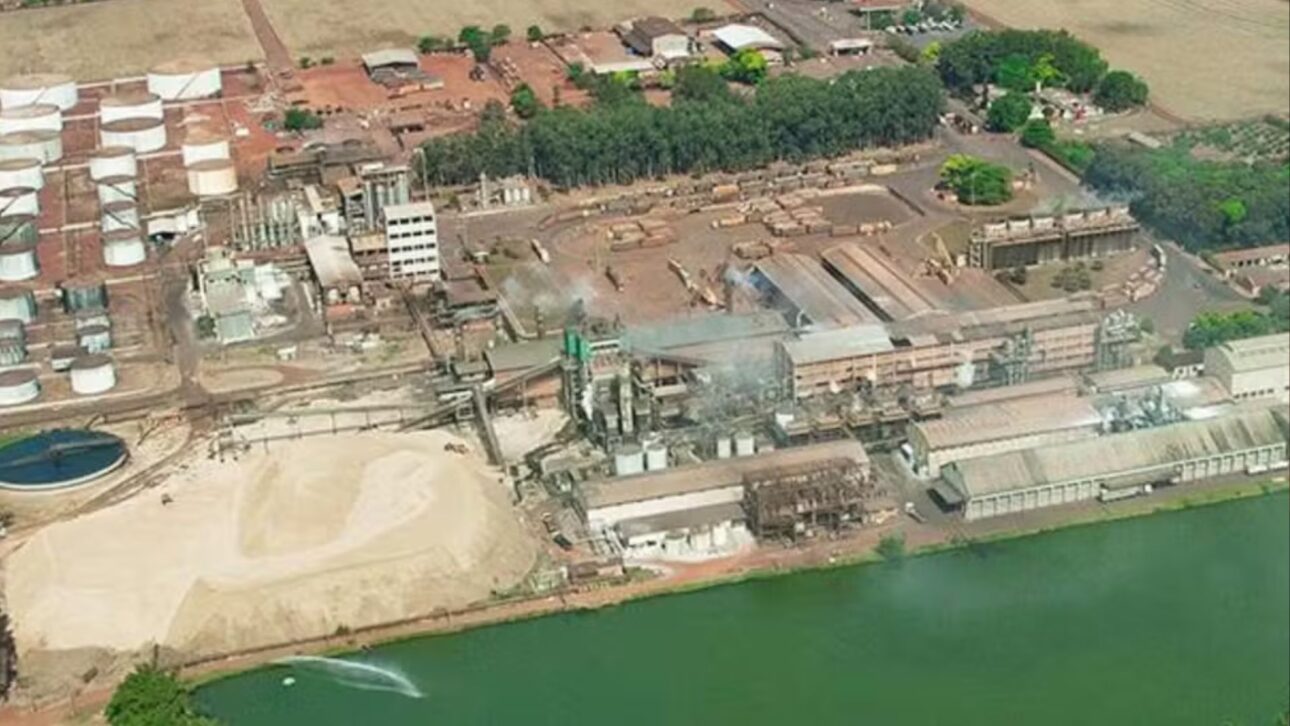
Raízen announced last Tuesday (15) the indefinite suspension of operations at Usina Santa Elisa, located in Sertãozinho (SP), within the metropolitan region of Ribeirão Preto, as part of its strategy for “portfolio recycling of assets for capturing agro-industrial efficiency”, the company reported.
The decision involved the sale of up to 3.6 million tons of sugarcane — including own cane and contracts with suppliers — for about R$ 1.045 billion.
The amount will be used to reduce the company’s debt, although the total debt amount has not been disclosed.
-
Brazilian Joins Homeownership Consortium, Faces Decade of Dual Payments Totaling $141,000, Surpassing Traditional Mortgage

-
Land Rover to Halt Production in July, Putting 371 Jobs at Risk, as Chinese Automaker Negotiates to Convert Factory to 100,000 Vehicles Annually by 2027

-
Mexican Pest Threatens U.S. Cattle Herds at Historic Lows, Potentially Boosting Brazilian Beef Exports as Burger Prices Soar

-
Brazilian Freight Bill Progresses in Congress with $5,000 Minimum Wage, 70% Advance Payment, and Fines Up to $1 Million, as Agriculture and Industry Warn of Rising Costs and Legal Uncertainty


Layoffs and Impact on Workers
The measure directly affected the local workforce.
Data from the Sertãozinho city hall reveals that the unit had approximately 1,200 employees, of which 234 resided in the municipality.
The labor union estimates that around two thousand jobs were impacted.
Immediately after the announcement, the union of workers in the sugar, food and related industries in Sertãozinho and the region began negotiations to secure rights for the laid-off workers.
By Wednesday (16/7), an agreement was reached with Raízen to ensure termination payments, bonuses and maintenance of benefits for a determined period, as well as health, dental, and life insurance plans for up to six months.
According to the union, the bonus corresponds to one full salary for every five years of service.
Employees with less time at the company receive one single salary. It was also agreed to pay food vouchers in six installments together with the termination.
The city hall, in turn, informed that it will launch a job drive through the Worker Assistance Office (PAT), in partnership with SENAI and private companies.
Goal: to mitigate the economic impacts on the thousands of families affected.
Ripple Effect in the Sugarcane Industry
The National Center of Industries of the Sugar-Energy Sector and Biofuels (Ceise Br) issued an official statement lamenting the decision.
It highlighted that the suspension of Santa Elisa, a plant with strong historical and operational significance, puts at risk maintenance, supply, and technical support contracts established with the facility.
According to Ceise Br, the measure jeopardizes business predictability, the financial health of suppliers and the very capacity for innovation and sustainability of the sector, especially in traditional hubs like Sertãozinho and the entire Ribeirão Preto region.
History and Importance of Usina Santa Elisa
Founded in 1936 by the Biagi and Marchesi families, Santa Elisa is among the pioneers in the development of the sugar and alcohol industry in Brazil.
By mid-1998, it became the mill with the highest grinding volume in the world, exceeding 7 million tons.
The unit had the capacity to grind around 6.1 million tons of cane and operated 36.4 thousand hectares of crops in the 2024/25 harvest.
It was under the control of Biosev until 2022, when it was transferred to Raízen, a result of the merger between Cosan and Shell.


Raízen’s Financial Strategy Focused on Debt Reduction
The transaction is part of a broader movement by Raízen to reduce its high level of debt — estimated at R$ 34.2 billion by the end of the 2024/25 harvest, with a debt/EBITDA ratio of 3.2 times.
Analysts from Itaú BBA and XP assessed the maneuver as positive in terms of agro-industrial efficiency.
The estimated multiple of US$ 53 per ton of cane was above the market range, which, according to Itaú, reinforces the asset recycling strategy.
The operation still depends on the approval of the Administrative Council for Economic Defense (Cade).
Additionally, the São Martinho group acquired around 10.6 thousand hectares of sugarcane fields for up to R$ 242 million, with the potential to produce 600 thousand tons in the 2026/27 harvest, potentially reaching 800 thousand in 2028/29.
Another five groups — Alta Mogiana, Bazan, Batatais, Pitangueiras, and Viralcool — also signed equivalent contracts with Raízen.
Uncertainties About Relocation and Continuity of Contracts
Raízen did not inform whether the Santa Elisa employees will be transferred to other units or directly laid off.
It only stated that any developments will be communicated in due time.
The extent of the company’s debt and the schedule for the closure of operations were not disclosed either.
The approval from Cade, necessary for the sale to be finalized, has not yet occurred, which could delay the sugarcane trading process in other mills.
Regional Reflections and Future of the Production Chain
The stoppage of Santa Elisa increases the pressure on maintenance, supply, and technical support companies in Sertãozinho, Ribeirão Preto, and other surrounding municipalities.
The region already has 15 mills, and six of them participated in Raízen’s transaction.
On the other hand, the movement may open up opportunities for regional competitors to access raw materials at lower costs, reducing the competition for sugarcane in the region.
However, this scenario depends on the consolidation of contracts and the continuation of the harvest.
For workers, the effectiveness of the PAT job drive and the union agreement will be essential to absorb the relocated workforce.
For suppliers, the resumption of services will depend on the functionality of the purchase agreements for sugarcane with the mills that took over supply.
How do you assess the impacts of this measure on workers, suppliers, and the competitiveness of the Ribeirão Preto region?





-

3 people reacted to this.