






 Portuguese
  Spanish
  5 min of reading
  0 comments


In the middle of the New Mexico desert rises the largest wind farm in the western hemisphere, a forest of giant turbines whose energy will travel through a line of almost 900 kilometers to light up the distant California.
There are energy projects that impress with their sheer scale, and SunZia is one of them. In the desert of New Mexico, the company Pattern Energy is erecting a wind farm of 3.5 gigawatts, making it the largest in the western hemisphere when completed. These are turbines spread over a vast area of dry, windy land, one of those projects whose size is only understood when seen from above.
But the park is only half the story. The energy generated there, in the middle of nowhere, needs to reach those who will consume it, and the destination is California, hungry for electricity. For this, the project includes a transmission line of about 900 kilometers that will carry the New Mexican desert wind to the Californian market. It’s wind turning into light over a continental distance.
The scale of a forest of turbines
Building a wind farm of this size is a colossal logistical effort. Each modern turbine is the size of a skyscraper, with immense blades that need to be transported in pieces by roads to the middle of the desert and assembled one by one. Multiply this by hundreds of units spread over dozens of kilometers, and you have an operation that mobilizes thousands of workers and machines for years.
-
Space technology used to search for water on Mars is now hunting for invisible leaks under the streets of São Paulo, using satellites, AI, and chlorine signals to help Sabesp recover up to 6.7 billion liters of water.

-
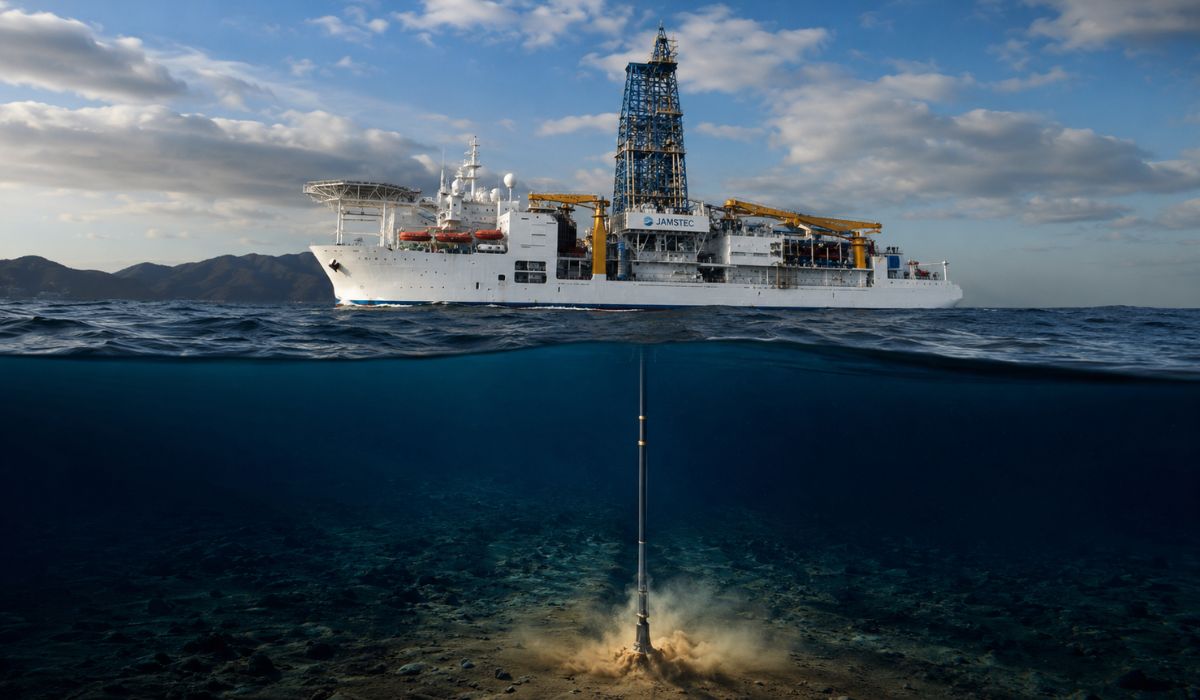
Japan sends ship to extract mud rich in rare earths at nearly 6,000 meters deep in the Pacific, attempts to lift 350 tons per day from the seabed, and transforms sediments near Minamitori Island into a strategic weapon to reduce dependence on China.
-
Venus Aerospace promises a rotating detonation hypersonic engine that takes the Stargazer to Mach 9 and crosses oceans in 1 hour, but the flight that made history barely surpassed the speed of sound.

-
Brazilian student creates a cheap formula that makes plants grow up to 90% faster and wins an award in a global scientific competition.




I confess that what impresses me the most is not just the number of turbines, but the coordination all this requires. Erecting a 3.5 gigawatts park means orchestrating foundations, towers, blades, cables, and substations in a gigantic synchronization, all at the right pace for the system to function as a single plant. It’s engineering of patience spread over a seemingly endless landscape.

The challenge of moving energy over 900 kilometers
There’s a detail in this story that often goes unnoticed, but is as challenging as erecting the turbines: getting the energy to where it’s needed. The best wind often blows far from cities, in remote and sparsely populated regions, while consumption is concentrated in distant urban centers. Solving this mismatch requires gigantic transmission lines, and that’s where the 900 kilometers stretch of SunZia comes in.
Building such a line crossing deserts, mountains, and state borders is a project in itself, full of technical, environmental, and licensing obstacles. But it is precisely this that transforms an isolated park in the middle of nowhere into a useful energy source for millions of people. Without the line, all that wind would be nothing more than wasted potential blowing in the desert void.

Why the desert became coveted
It may seem strange to build one of the continent’s largest energy projects precisely in a desert, but it makes perfect sense. These dry and open regions usually have constant wind and plenty of available space, two perfect ingredients for wind power. What is lacking is people nearby to consume it, and that is exactly the role of large transmission lines, connecting the desert’s wind surplus to the energy hunger of cities.
The investment in SunZia reflects a larger trend, seeking clean energy on an industrial scale, even if it requires colossal works to transport it. As the world tries to reduce fossil fuel burning, giant projects like this, which combine mass generation and transmission, are becoming central pieces of the electric future of entire countries.
There is an economic detail that helps to understand the race for these mega parks. Wind, once the turbine is installed, is a free fuel that doesn’t suffer from price hikes nor needs to be purchased from anyone. This makes large-scale wind energy an attractive long-term bet, even with the high initial construction cost. For a region like California, which consumes electricity in huge quantities and wants to cut its emissions, importing cheap wind from a neighboring desert is a solution that combines economy and environment in the same package. The challenge, as always with this type of project, is to fund the enormous investment at the beginning and have the patience to reap the benefits over decades of operation, in a much longer horizon than any political mandate, making such works a test of constancy as much as of engineering.

Desert wind lighting up California
I imagine the invisible journey of this energy, born from the spin of giant turbines in an empty New Mexico desert and running through almost a thousand kilometers of cables to light up a lamp in a Californian house, without anyone there realizing where it came from. It’s one of the most fascinating things about modern electricity, this ability to move brute force over enormous distances, connecting places that would otherwise never meet.
SunZia is a symbol of this continental-scale engineering, where wind, desert, and distant city are connected by a single project. When it becomes fully operational, it will show that clean energy can indeed be produced on an industrial scale, as long as there is the courage to erect turbines and wires to match the size of the challenge, without being daunted by the distance, the desert, or the long years such a project requires.
Is it worth covering deserts with turbines and crossing the country with wires to generate clean energy in mass?


Be the first to react!