






 Portuguese
  Spanish


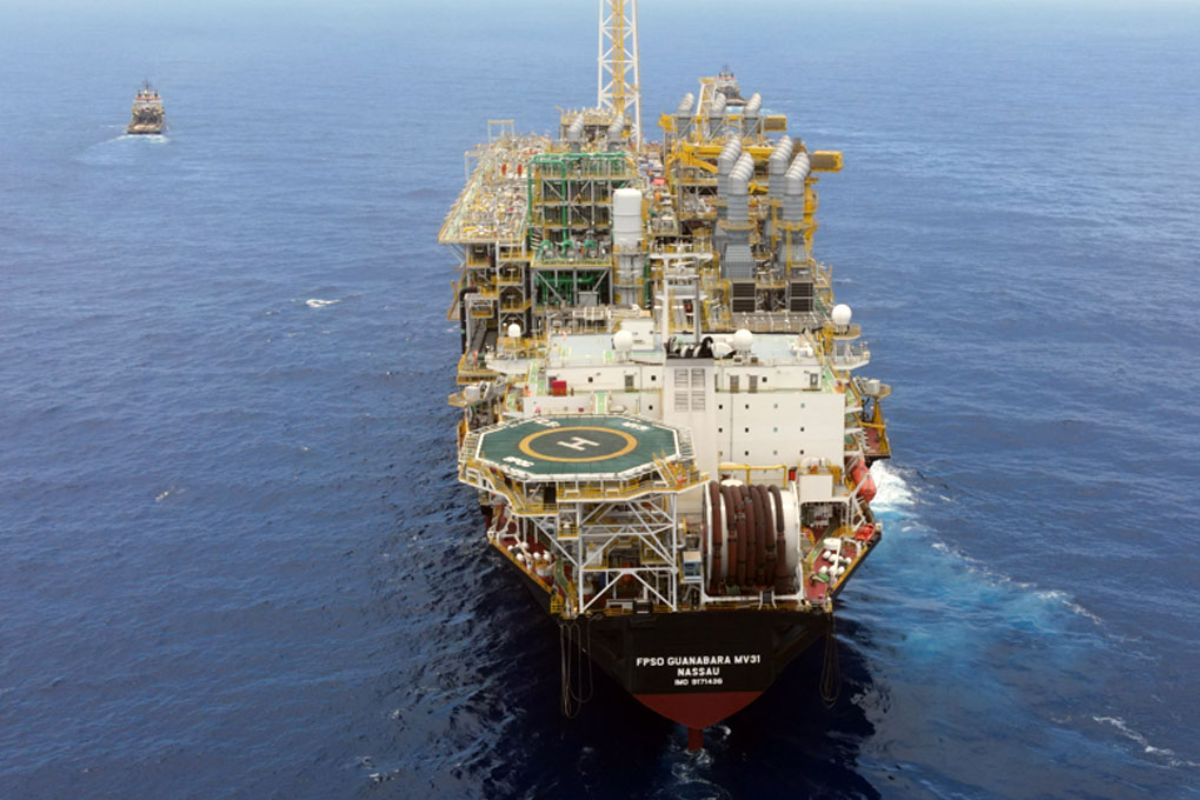


Anchored 180 Kilometers Off The Coast Of Rio De Janeiro, The FPSO Guanabara Serves As The Capital Of One Of The Most Promising Projects Of Brazilian Pre-Salt
Since the beginning of its operation in 2022, the FPSO Guanabara has not only overcome the challenges of an ultra-deepwater project but has also broken production records. Its exceptional performance became proof that it was possible to transform the geological wealth of Mero into a world-class asset, paving the way for a fleet of identical platforms that now dominate national production.
This platform, an individual investment of around US$ 2 billion, is the first definitive unit to extract oil from the gigantic Mero Field, validating a bet of over US$ 15 billion made by a consortium of energy giants.
The Genesis Of The Project, The Billion-Dollar Auction That Started It All
The story of the Mero Field begins in October 2013, with the first auction of pre-salt blocks under the sharing regime. The then Libra Block was awarded to a consortium led by Petrobras, which paid a historic signing bonus of R$ 15 billion to the government.
-
Esperanza’s Bamboo Barrier in Oaxaca Redirects River and Reduces Erosion by 85% in Five Years

-
Family Builds Homemade Wind Turbine to Power Off-Grid Home, Video Reaches 555,000 Views on Ngô Thị Huyền’s Channel
-
Indian Brand Creates Sneakers from Recycled PET Bottles and Discarded Tires, Repurposing Over 1 Million Bottles and Raising $4 Million for Expansion

-
Brazilian Innovator Uses 3D-Printed Device to Cool Two Rooms with One Air Conditioner




To develop this frontier asset, Petrobras teamed up with international giants like Shell and TotalEnergies, as well as the Chinese state-owned companies CNPC and CNOOC. Together, they approved a monumental development plan of US$ 15.3 billion. The goal was to extract oil from Mero, the third-largest field in Brazil, located in the Santos Basin at a depth of nearly 2,300 meters.
The Journey Of A Giant, The Construction Of The FPSO Guanabara
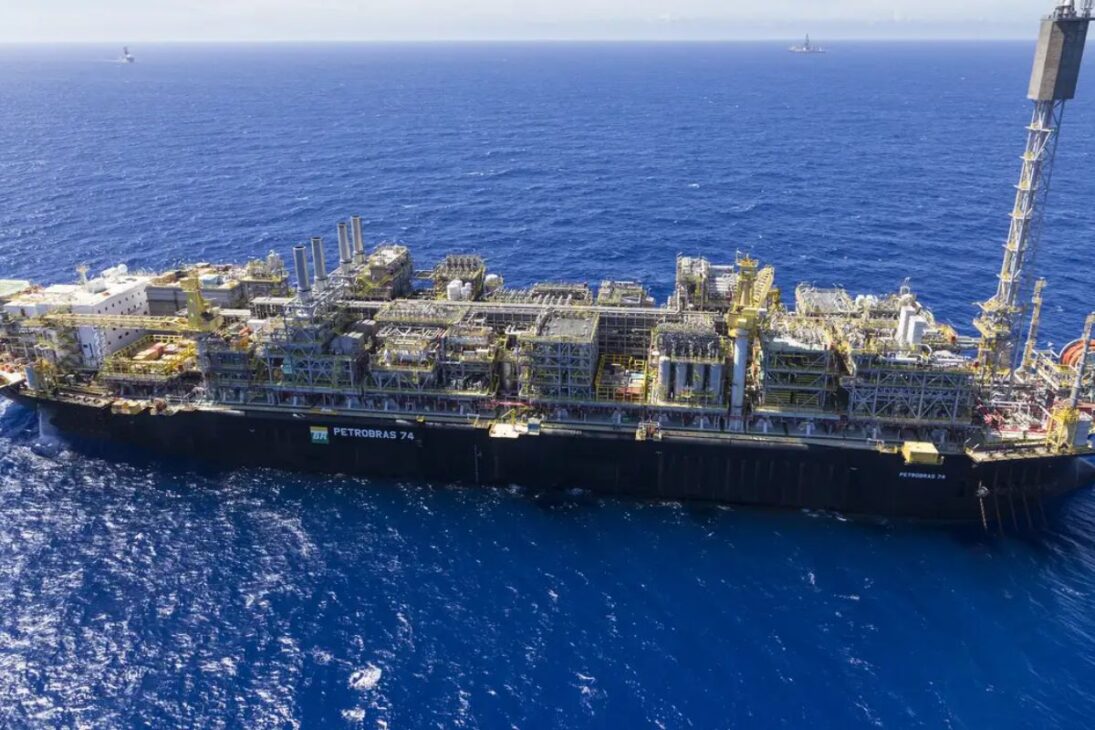
The centerpiece of the first phase of this plan was the FPSO Guanabara. The construction of the platform began with the conversion of the Very Large Crude Carrier (VLCC) Luxe, a work primarily carried out in China by the Japanese company MODEC, one of Petrobras’s main suppliers.
The project faced significant challenges, particularly delays caused by the COVID-19 pandemic at Chinese shipyards. The initial schedule, which called for production to start in 2021, was postponed. Nevertheless, after overcoming the obstacles, the platform arrived in Brazil in January 2022. On April 30, 2022, the FPSO Guanabara produced its first oil, marking the beginning of definitive operations in Mero.
With a length of 332 meters, the platform has the capacity to produce 180,000 barrels of oil per day and process 12 million cubic meters of gas.
How The FPSO Guanabara Dominated Production In Brazil
The operational performance of the platform exceeded all expectations. The production acceleration phase, known as ramp-up, was extraordinarily rapid. The FPSO Guanabara Reached Its Maximum Production Capacity In Just Eight Months, with the connection of only four producing wells.
This immediate success validated the high productivity of the reservoir and gave confidence for the consortium to proceed with the billion-dollar investments in subsequent platforms. Since reaching its full capacity, the FPSO Guanabara has established itself as the highest-producing unit in Brazil. The Platform Led The Production Rankings In 2023 And 2024. In November 2024, it set a new national daily production record, with an average of 184,263 barrels of oil.
The Innovation That Enables The Pre-Salt, Dealing With The CO2 Challenge
One of the biggest technical and environmental challenges of Mero is the high carbon dioxide (CO2) content in the gas associated with the oil, which reaches 45%. To address this, the FPSO Guanabara was equipped with one of the most robust Carbon Capture, Utilization and Storage (CCUS) systems in the world.
The technology works by separating the gas on the platform. The CO2 is then compressed and reinjected into the reservoir. This process serves a dual crucial function: it prevents the greenhouse gas from being emitted into the atmosphere and, at the same time, helps maintain reservoir pressure, increasing the amount of oil that can be extracted.
Additionally, the platform was built with the future in mind. It was designed to be “HISEP®-ready,” meaning it is prepared to receive an innovative technology from Petrobras that will separate the gas directly on the seabed, further optimizing production.
A Standardized Fleet For A Class Field
The success of the FPSO Guanabara initiated a strategy of “mass production” to develop the field. The consortium adopted an aggressive plan to deploy one platform per year between 2022 and 2025, all standardized with the same capacity.
After Guanabara (Mero-1), came the FPSOs Sepetiba (Mero-2), Marechal Duque de Caxias (Mero-3), and Alexandre de Gusmão (Mero-4). With the last unit coming online in May 2025, the total installed oil production capacity in the Mero Field reached 770,000 barrels per day. The FPSO Guanabara was not only the first piece but the cornerstone that ensured the success of one of the largest energy projects in the world.





Petrobras, orgulho do povo brasileiro!
Excelência em qualidade, produtividade e total respeito e comprometimento com a proteção do meio ambiente.
Petrobras na vanguarda da tecnologia mundial.
Investindo, gerando empregos e riquezas!