





 Portuguese
  English
  Spanish
  4 min of reading
  0 comments


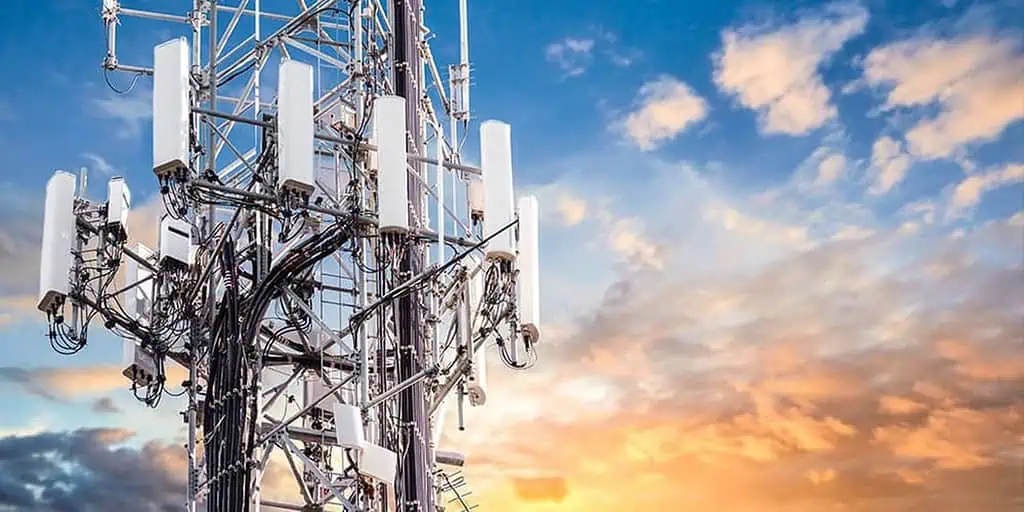
The Future Of Telecommunications Is Close! Scientists Have Achieved A Wireless Data Transmission 9,000 Times Faster Than 5G
Imagine downloading an entire library of 4K movies in a matter of seconds. That future is closer than ever, thanks to an innovative experiment conducted by scientists at the University College London (UCL). They have set a new world record for wireless data transmission, achieving an impressive speed of 938 gigabits per second (Gb/s).
To put that into perspective, this speed is over 9,000 times higher than the average 5G download speeds in the UK.
Breaking The Limits Of Wireless Technology In Data Transmission
Currently, wireless technologies like Wi-Fi in our homes or the 5G network on smartphones operate in very crowded frequency ranges, typically below 6 gigahertz (GHz). This severely limits the speed of communication.
-
Scientists believe they have discovered the origin of the river from the ‘Garden of Eden’: study reveals that the Euphrates emerged from the union of two giant rivers over 5 million years ago, including one larger than the Nile.

-
The grass for the 2026 World Cup did not come about by chance: U.S. universities spent 8 years creating an almost surgical turf, with pink lights, synthetic fibers, and agricultural technology to keep 104 games at the same standard.

-
Young student mixes water, oil, and nickel in a bottle, shakes everything, and accidentally creates a liquid that always returns to the shape of a Greek urn.

-
New humanoid robot promises to work indoors and even serve as a companion; study predicts automation of 40% of household tasks in 10 years, while companies accelerate testing of machines capable of replacing humans.




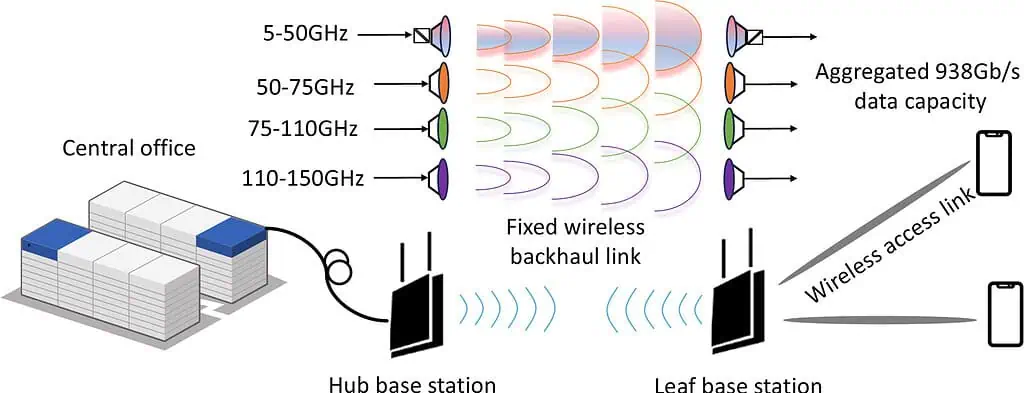
The UCL research team tackled this issue by expanding the system to utilize a broader range of frequencies, from 5 to 150 GHz.
They combined two cutting-edge technologies: advanced electronics and millimeter-wave photonics. For the lower part of the frequency spectrum, from 5 to 50 GHz, they used traditional digital-to-analog converters, which send data using radio waves.
However, these converters struggle at higher frequencies. To address this, the team introduced a photonic-based system for frequencies from 50 to 150 GHz. By using lasers to generate radio signals, they were able to enhance data transmission in frequency ranges that were previously underutilized.
This combination of radio waves at lower frequencies and lasers at higher frequencies allowed for the creation of a broadband transmission system capable of sending vast amounts of data. According to the team, the system can be described as a “superhighway” for information transmission, with a bandwidth of 145 GHz, more than five times the previous world record.
This advancement is a significant step towards the development of the next generation of wireless technologies.
Impact On Daily Use
With speeds reaching 938 Gb/s, users in major urban centers or at events like concerts will be able to experience mobile internet without slowdowns, regardless of how many people are connected to the network.
For example, a 4K movie that currently takes about 19 minutes to download on 5G networks could be downloaded in just 0.12 seconds with this new technology.
Professor Izzat Darwazeh, co-author of the study, highlighted the flexibility of wireless technology. “The beauty of this technology lies in its flexibility in terms of space and location,” he stated.
The researchers are already in contact with smartphone manufacturers and network operators, and the work they have done could serve as a foundation for 6G technology.
However, according to researcher Liu, other approaches are competing to define the next generation of wireless networks.
Transforming Connectivity
At the heart of this research is the resolution of a persistent bottleneck: the “last mile” of data transmission. While fiber optics can carry information over long distances, wireless networks need to cope with the final stretch between the device and the network, where speed drops often occur.
By enhancing this last link, the UCL team is bridging the gap between what is possible with fiber optics and what can be achieved through aerial transmissions.
“Our new approach combines two existing wireless technologies for the first time, high-speed electronics and millimeter-wave photonics, to overcome these barriers,” explained Liu. “This new system enables the transmission of large amounts of data at unprecedented speeds, which will be crucial for the future of wireless communications.”
The Future Of Wireless Communications
The need for faster and more reliable wireless communications is only expected to grow. With more devices connected to the internet, whether smartphones, autonomous vehicles, or smart home systems, the demand for bandwidth will increase exponentially.
Although the technology has only been demonstrated in the laboratory so far, commercial testing may begin soon. If successful, we could see this new technology incorporated into consumer devices and networks in three to five years.
We are on the brink of a revolution in wireless communications, with advancements like those from UCL redefining what is possible in terms of speed and connectivity.
Stay tuned for more updates on the development of these technologies and the changes they will bring to your daily life. Who knows, soon you may be able to download movies in seconds or experience mobile internet without interruptions!


Be the first to react!