Portuguese
  Spanish


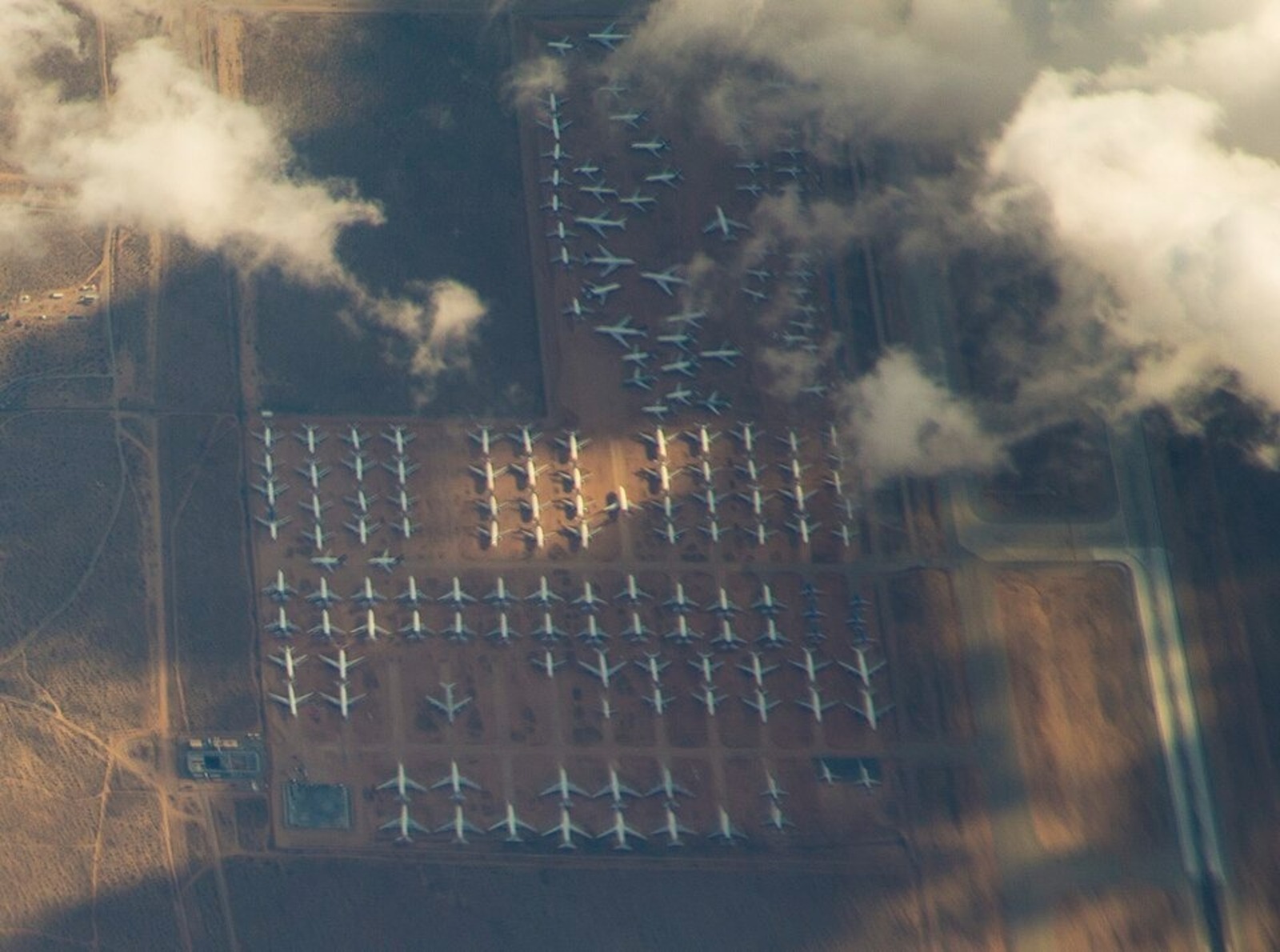


In Central California, Southern California Logistics Airport Impresses by Gathering Hundreds of Inactive Aircraft, Which Are Preserved, Repaired, or Dismantled Under the Dry Climate of the Mojave Desert
About 140 kilometers from Los Angeles, the quiet Victorville houses one of the most curious places in the world of aviation: Southern California Logistics Airport (SCLA). The airport gained international fame for functioning as a true aircraft graveyard, attracting tourists and onlookers. There, end-of-life aircraft are dismantled, recycled, or waiting for new profitable destinations.
This facility impresses with its capacity: up to 12 jets can be dismantled at the same time. But the site goes beyond a scrapyard.
In times of low demand, such as during the pandemic, the space serves as a temporary shelter for aircraft from major airlines. They remain there, well cared for, until they can return to flying.
-
Adventurer Solo Climbs 20-Meter Giant Fig Tree in Costa Rica, Camped in Canopy, Explains Tree’s Unique Growth Strategy

-
Underground Fire Burns for Over 100 Years in New Zealand Forest Without Wood, Smoke, or Human Intervention

-
Brazilian Town Known for Its Steady Winds Impresses with Cutting-Edge Hospitals, Clean Air, and Peaceful Living Just Three Hours from São Paulo
-
Animal Thought Extinct for 130 Years Reappears in Brazil, Exciting Scientists with Rare Comeback


Dry Climate and Strategic Location
The choice of Victorville is not accidental. Located near the Mojave Desert, the city offers an extremely dry climate — perfect conditions to prevent the corrosion of fuselages.
Additionally, the SCLA operates as a complete aviation service center, offering repairs and maintenance.
Companies like Delta Air Lines and FedEx frequently use the site. Often, their aircraft remain parked waiting for maintenance or reactivation.
The land, which once was George Air Force Base of the United States Air Force, now holds hundreds of jets lined up under the California sun.
500 Aircraft Stored Under the Sun
The SCLA has two runways capable of accommodating models of all sizes, from Boeing to Airbus — including the impressive A380.
The storage space can hold more than 500 aircraft, and this capacity was nearly fully utilized during the pandemic, when around 450 aircraft were parked simultaneously.
The airport has witnessed other critical moments in aviation. After the September 11, 2001 attacks, for example, hundreds of aircraft were taken out of operation and brought to the Victorville yard, which once again served as a refuge in turbulent times.
Constant Maintenance and “Anti-Aging” Techniques
Keeping so many aircraft parked requires constant care. Engines are periodically started, hydraulic and steering systems are tested, and landing gear receives regular lubrication.
Inside the cabins, humidity control prevents deterioration, while sensitive surfaces are frequently cleaned.
Air openings and vulnerable systems are sealed to prevent the entry of animals, and many windows are covered to protect electronic and plastic components from intense sunlight.
An Australian Version
In the opposite hemisphere, Australia also has a similar location: Asia Pacific Aircraft Storage (APAS) in Alice Springs.
The facility, located in a desert area, housed immobilized aircraft during the pandemic, including models from Cathay Pacific and Singapore Airlines.
Like the SCLA, the APAS utilizes the dry climate and rigorous maintenance practices to preserve its metallic “guests” until they return to the skies — or are permanently dismantled.
Information from UOL.