






 Portuguese
  Spanish


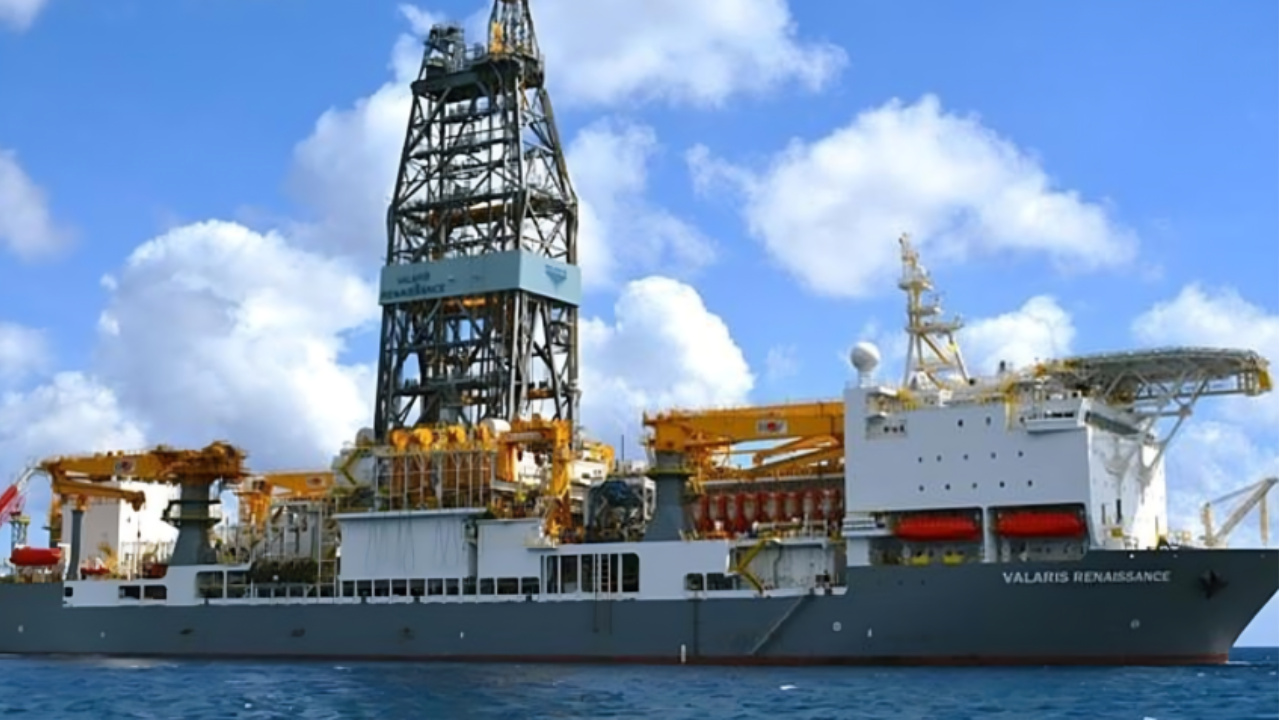


BP Announces Largest Oil Discovery in 25 Years With Bumerangue Field in Brazil, Rekindling Investor Optimism and Reinforcing the Strategic Importance of Deep-Water Exploration.
The announcement from British Petroleum (BP) regarding the megadiscovery of oil off the Brazilian coast has breathed new life into the global energy sector, as reported by InfoMoney on Monday, September 15. Named the Bumerangue Field, the reservoir was classified by CEO Murray Auchincloss as the company’s most significant discovery in a quarter of a century.
The news boosted BP’s shares on the London Stock Exchange, with an immediate increase of 8% in August, outperforming other industry giants. This result demonstrates how the market has begun to look enthusiastically at oil investments again, after years of caution due to the energy transition and environmental pressures.
The Strategic Impact of the Discovery and the Potential of the Bumerangue Field
According to initial surveys, Bumerangue is located in a high-quality pre-salt area and features a hydrocarbon column of 500 meters, which may extend over 300 square kilometers.
-
OPEC+ Boosts Oil Supply by 188,000 Barrels per Day in July 2026, Leading to Price Drop from $112 to $89 per Barrel in Under Two Months

-
TotalEnergies Signs 20-Year Deal to Purchase 2 Million Tons of LNG from Alaska, Boosting Project Viability
-
Turkey Deploys Çağrı Bey Drilling Ship to Explore New Oil Frontier Off Somalia’s Coast
-
Golden Pass LNG Ships First Liquefied Gas Cargo from the U.S., Completing $10 Billion QatarEnergy and ExxonMobil Investment

Claudio Steuer, an expert at the Oxford Institute for Energy Studies, estimates that the field may contain between 2 billion and 2.5 billion barrels of recoverable oil equivalent. This represents potential production of around 400,000 barrels per day over the coming decades. The most relevant detail is that BP holds 100% ownership in the area, reinforcing the positive financial impact for the company, currently valued at about US$ 93 billion.
BP’s Shift to Upstream
This discovery is not coincidental. In recent years, BP has decided to reinforce investments in the upstream sector, responsible for the exploration and production of oil and gas. After a period of cuts in technical teams and engineering, the company announced it intends to increase exploration spending by 20% by 2027, reaching US$ 10 billion annually.
The goal is to maintain production stable between 2.3 million and 2.5 million barrels per day until the end of the decade. This new strategic direction echoes the aggressive expansion phase of the 2000s, when major oil companies significantly increased their spending to secure new reserves.
Investors Return to Oil Reserves
For decades, the size of reserves was one of the main indicators analyzed by investors. Between 1995 and 2013, exploration spending surged from US$ 5 billion per year to over US$ 35 billion, according to consultancy Thunder Said Energy. However, this cycle was interrupted starting in 2014, due to the drop in oil prices and the increase in development costs.
The situation worsened with the Paris Agreement in 2015, when forecasts of declining demand pressured companies and raised the risk of stranded assets. As a result, giants like ExxonMobil, Chevron, Shell, BP, and TotalEnergies reduced their investments to less than US$ 10 billion per year.
This retraction reduced Western companies’ reserves to the equivalent of 7 to 13 years of production, compared to 12 to 17 years recorded a decade earlier. In BP’s case, the scenario was even more concerning: in 2024, the company had 6.25 billion equivalent barrels, 8% below the previous year.
With Bumerangue, this picture gains a new horizon.
The Return of Appetite for Exploration
BP’s success in Brazilian waters coincides with a global resurgence in the search for new reserves. Chevron’s CEO, Mike Wirth, stated in August that he was “not satisfied” with the recent exploration results. The American company, like other major players in the industry, is already increasing investments in strategic regions, including Suriname, Egypt, and Namibia.
For Rystad analyst Per Magnus Nysveen, the increase in licensing rounds is the main signal of the return of exploratory appetite. According to the consultancy, the planet still holds about 1.5 trillion barrels of potentially recoverable oil, a volume that corresponds to total global consumption from 1900 to 2024.
Future Demand and Energy Security
The debate over long-term demand remains open. The International Energy Agency foresees stabilization of consumption by 2030, while OPEC believes in growth until 2050. What is known is that the pressure for energy transition coexists today with an equally decisive factor: the pursuit of energy security.
This topic gained prominence following the war in Ukraine, which began in 2022, and is expected to remain central amid the increasing global demand for electricity driven by technologies like artificial intelligence.
Thus, although predictions diverge, one point converges: there will be a need for new investments in oil to ensure the balance between supply and demand in the short and medium term.
For BP, the megadiscovery comes at a crucial moment, marked by internal turbulence, speculation about mergers, and questions about the company’s direction in the energy transition. The Bumerangue field emerges as an opportunity to reposition the company in the international scenario, reinforcing its relevance among the world’s largest oil companies.
As for Brazil, the announcement further consolidates the country’s position as a protagonist in deep water. The pre-salt confirms itself as one of the planet’s most strategic areas, attracting investments that can sustain not only national production but also global energy security in the coming decades.


Eu poderia dizer que isso é muito bom para o Brasil porém, ouvi dizer que nós ficamos com somente 10 a 15% do que as petroleiras estrangeiras extraem! Será que isso é verdade?
Se essa informação é verdadeira, o governo brasileiro deveria dar mais suporte à Petrobrás para que aumentasse sua capacidade de produção e assim toda a produção seria do Brasil.