






 Portuguese
  Spanish


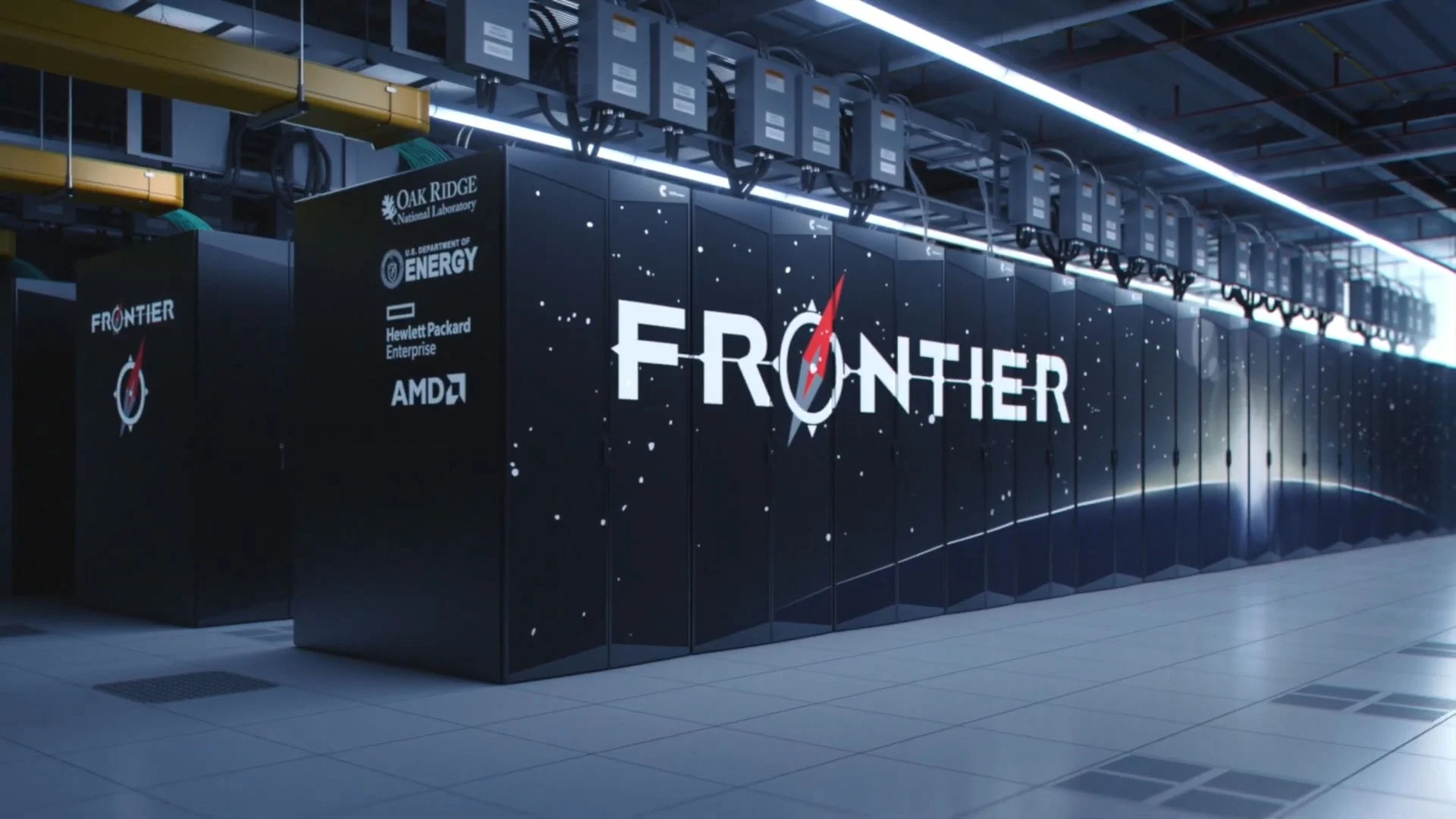


Named Frontier, The Largest Computer In The World Occupies Sports Courts, Consumes The Energy Of A City And Performs More Calculations Per Second Than All Human Brains Combined.
When we talk about “computer“, the common image is still that of a laptop or, at most, a data center full of servers. But the largest computer ever built by humanity is on another scale. It does not fit in rooms, does not operate plugged into a common outlet, and does not exist for everyday tasks. It is a monumental scientific infrastructure, designed to solve problems that no other system on the planet can tackle. This computer is the Frontier, installed at the Oak Ridge National Laboratory in the United States.
Where Is The Largest Computer In The World Located And Why Was It Created
The Frontier was developed as part of a strategic program by the American government to achieve the so-called exascale era, a level of processing never attained before.
It was designed to handle extremely complex scientific simulations, such as global climate, nuclear fusion, materials dynamics, large-scale artificial intelligence and even advanced studies on weapons, energy, and health.
-
China Develops Custom 140-Ton Electric Mining Truck with 770 kWh Swappable Battery, Deploys 290 Units in Xinjiang’s Largest Zinc Mine

-
Meta to Launch Arena, a New Prediction App Targeting 3.56 Billion Users, Competing with Polymarket and Kalshi

-
Scientist Challenges Famous Human Evolution Theory, Argues Homo Sapiens Evolved Gradually Over Thousands of Years
-
15-Year-Old American Builds Ocean Generator with PVC Pipe and 3D-Printed Propeller for $12, Wins National Prize, Presents at White House, and Makes Forbes 30 Under 30 List




Unlike commercial computers, the Frontier does not exist for ordinary users. It is a national tool, used by selected researchers, universities, and scientific centers.
The Physical Size Impresses More Than Any Photo
The Frontier occupies an area equivalent to multiple sports courts, distributed across long corridors of metal racks that extend for dozens of meters. Each corridor houses thousands of electronic components, all interconnected by an ultra-high-speed internal network.
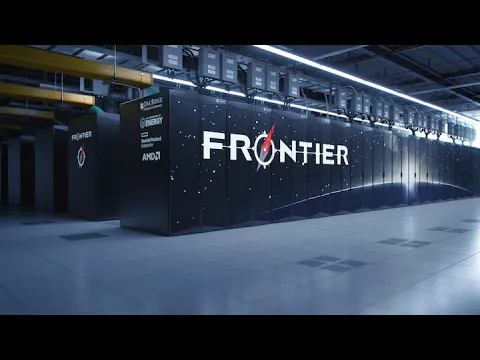

It is not an exaggeration to say that walking inside the environment where the Frontier operates feels more like visiting an industrial plant than a computer lab. The constant noise from the cooling systems and the strict temperature control make it clear that every degree matters.
Sufficient Energy To Power A City
To operate, the Frontier consumes about 21 megawatts of electrical energy. This is enough to power a medium-sized city. The consumption is not limited to the processing itself: a large part of this energy is used to keep the system cool, as the heat generated by billions of simultaneous operations could destroy the components in minutes.
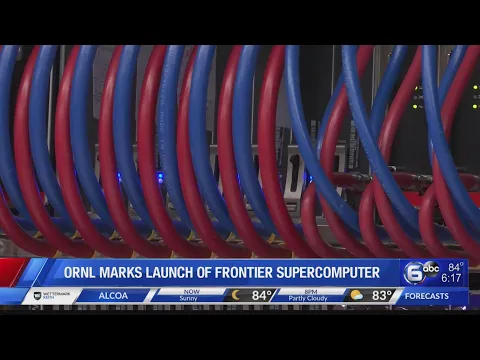
Therefore, the computer operates with advanced liquid cooling systems, something unthinkable in conventional computers.
A Processing Power Beyond Any Human Reference
The point that truly places the Frontier in another dimension is its processing power. It was the first computer in history to surpass the mark of 1 exaflop, which means more than a quintillion calculations per second.
For comparison, estimates suggest that the human brain performs something in the order of 10¹⁶ operations per second. Even considering all living human brains simultaneously, the Frontier still executes more calculations per second than this theoretical sum.
This capability allows simulating phenomena that would previously take decades — or were simply impossible.
How The Frontier Is Built Inside
The Frontier combines:
– thousands of high-performance processors (CPUs)
– tens of thousands of graphics accelerators (GPUs)
– ultra-fast interconnections capable of exchanging data almost instantly
This hybrid architecture is essential to achieve extreme performance, particularly in scientific simulations and large-scale artificial intelligence applications.
What Is The Purpose Of Such A Powerful Computer?
The Frontier does not exist to run common software. It is used to:
- simulate climate changes with unprecedented accuracy,
- test new atomic and molecular materials,
- advance nuclear fusion research,
- train giant artificial intelligence models,
- simulate pandemics and disease spread,
- study physical phenomena that are impossible to replicate in the laboratory.
In many cases, what the Frontier calculates could not be tested in the real world due to costs, risks, or simply because it does not yet exist.
Comparison With Past Computers
To understand the technological leap, just look at the ENIAC, the first large electronic computer in history, built in 1945.
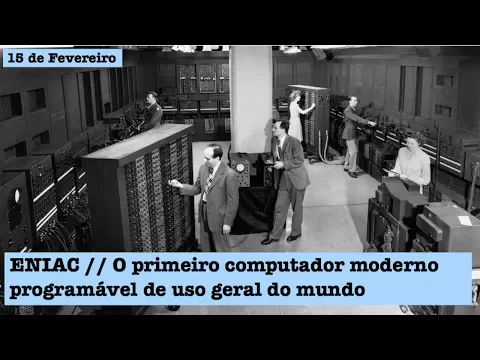
It occupied an entire room, weighed about 30 tons, and performed a few thousand calculations per second. Today, a simple smartphone is millions of times more powerful.
The Frontier, in turn, is millions of times ahead even of supercomputers from the early 2000s, showing how computational evolution is not linear, but exponential.
The ‘Invisible’ Cost Of The Largest Computer In The World
Although the exact value varies depending on contracts and maintenance, the Frontier cost hundreds of millions of dollars to design, build, and operate.
In addition to the financial investment, there are environmental, logistical, and human costs involved in the continuous operation of this machine.
Still, the countries that lead this type of technology consider the investment strategic, as those who dominate extreme computing power dominate the ability to predict, simulate, and innovate.
The Frontier is not just the largest computer ever built. It represents a new level of the relationship between humanity and technology.
Just as great industrial machines marked the Industrial Revolution, supercomputers like the Frontier mark the era of total simulation, where testing the future in the virtual world becomes faster, cheaper, and safer than in the real world.
More than impressive numbers, it symbolizes how far human engineering has come — and how far we still are from the ultimate limit of computing.






