Portuguese
  Spanish


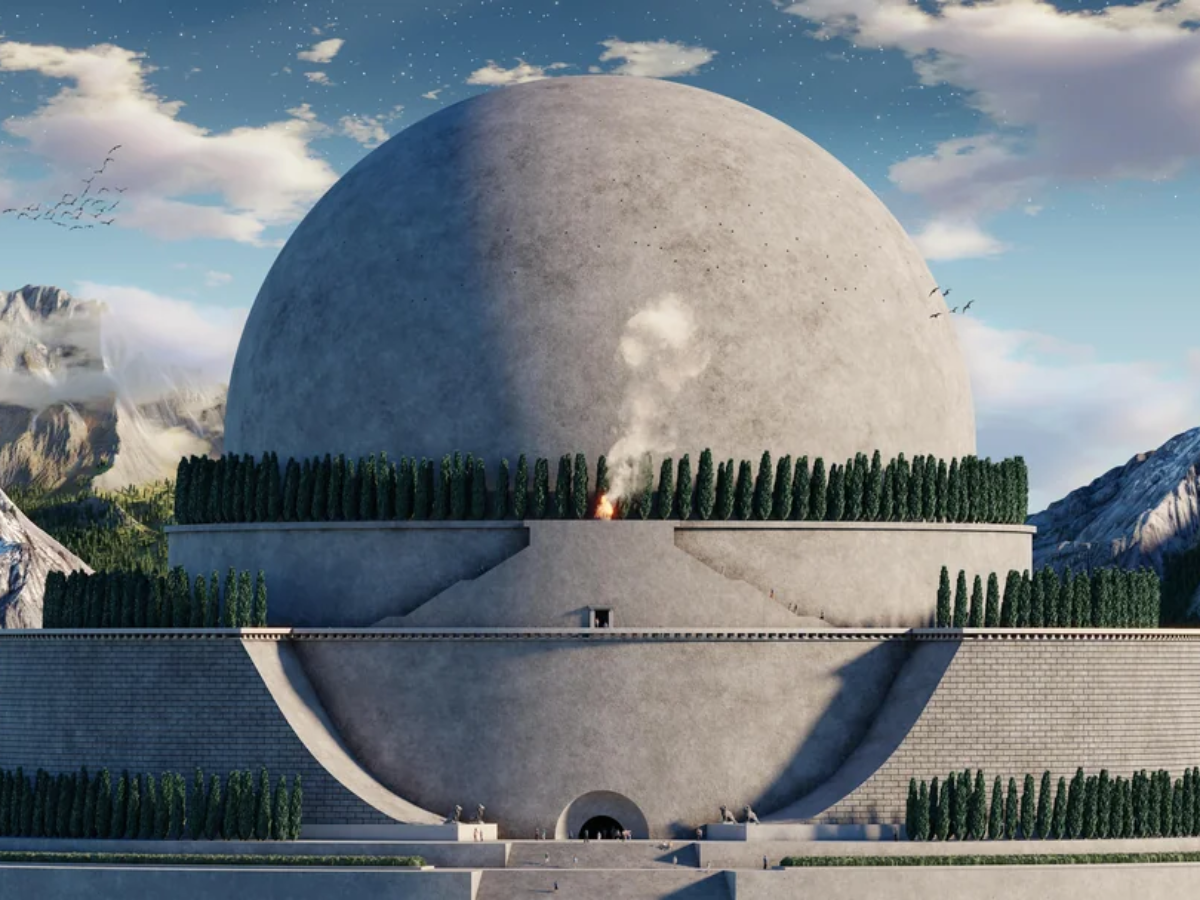


Explore The Visionary Cenotaph For Isaac Newton, Designed By Étienne-Louis Boullée In 1784, A 150M Sphere That Sought To Materialize The Universe And The Enlightenment Ideals
The cenotaph for Isaac Newton, conceived in 1784 by French architect Étienne-Louis Boullée, is more than an unbuilt project; it is a powerful architectural manifesto. This visionary work, a perfect sphere 150 meters in diameter, aimed to honor the great scientist and the ideals of the Enlightenment.
Understand the grandeur and symbolism of the cenotaph for Isaac Newton. We will analyze its innovative design, the concept of “talking architecture,” and the lasting legacy of what is one of the most ambitious proposals in the history of architecture.
Étienne-Louis Boullée And The Vision Behind The Cenotaph For Isaac Newton, Enlightenment And Neoclassicism
Étienne-Louis Boullée (1728-1799) was a central figure in French Neoclassicism. Reacting against the Rococo, which he considered frivolous, Boullée advocated for formal purity and classical grandeur, reinterpreted by Enlightenment reason. The cenotaph for Isaac Newton reflects this philosophy, honoring the scientist whose discoveries symbolized the triumph of science.
-
How to Prevent Brown Recluse Spider Bites: Common Hiding Spots and Free Tips to Reduce Risks

-
Natto: The Unusual Japanese Superfood Gaining Popularity on Social Media and Driving Record Exports
-
Brazilian Mayor Goes Undercover as Homeless for 24 Hours to Assess Public Services

-
15-Year-Old Entrepreneur Malu Lira Publishes 20 Children’s Books on Financial Education, Earns $500,000, and Expands Her Project to the Amazon Rainforest




In his “Theory of Bodies,” Boullée explored the properties of geometric forms, considering the sphere the ideal shape, a symbol of perfection and beauty. His “poetics of architecture” sought to evoke sublime feelings in the observer, using form to communicate ideas.
The Anatomy Of The Monumental Cenotaph For Isaac Newton And Its Symbolism
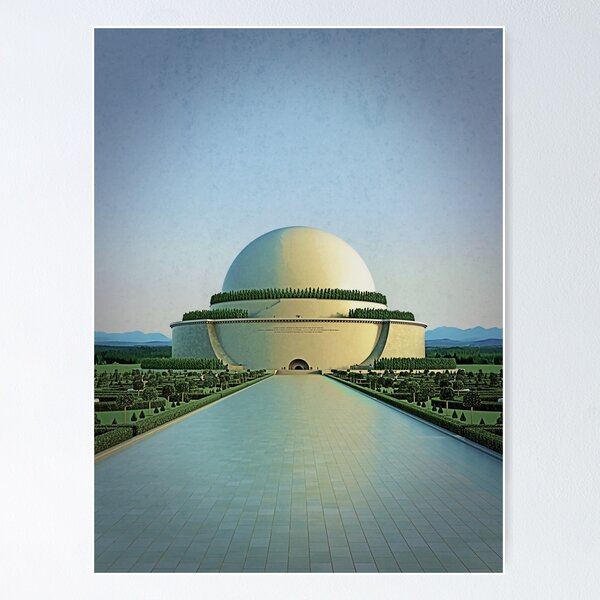
The design of the cenotaph for Isaac Newton is dominated by a colossal sphere of 150 meters in diameter, set upon a vast stepped cylindrical base and surrounded by cypress trees. The interior of the hollow sphere was conceived with an ingenious lighting system:
Daytime Effect (Cosmic Night): Perforations in the sphere’s shell would allow sunlight to enter, creating the illusion of a starry sky, possibly replicating real constellations.
Nighttime Effect (Sunlight): An immense central lamp suspended would radiate light, simulating daytime.
This “Architecture of Light and Shadow” aimed to create a microcosm representing the universe. The sphere symbolized the cosmos and perfection. At the center, an empty sarcophagus of Newton would be the focal point, contrasting human finitude with the vastness of knowledge.
How The Cenotaph For Isaac Newton Communicated Its Purpose And Ideals
The cenotaph for Isaac Newton is a paradigmatic example of “architecture parlante” (talking architecture). This theoretical current of the late eighteenth century proposed that the form of a building should directly communicate its purpose. The monumental sphere and its cosmic interior “speak” of the vastness of the universe and the greatness of Newton’s discoveries.
Pure geometry, symmetry, and the absence of unnecessary ornamentation reflect Enlightenment ideals of reason, order, and universal clarity. The immersive experience inside, evoking the sublime, sought to convey the grandeur of the honoree more powerfully than any decoration.
Why The Cenotaph For Isaac Newton Was Never Built And Its Conceptual Importance
The cenotaph for Isaac Newton was conceived more as a theoretical exercise than as a structure for immediate construction. Its scale and the complexity of the hollow sphere were beyond the technical and financial capabilities of the eighteenth century. Boullée, by focusing on the purity of form and the dramatic effects of mass, light, and shadow, rejected the excessive ornamentation of the time.
Its importance lies in the primacy of the architectural concept. The project, being unfeasible in practice, allowed Boullée to take his ideas to their purest logical conclusion, creating an archetype of visionary architecture. He challenged conventions, elevating architecture to a vehicle for the highest intellectual and artistic aspirations.
The Lasting Influence Of The Cenotaph For Isaac Newton


Paradoxically, the fact that it was never built ensured the immense theoretical influence of the cenotaph for Isaac Newton. Its striking drawings disseminated Boullée’s radical ideas, influencing generations of architects, from his contemporaries to modern figures like Aldo Rossi.
Boullée’s project is a reminder of the capacity of architecture to aspire to the sublime and engage with great intellectual questions. His “poetry of public spaces” and emphasis on immersive experience continue to inspire debates about monumentality and symbolism. The cenotaph for Isaac Newton transcends the homage to an individual, manifesting as a testament to the eternal human quest for meaning and understanding of the universe.