Portuguese
  Spanish


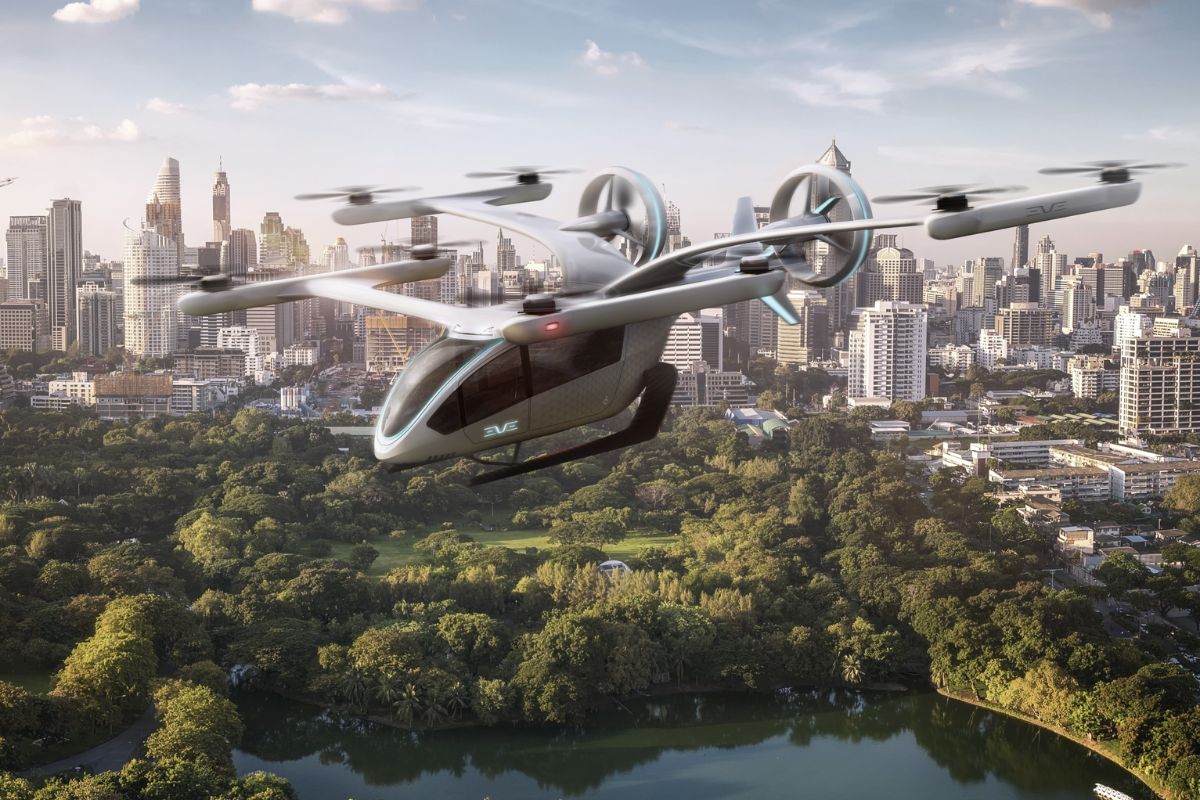


With a System of Eight Engines for Vertical Flight and One for Cruise, Eve (Embraer) Bets on the Brazilian Flying Car Engine with Low Noise and High Safety to Enable Urban Air Mobility.
The key to the future of urban air mobility lies in the Brazilian flying car engine. It is not an ordinary engine. It is an intelligent network of multiple electric motors, designed with two main objectives: to be extremely safe and quiet enough to not disturb life in the city. It is this technology that will allow the aircraft to take off and land in urban centers.
The “flying car” from Brazil, developed by Eve Air Mobility, a company of Embraer, is getting closer to becoming a reality. But for it to operate in the skies of major cities, it needs to solve a crucial problem that has always limited helicopters: noise. The solution to this lies at the heart of the project: an innovative and silent propulsion system.
Eight Engines to Take Off: The Distributed Electric Propulsion (DEP) Technology
Unlike a helicopter, which depends on a single large rotor, Eve’s eVTOL utilizes a concept called Distributed Electric Propulsion (DEP). The aircraft has a “Lift+Cruise” configuration that works as follows:
-
From matches sold by bicycle at age 5 to a global furniture empire: the lumberjack’s son founded IKEA at 17 in his uncle’s kitchen and transformed a small company into the largest furniture retailer on the planet.

-
The mansion in Flamengo, built in 1865 for the Baron of São Clemente and closed for 20 years, has become a spa, event hall, and gym for “Symphony,” a luxury condominium that sold 70% of its gross development value in the first month on the R$ 60 million land of the former Bennett College.

-
The Ipiranga convent, a 1924 building adjacent to the Museum that remained vacant for a decade and became home to dozens of cats, is reborn as “Alma Mater,” a luxury development worth R$ 130 million with a pool in the courtyard and a clubhouse in the former nuns’ chapel.

-
An empty pool of almost 3 meters turned into tilapia farming in the backyard after a family transformed the dangerous space for children into an urban greenhouse with eggs and organic food.




Eight electric motors are distributed along the wing and are used exclusively for vertical flight, meaning to take off, land, and hover in the air.
One propulsion motor, located at the rear, is used for horizontal flight, pushing the aircraft forward during the cruise phase.
This architecture is a bet on simplicity and reliability, as it eliminates the need for complex parts that tilt the rotors during flight. To ensure quality, the production of the Brazilian flying car engine is entrusted to Nidec Aerospace, a joint venture formed by Embraer and the Japanese motor giant, Nidec.
Designed for Silence: The Challenge of Operating in City Centers
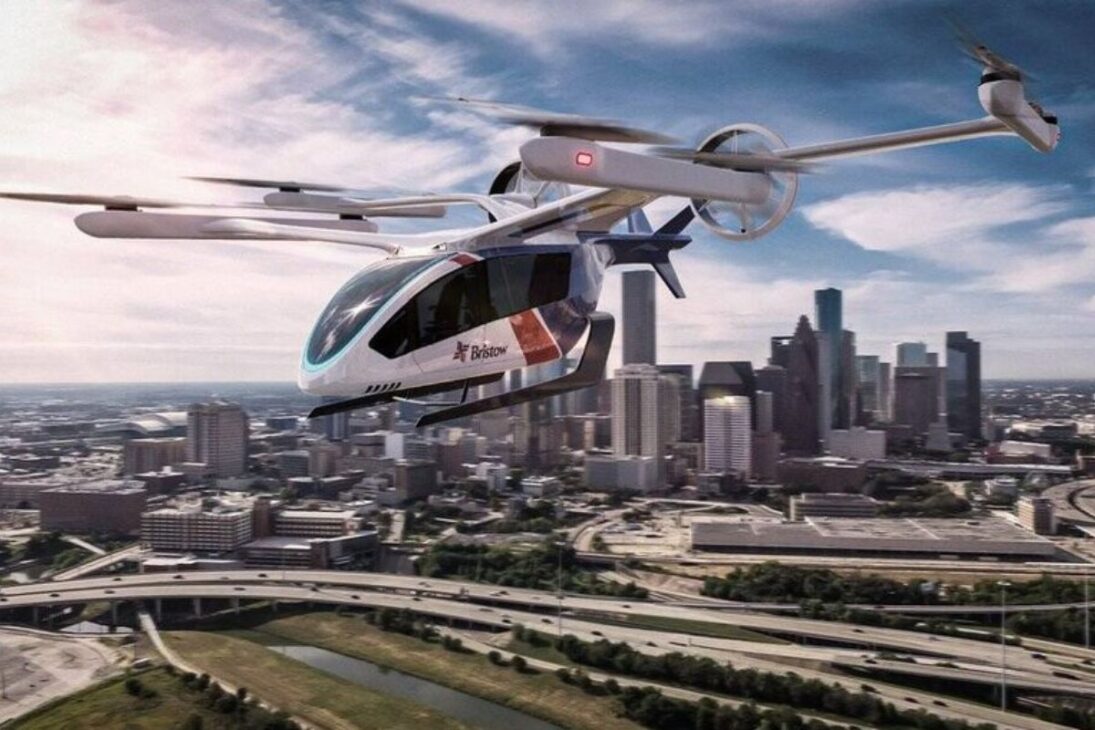
The main objective of the multiple engine design is to drastically reduce noise. Using eight smaller propellers allows them to spin at a lower speed to generate the same lift as a helicopter rotor. Lower rotational speed results in a much quieter and less annoying sound.
But the big acoustic advantage of the Brazilian flying car engine from Eve is another: during the cruise phase, the eight takeoff motors are completely turned off. This means that while flying over the city, the aircraft will be propelled only by the rear motor, optimized to be silent. This feature is crucial for gaining acceptance from communities and getting permission to operate in densely populated areas.
More Engines, More Safety: Redundancy as a Pillar of the Project
Safety is the most critical benefit of distributed propulsion. In a system with eight independent motors, the failure of one or even several of them is not catastrophic. The flight control system is smart enough to redistribute power to the remaining motors, ensuring that the aircraft can continue flying and make a safe landing.
This redundancy is a fundamental safety advantage compared to traditional helicopters, which typically rely on a single engine and a single main rotor. The philosophy is simple: more engines mean more layers of safety.
From Taubaté to the World: Production and the Schedule for the Start of Flights
The home of the Brazilian flying car engine and the aircraft will be in Taubaté, in the interior of São Paulo. The first Eve factory is already under construction on a plot of land from Embraer, with financial support from BNDES. The project foresees a modular production with a final capacity to manufacture up to 480 aircraft per year.
While the initial goal for the start of operations was 2026, the schedule has been updated to a more realistic date based on already signed contracts. The current forecast, confirmed by the company, is that the first commercial flights will begin in the fourth quarter of 2027.
Beyond the Engine: The Complete Ecosystem for Urban Air Mobility


Embraer’s strategy with Eve goes well beyond selling an aircraft. The company is creating a complete ecosystem for air mobility, which includes a portfolio of maintenance and support services (TechCare) and air traffic management software (Vector).
This approach is the “Embraer Advantage” in action. The company leverages its more than 50 years of experience in certification, large-scale production, and global support to build a solid and reliable business. Eve’s bet is not just on a futuristic technology, but on a complete and well-structured business model to lead the next era of aviation.