Portuguese
  Spanish


The Beautiful Future and Blooming Future tanker ships join the Braskem Trading & Shipping fleet as part of a logistical modernization aimed at more efficient voyages, lower fuel consumption, and the advancement of decarbonization in the maritime transport of naphtha, an input used in industrial chains that supply products for daily Brazilian life.
The Beautiful Future and Blooming Future tanker ships are now part of the Braskem Trading & Shipping, BT&S, fleet, in another stage of the company’s logistical modernization. The vessels are LR1 type and were designed to transport naphtha on long-distance routes between the U.S. Gulf Coast and Brazil.
According to the company, the arrival of the two ships reinforces an increasingly present movement in maritime transport: seeking more efficiency without giving up essential routes for the industry. According to Braskem, the new vessels can reduce CO₂ emissions by about 30% compared to the current fleet average, equivalent to an estimated reduction of 6,500 tons per year.
New ships enter an important route for Braskem
The two tanker ships were developed for a route that plays a direct role in supplying Braskem’s industrial operations. On a typical voyage, the vessels travel more than 5,500 nautical miles between the United States and Brazil to transport naphtha.
-
Oil production grows in Rio, but reserve replacement raises a warning sign

-
Petrobras is expected to complete the drilling of the Morpho well in the Foz do Amazonas in August 2026, the first well in the Equatorial Margin, an oil frontier that the ANP estimates at more than 30 billion barrels and could redraw the map of Brazil.

-
Oil returns to the center of concerns with tension between the US and Iran

-
IEA reduces forecast for global oil demand in 2026 after impacts of the Middle East crisis
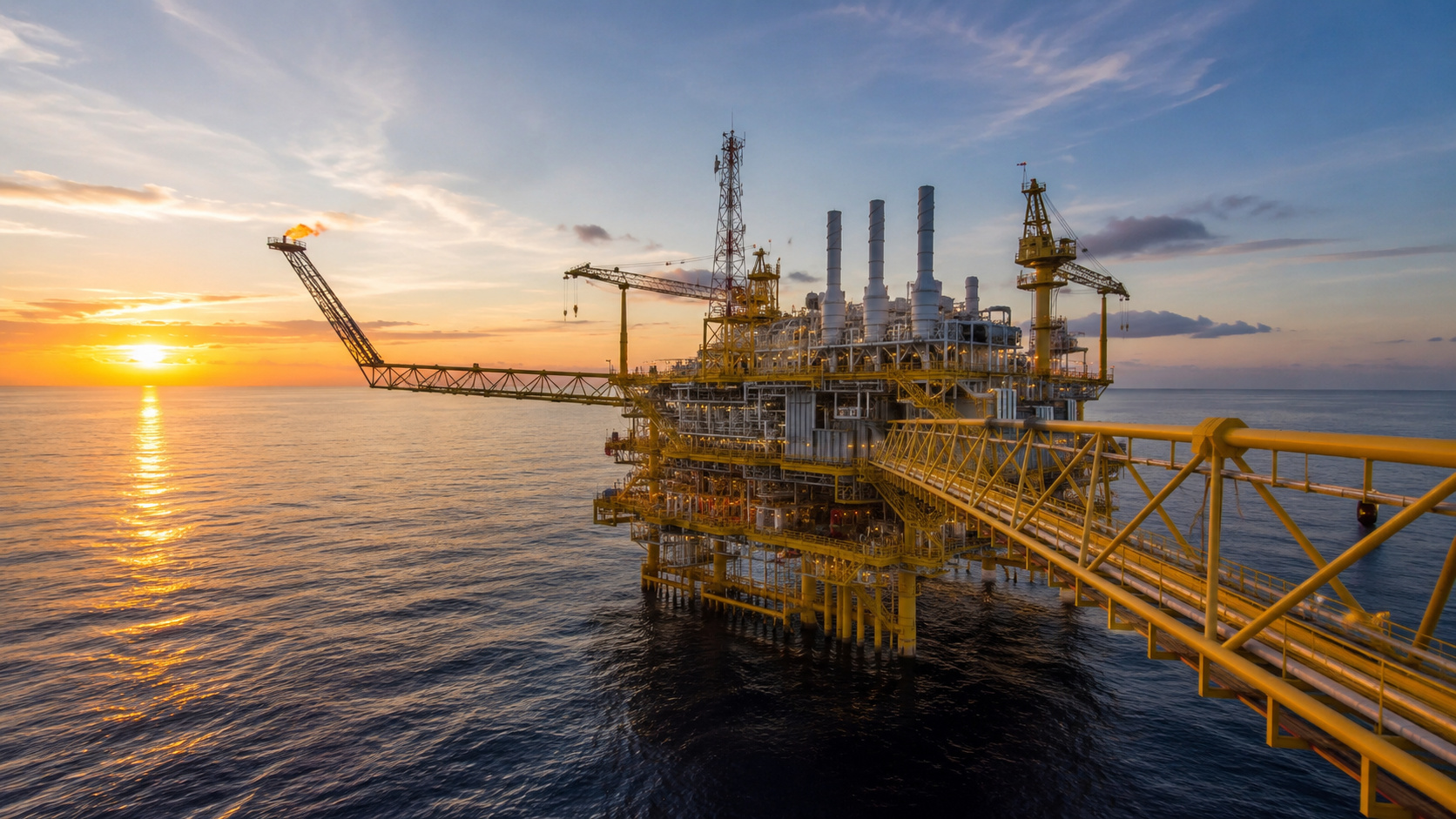


Naphtha is an essential raw material for the petrochemical chain. From it, everyday items are produced, such as packaging, medical supplies, and household products. Therefore, the logistics of this route is not just a matter of transport: it is part of the mechanism that keeps an industrial operation running.
The Beautiful Future and Blooming Future were officially presented at a ceremony held in China on May 8, 2026. Their incorporation was announced by Braskem on May 12, 2026, in São Paulo.
The vessels are the first LR1 ships delivered to Braskem Trading & Shipping in 2026. Two other ships are already under construction and are expected to join the company’s fleet by early 2027.
Emissions reduction is the central point of the new fleet
Braskem states that the new ships were designed to emit approximately 30% less CO₂ compared to the average of ships currently operated by the company. This estimate represents about 6,500 tons of emissions avoided per year.
This advance is part of the strategy for logistical modernization and decarbonization of maritime operations. The idea is to reduce the environmental impact of a route that will continue to be necessary for the transport of raw materials between the two countries.
The reduction is associated with the set of onboard technologies, lower fuel consumption, and optimized speed operation. In practice, the company seeks to make long-distance maritime transport more efficient, while maintaining operational regularity.
The important point is that the change does not eliminate emissions from maritime transport. The reported gain is in comparison with the company’s current fleet, within an activity that continues to depend on large international displacements.
Modern engines and optimized hull help with efficiency at sea

According to Braskem, the tanker ships feature latest-generation engines, optimized hull design, and emission control systems. These elements were combined to reduce fuel consumption and improve the vessels’ performance on long voyages.
The optimized hull plays a relevant role in this process. In large ships, the vessel’s design influences water resistance and can contribute to more efficient navigation.
Optimized speed also factors into this. By operating at a planned pace to reduce consumption, ships can decrease emissions associated with transporting naphtha between the United States and Brazil.
On routes spanning thousands of nautical miles, efficiency gains along the way can contribute to the company’s reported annual emissions reduction. It is this cumulative effect that makes fleet modernization an important part of maritime logistics.
Naphtha transport requires scale, regularity, and planning
The route between the U.S. Gulf Coast and Brazil requires planning because it involves distance, industrial supply, and regularity. In this context, ships are not just means of transport, but part of the company’s production chain.
The naphtha transported by the vessels supplies Braskem’s industrial operations. Therefore, reliability and efficiency are relevant factors for maintaining the flow of raw material on an international route.
Fleet modernization also connects to operational competitiveness. More efficient ships can improve logistical performance by reducing fuel consumption, in addition to responding to increasing demands regarding emissions in the maritime sector.
Long-distance maritime transport has been pressured to combine scale, regularity, and relatively lower environmental impact. For companies with international routes, this combination has gained strategic importance.
Braskem is already preparing new ships to expand its fleet
The Beautiful Future and Blooming Future represent the first step in this LR1 renewal phase within Braskem Trading & Shipping. According to the company, two other ships are already under construction and are expected to be incorporated into the fleet by early 2027.
This shows that the initiative is not limited to two isolated vessels. The company treats the incorporation as part of a broader movement to modernize the maritime fleet.
Braskem’s Logistics Director, Silvia Migueles, links the initiative to a global movement in the maritime industry aimed at fleet modernization and the reduction of CO₂ emissions. This movement is driven by international goals for energy efficiency and decarbonization of maritime transport.
The arrival of the new tankers shows how maritime logistics has become part of the efficiency goals of large industrial supply chains.
Efficiency at sea becomes part of the industrial strategy
The incorporation of the tankers Beautiful Future and Blooming Future shows how the discussion about emissions has also reached supply routes. In Braskem’s case, the focus is on transporting naphtha between the United States and Brazil with more modern vessels and lower consumption.
Braskem Trading & Shipping Director, Hardi Schuck, stated that the ships represent an advance in the company’s logistical evolution and reinforce the long-term vision for more efficient maritime transport.
Fleet modernization, therefore, does not appear merely as a technical update. It connects to international logistics, operational efficiency, and the attempt to reduce emissions on a route important to the company.
Ultimately, Braskem’s new tankers show that efficiency at sea has become part of the strategy for large industrial operations.
Do you think more modern vessels already represent a sufficient advance for maritime transport, or does the sector still need deeper changes to reduce emissions? Share your opinion.