Portuguese
  Spanish


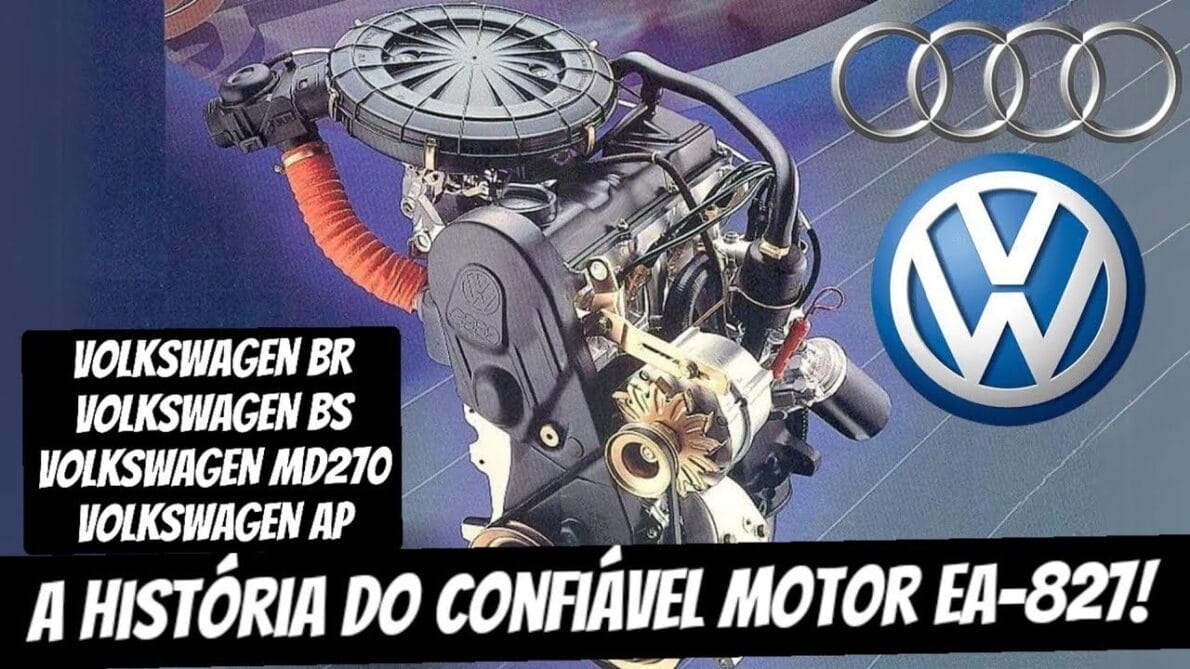

EA-827 Engine: The Beginning of Volkswagen AP and the Revolution in the Automotive Industry
The EA-827 engine, a project initially designed for the Audi line, quickly proved to be a key component in the evolution of various brands within the Volkswagen Group, including the creation of the legendary Volkswagen AP. This engine not only helped modernize automotive mechanics but also brought robustness and reliability that won over both the European and Brazilian markets.
But how did the EA-827 engine go from a European creation to a legend on Brazilian roads? The answer lies in engineering, in the adaptations and mechanical innovations that made it iconic.
The Emergence of the EA-827 Engine and Its Evolution
The EA-827 engine was developed in the 1970s, initially to equip Audi vehicles. Its mechanics were designed with a focus on robustness and flexibility, allowing for both gasoline and diesel variations, making it an adaptable solution for different markets.
-
Former Atacadão Employee Turns Online Cake-Baking Lessons into a Confectionery Brand with Factory, Store, Delivery, and Nearly $400,000 in Revenue

-
Brazilian Startup Sells Nearly 9 Million Surprise Bags of Near-Expiry Food, Prevents Thousands of Tons of Waste, Aiming for $42 Million Revenue by 2026
-
How to Prevent Brown Recluse Spider Bites: Common Hiding Spots and Free Tips to Reduce Risks

-
Natto: The Unusual Japanese Superfood Gaining Popularity on Social Media and Driving Record Exports




As time went on, Volkswagen recognized the potential of this engine to meet the needs of its portfolio and decided to implement it in strategic models. Thus, the first cars with the EA-827 engine were born, such as the Passat, which soon stood out for its innovative features, such as liquid cooling, something rare in a market dominated by air-cooled engines.
According to a mechanics expert interviewed by CPG, the EA-827 engine was easy to modify, which facilitated its adaptation to Brazilian conditions. With some improvements, versions such as the BR, BS, and finally the Volkswagen AP emerged, which quickly gained prestige.
The Legacy of the Volkswagen AP

In Brazil, the EA-827 engine was the foundation for the development of the Volkswagen AP, which powered legendary cars such as the Gol, Voyage, Saveiro, and Santana. The reliable, easily maintained mechanics made the Volkswagen AP one of the most beloved options among Brazilian drivers, especially those looking for robust and powerful vehicles.
Mechanical expert Marcos Vinícius highlights that “the Volkswagen AP not only won over consumers with its durability, but also for its engines that handled adaptations well, such as the use of ethanol and even preparations for competitions.”
The question remains: will any other engine achieve the legendary status of the AP in Brazil?