






 Portuguese
  Spanish


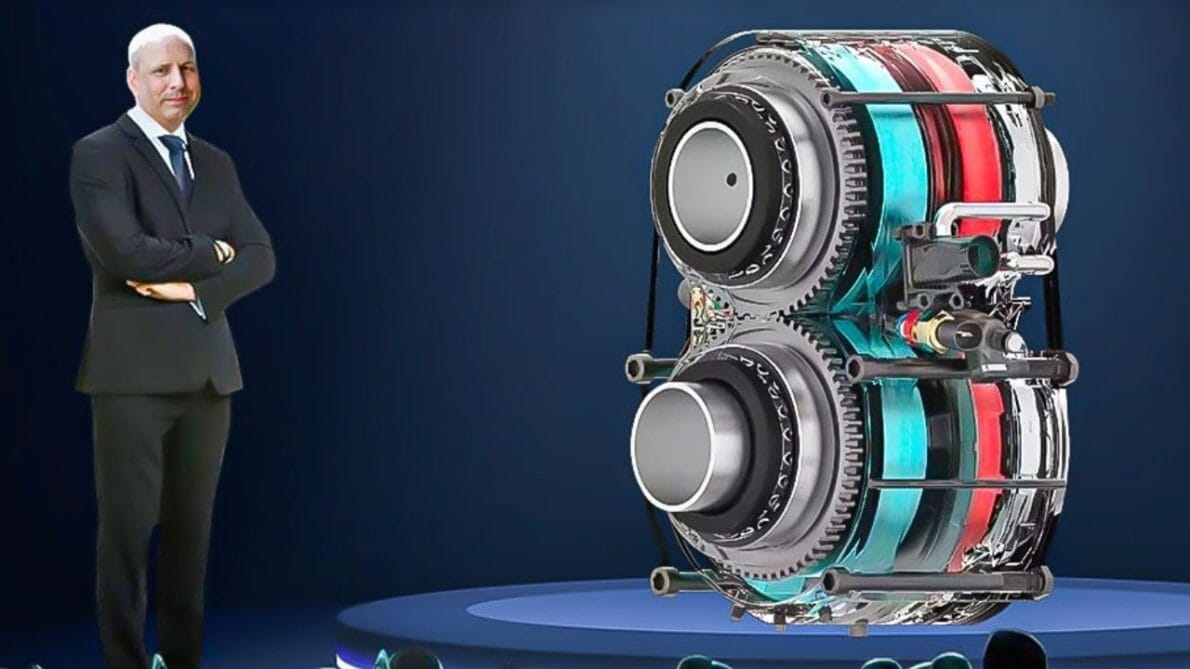


New Omega-1 Rotary Engine from Astron Aerospace: Will It Be the End of Electric Vehicles?
Astron Aerospace now wants to change the game with the new Omega-1 rotary engine from Astron Aerospace. They claim that this technology can surpass traditional electric and combustion engines. But is it true or just another hype?
This revolutionary engine, developed by Aston Aerospace, does not use cylinders or pistons. Instead, it operates with electromagnetism and a rotating rotor, creating a super-efficient combustion. Basically, an engine without the parts we know, promising more efficiency and fewer emissions.
How The New Omega-1 Rotary Engine From Astron Aerospace Works
Instead of pistons moving back and forth, the new Omega-1 rotary engine from Astron Aerospace uses two interconnected rotors that spin and compress the fuel in chambers. This creates a high-pressure and high-temperature environment, transforming the fuel into plasma. This plasma is then used to generate rotational movement, all controlled by electromagnetic fields.
-
She spent 73 years breathing inside an iron lung, survived the aftereffects of polio, and became the last woman in the United States dependent on the equipment before dying at 78 years old.

-
Brazilian students created a $1 filter using pine bark, cotton, and 3D-printed parts to clean cassava wastewater, reduce the toxicity of a hazardous waste, and transform contaminated water into biofertilizer.

-
Astronaut from Artemis II steps down after mission to the Moon and decision surprises after a record of 406,771 km, a historic 10-day journey, and an unprecedented achievement for Canada.

-
A fossil kept for years in a small museum in Montreal concealed 450-million-year-old soft tissue, a discovery that has only happened once before in history.


Theory is fascinating, but practice may be another story. Integrating this technology into mass-produced cars can be extremely complicated and expensive. Fewer moving parts, less wear, right? Perhaps not. High technology may require specialized maintenance, something that is not accessible to everyone.
This engine still relies on an innovative fuel, which may not be available on a large scale. Additionally, the environmental impact of this fuel still needs to be tested long-term.
Impact on the Electric Vehicle Market
With the growing popularity of electric vehicles, the arrival of the new Omega-1 rotary engine from Astron Aerospace may seem like a threat. However, the infrastructure for electric vehicles is already well established, with chargers and batteries becoming more accessible and efficient. Switching all this infrastructure to a new technology could be a step back.
New Omega-1 Rotary Engine From Astron Aerospace Is An Ambitious Promise
The new Omega-1 rotary engine from Astron Aerospace is an ambitious promise, but it is still far from becoming a reality. The idea of a more efficient and less polluting engine is appealing, but the technical and logistical challenges are enormous. Until then, electric vehicles remain the most practical and sustainable choice.
If Astron Aerospace can overcome these challenges, maybe in the future we will see this technology dominating the roads. But for now, let’s keep a cautious eye on the developments of this promising innovation.










Xupa meu ku!!
Ja está na hora do governo apoiar um fábrica de motores eletrico pra substituir os motores dos automoveis antigo tem pessoa na cidade que ronda menos de 300 km por semana
É ficção ou realidade?