






 Portuguese
  Spanish
  3 min of reading
  3 comments




Viral Record Of Apparently Dead Fish Reignites Scientific Debate About Estivation, Metabolic Resistance, Leather Species, And Real Limits Of Survival Outside Water During Prolonged Extreme Drought
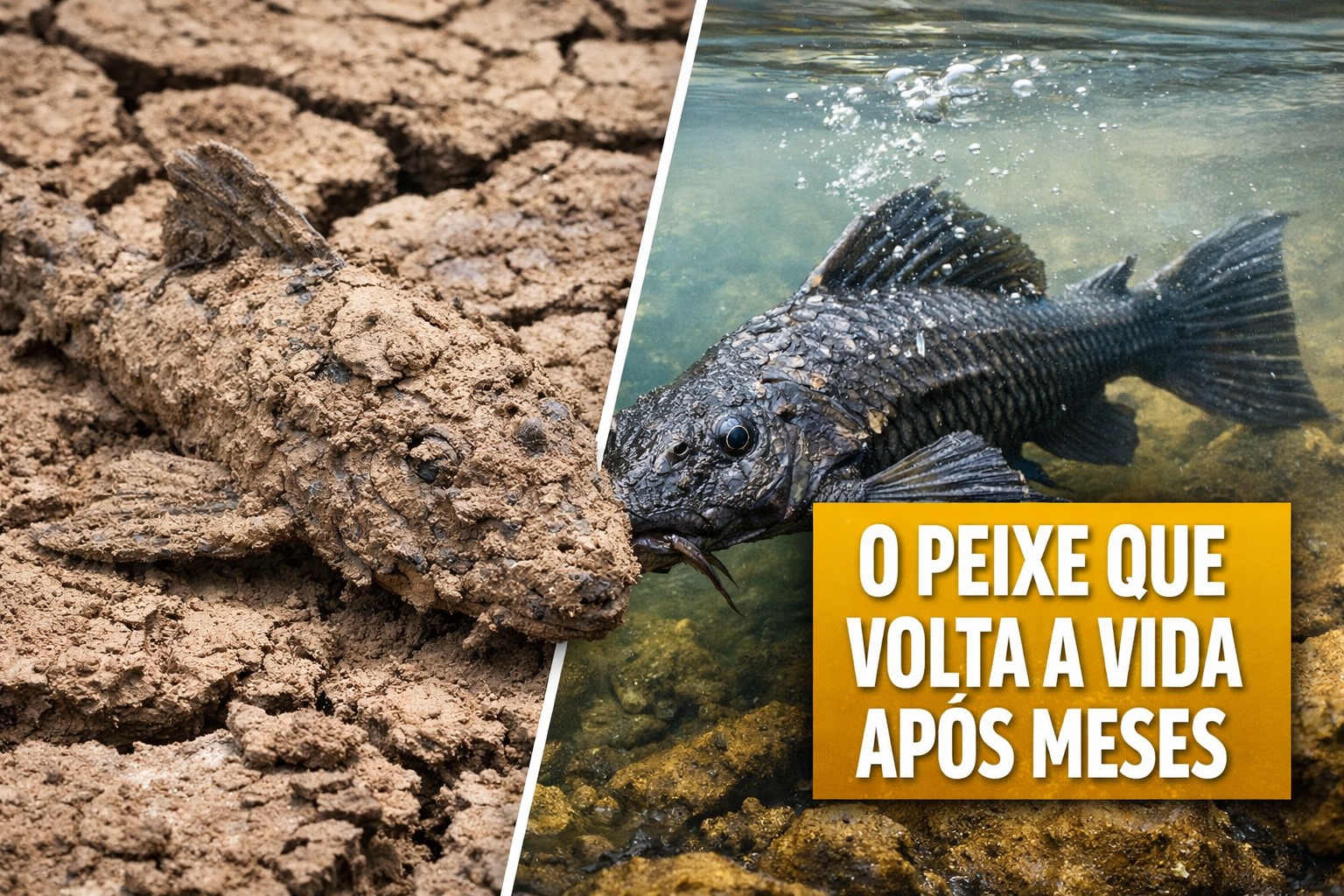
A video circulating on social media shows a fish covered in dry mud, apparently dead, coming back to breathe and swim after contact with water, raising doubts, curiosity, and scientific explanations about extreme survival in temporary and unstable environments.
A Video That Challenges Immediate Perception
The images show a fish motionless, with a dried body and no apparent signs of life, awakening surprise and disbelief in those who watch the scene.
As soon as the water touches the animal’s body, subtle movements return, breathing resumes, and the fish begins to swim normally again.
-
The factory that fits in a container: Brazilian Army wants to produce bomber and kamikaze drones on the front line with 3D printing, seeks partners to set up a mobile combat unit, and tries to shorten in Brazil the war logic that exploded in Ukraine.

-
Man creates homemade system with laptop batteries and reduces dependence on the power grid; the project has been operating since 2016 with reused batteries, 24 solar panels, and more than 10 kW.

-
China’s logistical rise raises an alert for Brazilian infrastructure: AI-driven ports handle 47 million TEU, Beijing invests R$ 285 billion in Africa and threatens up to US$ 60 billion of Brazilian agribusiness while Santos faces historical bottlenecks.
-
NASA focuses on astronaut feces to feed plants on the Moon with a system of 3 bioreactors capable of recycling waste, recovering water, and extending space missions after achieving 98% reuse on the ISS.


What seems impossible at first quickly spread across social media, accompanied by comments suggesting a supernatural event or a supposed miracle.

The Science Behind An Extreme Phenomenon
Despite the impressive appearance, the episode has a scientific explanation related to survival strategies developed by species that live in temporary environments.
Instead of migrating or dying during dry periods, these fish enter a state of biological pause, reducing vital functions to the minimum necessary.
This mechanism allows the organism to endure extreme conditions until the environment provides enough water and oxygen again.
Catsfish And The Limits Of Resistance
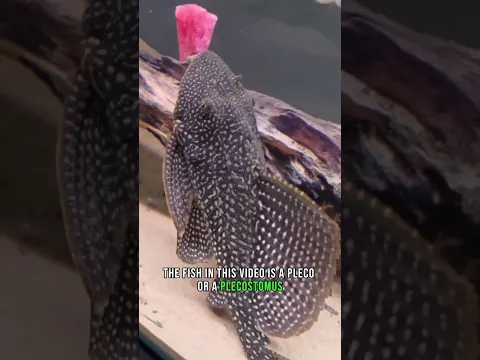
The catsfish is known for its body covered with bony plates, sucker-shaped mouth, and common presence in rivers, lakes, and aquariums.
It is a resilient fish, protected by a kind of natural armor, capable of tolerating adverse conditions for limited periods.
However, not every catsfish has the ability to survive outside water for long intervals, as suggested by the viral video.
Species That Withstand Lack Of Water
Species of the genus Hypostomus depend on continuous water, current, and good oxygenation, being common in watercourses and aquariums.
Still, like other leather fish, they can withstand hours or days in humid environments, breathing oxygen from the air or through their skin.
This explains how an apparently motionless fish can resume movements when it comes into direct contact with water again.
Estivation And The Temporary Suspension Of Life
Estivation is a biological mechanism similar to hibernation, used to face long periods of drought in unstable environments.
During this process, the fish buries itself in the mud, drastically reduces its metabolism, and produces a hardened mucus capsule.
This layer prevents excessive water loss and allows the organism to remain functional, even if almost without visible movements.

When The Environment Returns To Offer Conditions
With the return of rain or humidity, the mucus dissolves, breathing resumes, and the animal comes out of its metabolic pause state.
The body, previously rigid and seemingly lifeless, gradually starts to react until it regains normal movements.
What seems like a miracle, therefore, happened through an extreme biological adaptation developed to ensure survival in unpredictable scenarios.
With information from Xataka.








A alguns anos atrás pesquei uns vinte cascudos,coloquei em uma sacola e trouxe para casa .no outro dia fui limpar e para espanto meu os bichos estavam vivos. Sem um pingo de água.
Dei pera um vizinho que tem tanque de peixe e ainda se reproduziram
Ola desculpa mais essa matéria é enganosa, os cascudos não passam meses fora d’água, no máximo um ou dois dias e o único estudo científico que fala sobre isso não é de Hypostomus.
Mutante por quê? Existem anfíbios que se comportam exatamente da mesma maneira e não são mutantes também.