Portuguese
  Spanish


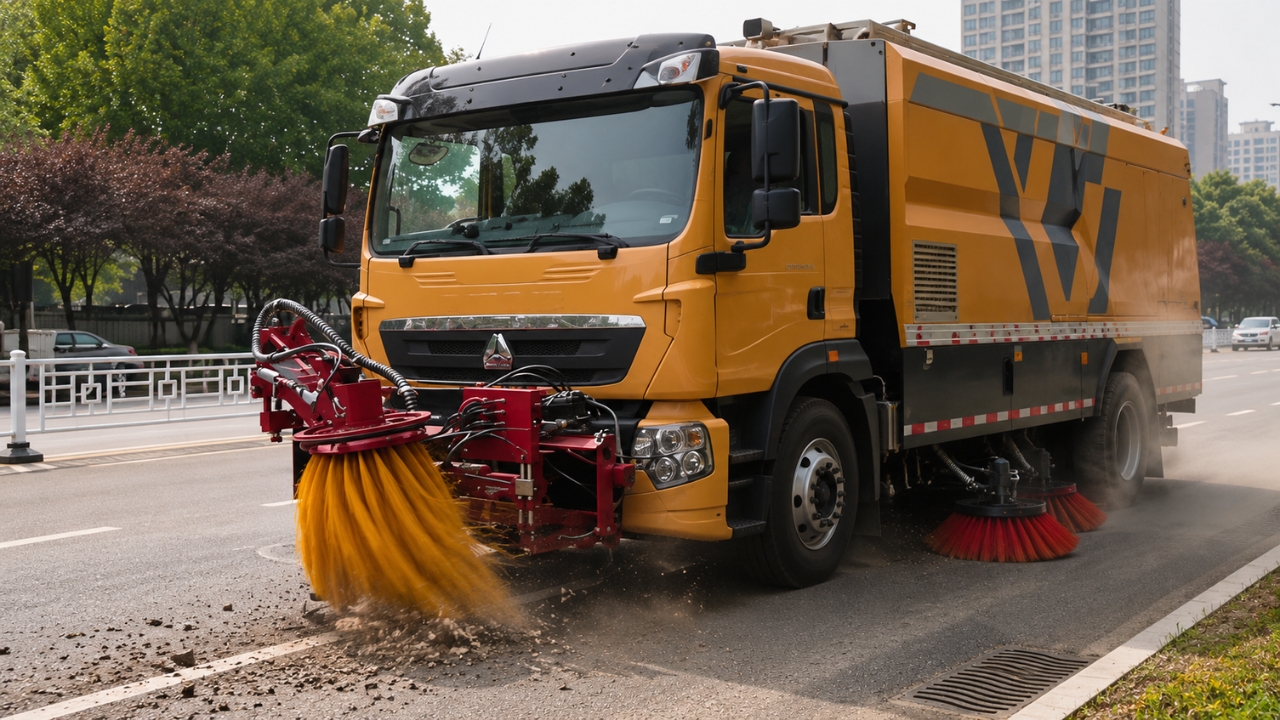

The equipment developed in China shows how highway maintenance can enter a new phase, with machines capable of collecting dirt, debris, and hazardous objects directly from the road without turning cleaning into long closures.
A video released by pages and profiles linked to China went viral by showing a high-speed road cleaning machine collecting stones, dust, and debris directly from the asphalt. The scene was associated with a Chinese device capable of operating at up to 80 km/h, a speed much higher than conventional urban sweepers.
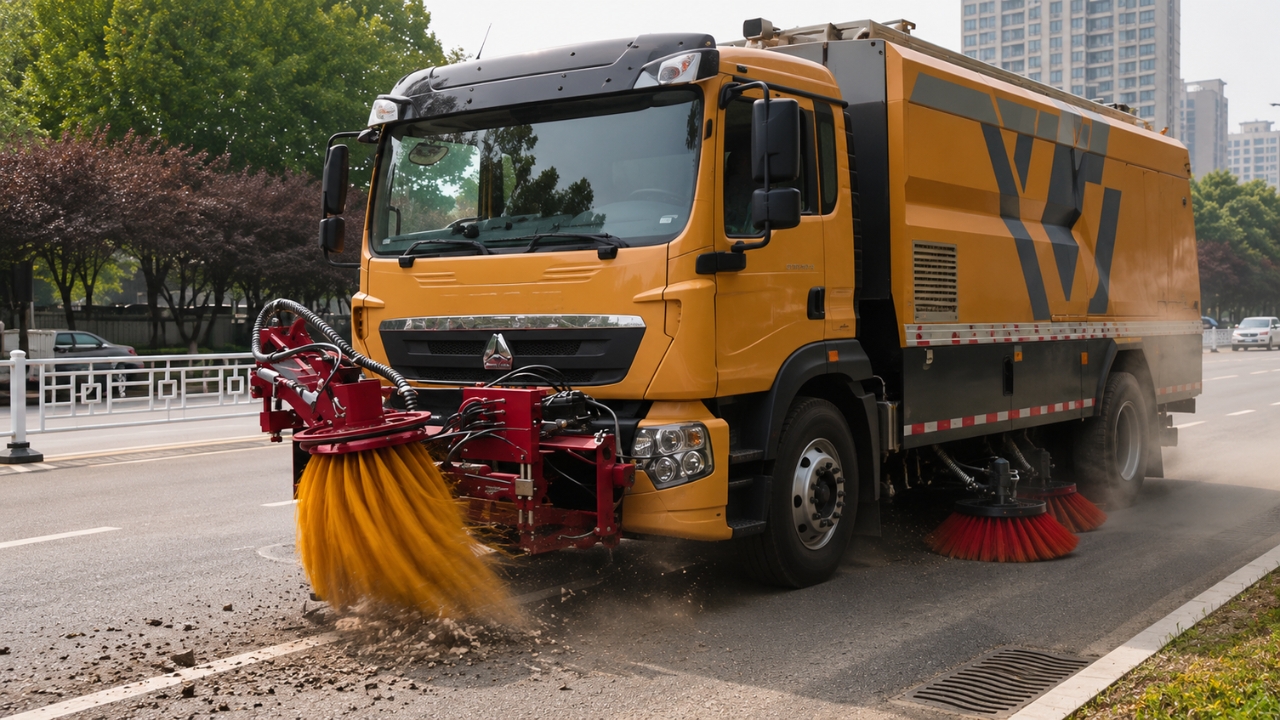
In the images, the vehicle appears as a heavy-duty yellow truck, with a high cabin, closed body, front brushes, hydraulic arms, lower sweeping system, and a structure prepared to collect road debris. The setup does not resemble a simple urban cleaning truck but a machine aimed at highways, expressways, and high-efficiency maintenance.
The promise behind the technology is straightforward: clean the road while moving, reduce blockages, avoid long closures, and decrease risks for drivers and maintenance teams.
-
The large jar blender has a rival: Oster Ultra Power bets on 1,000 W, six stainless steel blades, and two portable cups with leak-proof lids.

-
Tesla injected an additional $250 million into the German factory, doubled the battery cell target, and opened its own production line for startups.

-
No more TV stuck on the wall: Samsung The Freestyle+, the new projector with over 400 lumens projects on walls, floors, and ceilings, bringing cinema to any corner of the house.
-
A Japanese governor single-handedly stalled the construction of the world’s fastest train for nine years, and only now has he agreed to allow a tunnel excavated at a depth of 1,400 meters.



What is confirmed in the video and what still needs caution


The central point of the disclosure is the high-speed operation. The equipment was presented as a Chinese road sweeper capable of cleaning roads at up to 80 km/h, removing debris such as stones, dust, metal fragments, and larger debris.
In the video, it is possible to see the truck operating on a paved road, with front and lower brushes in action. The machine pushes, sweeps, and concentrates scattered debris on the road, while raising dust and collecting part of the material during movement.
However, the public sources that echoed the video do not provide, in a fully detailed manner, the exact model of the truck, nor all the factory technical data. Therefore, the connection with specific manufacturers should be treated as industrial context, and not as absolute confirmation that all data belongs to the same vehicle filmed.
What can be safely stated is that the video shows a Chinese high-speed road cleaning truck, with brushes and a sweeping/suction system, promoted as a solution for highway maintenance with less traffic impact.
Why cleaning a highway at 80 km/h draws so much attention
On busy highways, a piece of metal, a loose stone, or wood fragments on the asphalt can cause serious accidents. Flat tires, loss of control, sudden braking, and chain collisions are among the risks associated with debris scattered on the road.
The problem is that conventional cleaning usually requires slow vehicles, teams close to traffic, and temporary blockages. On expressways, this can lead to congestion, delays, and new dangerous situations.
This is where the appeal of the 80 km/h cleaning truck comes in. By operating at a speed compatible with fast lanes, the machine promises to transform a slow task into a more agile operation, with less interference in the flow of cars and trucks.
For countries with large transportation networks, any technology capable of reducing highway blockage time can represent a gain in road safety, logistics, and public maintenance.
Brushes, suction, and hydraulic arms work together
From the video images, the vehicle uses a combined system. At the front, there is a red set with mechanical arms and hydraulic hoses, responsible for positioning brushes and directing debris on the asphalt.
The yellow and red brushes appear spinning close to the ground, pushing dirt, small stones, and fragments to a collection area. At the bottom and center of the truck, other sweeping mechanisms help complete the work.
This type of equipment does not rely solely on “vacuuming” the track. It combines mechanical sweeping, dust control, airflow, and suction, creating an integrated operation to handle light and heavy debris.
The logic is simple: move the debris, concentrate the material, capture the dirt, and prevent it from returning to the highway.
The idea of a high-speed sweeper did not come out of nowhere
Although the video has gained traction now, the idea of a high-speed highway sweeper has been appearing in Chinese technical records for years. A Chinese patent related to the concept of highway cleaning describes equipment capable of operating at speeds between 40 km/h and 80 km/h.
This type of record helps contextualize the technology but should not be automatically confused with the identification of the model seen in the video. It shows that China has been researching solutions to clean highways, airport runways, and large paved areas without relying on extremely slow operations.
In practice, the viral video seems to represent precisely this trend: taking road cleaning to a new level, with faster, more robust machines adapted to modern traffic.
The Chinese industrial model behind special vehicles
Besides the truck shown in the images, the case draws attention to a very strong sector in China: special vehicles. Companies like Shandong Dongyue Special Purpose Vehicle Manufacturing are involved in transforming trucks for specific uses, including road maintenance, logistics, special transport, and infrastructure equipment.
This type of industry usually works with platforms provided by major automakers and chassis manufacturers. Groups like Dongfeng are part of this ecosystem of commercial vehicles and heavy trucks, while specialized companies adapt the bases for functions such as urban cleaning, sanitation, cargo transport, road maintenance, and public services.
This does not mean that the exact model in the video is publicly confirmed as being from one of these companies. The relevant point is another: China has a production chain capable of transforming conventional trucks into highly specialized machines to solve concrete infrastructure problems.
A machine that seems simple but reveals a bigger change
At first glance, the truck may seem like just a stronger sweeper. But the impact lies in the concept: clean highways without completely stopping traffic.
If the technology delivers on its promise, it can reduce maintenance time, decrease risks for workers, avoid traffic jams, and make roads safer for millions of drivers.
The video does not allow us to confirm all the model’s data or precisely identify each factory component. Even so, the scene shows a clear direction: road maintenance is shifting from a slow, manual operation to becoming an increasingly automated, fast, and industrialized activity.
In the end, the Chinese truck draws attention not only for sweeping stones and dust from the asphalt. It impresses because it shows how even a basic task, like cleaning a road, can become a symbol of a new phase of infrastructure: faster, more technological, and much less dependent on blocking traffic to function.