





 Portuguese
  English
  Spanish
  4 min of reading
  0 comments


Oil Could Hit 250 Dollars Per Barrel! The Tension Between Iran and Israel Shakes Markets and Could Trigger a New Global Crisis!
The recent escalation of tension between Iran and Israel has generated significant concern in global markets, especially in the energy sector. The attack by Iran and the subsequent missile launch near Tel Aviv not only put the international community on alert, but also had an immediate effect on oil prices, which had been registering a downward trend in recent months. As analysts try to predict the impact of this conflict in the Middle East, the world is closely watching market fluctuations.
The increase in oil prices was not a surprise, as any instability in such a critical region as the Middle East can have immediate repercussions on energy markets. What is concerning is the possibility of an open war between Israel and Iran, which could drastically alter the global economic balance.
A Volatile Market Amidst Conflict
In recent months, oil prices had been declining due to low demand, driven by the slowdown of the global economy and reduced demand from China, the world’s largest oil importer. Before the attacks, the price of Brent crude, one of the main global benchmarks, was below 71 dollars. However, in less than 24 hours after the escalation, the price of Brent rose by more than 5 dollars, reaching around 76 dollars per barrel. In the case of West Texas Intermediate (WTI), the benchmark in the United States, the increase was over 5%.
-
404 km off the coast of Rio de Janeiro, an oil company drilled 5,855 meters into the ocean and discovered the largest oil and gas reserve found in a quarter of a century.

-
Vaca Muerta can supply gas to Brazil, Chile, Uruguay, Bolivia, and Argentina for up to 124 years, but it requires more than $10 billion in infrastructure to distribute the gas.

-
Criminals dig a secret tunnel to tap into Petrobras pipeline, steal 100,000 liters of fuel and put thousands of people at risk of explosion in the Federal District.

-
Oil surges again after attacks and standoff between the US and Iran increase global tension



The immediate price rise reflects the uncertainty surrounding the possible consequences of a war in the region. Iran, which is the ninth-largest oil producer in the world and has the third-largest proven reserves globally, is a key player in the market. The country, a member of OPEC, produces about 3 million barrels per day, accounting for 3% of global production. Any disruption in oil production or transportation in Iran would have a significant impact on the markets, generating fear among investors.
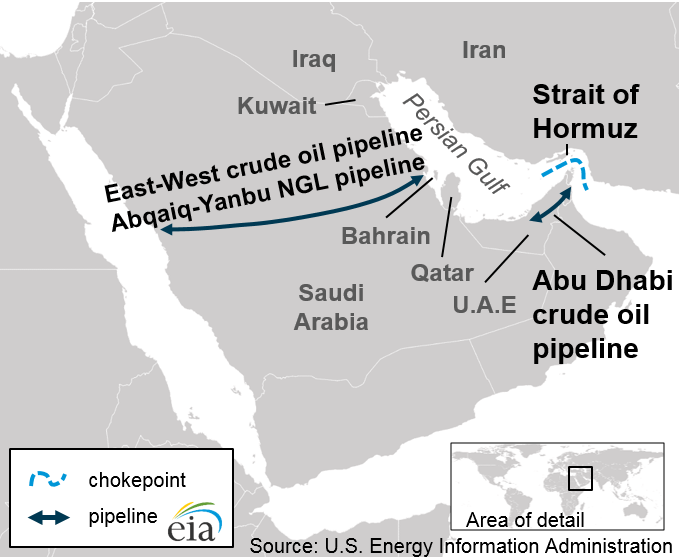
The situation is especially delicate when considering the role of the Strait of Hormuz, one of the most strategic maritime routes in the world. About 20% of the world’s oil passes through this strait, located between Oman and Iran, and any alteration in its security could severely impact global supply. According to the U.S. Energy Information Administration (EIA), over 21 million barrels of oil traverse this region daily, representing 21% of global consumption. An open conflict between Israel and Iran could jeopardize this critical route, triggering a global energy crisis.
Economic Repercussions and the Possible War
Despite initial fears, statements from Iranian authorities aimed to calm the situation. Representatives from Iran told media outlets, such as CNN, that they do not seek to escalate the conflict into an open war with Israel, and the initial responses seem to have been more symbolic than military. However, fear persists, and financial analysts do not rule out a more complex scenario.
Naeem Aslam, Chief Investment Officer at Zaye Capital, highlighted that investors are not currently considering a large-scale war, but warned that if such a scenario occurs, oil prices could skyrocket to unprecedented levels. According to Aslam, the only significant level that could be easily reached would be 100 dollars per barrel. This would represent a considerable increase from the current level, affecting not only the energy sector but also the global economy as a whole.
The Bank of America had previously warned that if the security of the Strait of Hormuz were compromised, oil prices could reach 250 dollars per barrel, an unprecedented level. Such a scenario would have devastating repercussions for the global economy, impacting not just oil-consuming countries, but also industries dependent on this resource. Sectors like transportation, manufacturing, and agriculture would be among the most affected by a continuous rise in oil prices.
The Future of Oil
The uncertainty surrounding the future of the energy market is palpable. While the world anticipated a continued decline in oil prices until the end of 2024, the conflict between Iran and Israel has cast doubt on those projections. Before the escalation, analysts had predicted that the price of oil could fall even below 50 dollars, driven by low demand and rising global inventories, primarily from Saudi Arabia.
OPEC, which has kept its reserves without releasing large quantities to the market, also plays a crucial role in stabilizing prices. However, a military conflict in the Middle East could force the cartel of producers to modify its strategy. Countries like the United States, which have increased their domestic oil production in recent years, would also need to adapt to the new situation.
The question that persists in the markets is whether this conflict will be prolonged long enough to permanently alter oil prices. Just as with Russia’s invasion of Ukraine, geopolitical tensions have the potential to destabilize not only energy markets but also the global economy as a whole. As oil prices fluctuate, investors and consumers are watching with concern what could be the beginning of a new energy crisis.
The situation in the Middle East has reignited fears of a new oil crisis. Although, for now, an open war between Iran and Israel is not contemplated, the mere existence of this possibility has been enough to alter markets and drive prices higher. The future of oil remains uncertain, and any movement in the conflict will have immediate repercussions on the global economy.











Be the first to react!