Portuguese
  Spanish


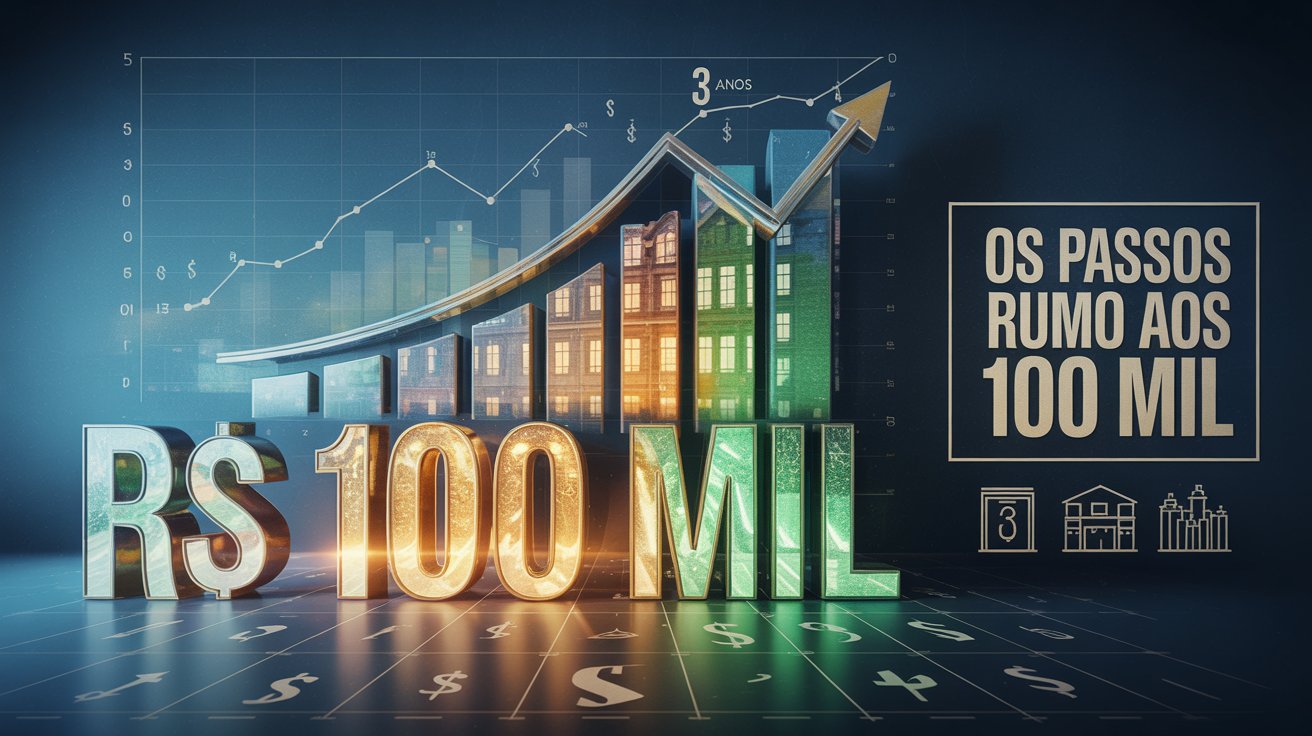

Planning and Investing Correctly Can Make It Possible to Save R$ 100 Thousand in Three Years for the Down Payment of a Property, Combining Financial Discipline, Smart Fixed-Income Choices, and Strategies to Take Advantage of the Best Returns.
Saving R$ 100 thousand in three years for a down payment on a property is the goal of many Brazilians looking to achieve the dream of homeownership.
But how much needs to be invested monthly to reach this amount in such a short time?
Financial planning is essential, and choosing the best investments makes all the difference on the path to that amount.
-
Brazil’s Imigrantes Highway Celebrates 50 Years with Plans for Major Expansion, Including a 6 km Tunnel and Third Lane to Ease Traffic to São Paulo’s Coast

-
Brazilian Job Market Surprises: Unemployment Falls to 5.6%, Hits Record Low for May, Brazilian Incomes Rise, and Underemployment Reaches Lowest Level Ever Recorded by IBGE

-
Chinese E-commerce Giant Predicts Robots Will Replace 700,000 Delivery Workers as Autonomous Vehicles Expand to 200 Cities, Offering Training for Workers to Maintain Their Machines

-
Trump warns Europe with 100% tariff threat on digital tax, potentially impacting wine and trade agreements


Below, experts detail how much needs to be invested monthly in options like Treasury Selic and CDBs (Certificates of Bank Deposits) to achieve the property down payment goal in 36 months.
To answer this question, the report consulted simulations based on three popular fixed-income investments: Treasury Selic, Fixed Rate CDB, and CDB IPCA+.
The calculations take into account fees, taxes, and the current conditions of the Brazilian financial market, considering the scenario of July 2025.
The main objective is to show accessible paths, focusing on security and predictability, for those looking to take the first step towards real estate financing.
How Much to Invest Per Month to Save R$ 100 Thousand in 3 Years

The task of saving R$ 100 thousand in three years requires discipline and consistency in monthly contributions.
According to market specialists, the amount that needs to be invested each month varies depending on the chosen product and its return conditions.
For Treasury Selic, the recommended monthly investment to reach R$ 100 thousand within 36 months is R$ 2,351.87.
Meanwhile, the Fixed Rate CDB, yielding a fixed rate of 14.30% per year, requires a monthly contribution of R$ 2,334.55.
The CDB IPCA+, which yields inflation (IPCA) plus 8.3% per year, demands a monthly investment of R$ 2,361.16.
These values account for all fees involved in the investments, including administrative costs and the incidence of Income Tax (IR) on the yield, which follows a decreasing table according to the investment term.
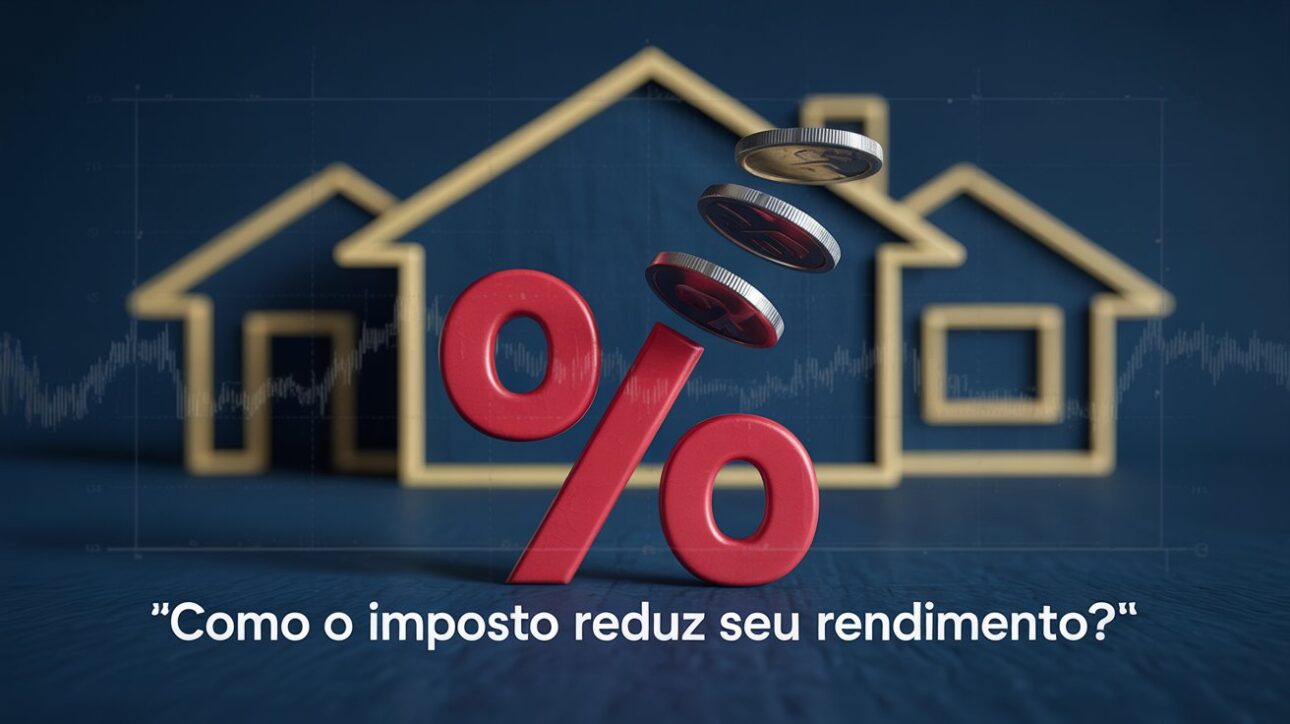
The Impact of Tax on Investments for Property Down Payment
When it comes to income tax, the rules are the same for the three types of investments mentioned.
After two years, the rate on the yield drops to the lowest level, at 15% for withdrawals or maturities over 720 days.
The tax is automatically deducted at the time of withdrawal.
For shorter terms, the rates increase: 22.5% up to 180 days, 20% between 181 and 360 days, and 17.5% for those who stay between 361 and 720 days.
Planning to withdraw after the two-year period can guarantee significant savings on the tax paid, increasing the net amount available for the down payment on the home of your dreams.
Strategies to Migrate Between Investments and Ensure Liquidity
Experts recommend paying attention to liquidity in the final months of the accumulation strategy.
Although the Fixed Rate CDB may offer higher yields, the Treasury Selic stands out for allowing quick withdrawals — usually within a business day — which provides security for those close to completing the property purchase.
Thus, a common strategy is to start contributions in higher-yield CDBs and, as the end of the term approaches, transfer part of the accumulated amount to Treasury Selic.
In this way, the investor maintains high profitability for most of the time while also enjoying the liquidity of the Treasury at the time of cashing out the funds.
Differences Between Available Investments
The Treasury Selic is considered the safest investment in the Brazilian market, as it has the direct guarantee of the National Treasury.
It offers daily liquidity, making it ideal for emergency reserves as well as short-term goals like the down payment on a real estate loan.
However, the yield may vary according to fluctuations in the Selic rate.
On the other hand, the Fixed Rate CDB offers a fixed yield rate agreed upon at the time of investment, providing predictability for those planning their financial future.
It’s an interesting alternative for those looking to avoid potential drops in the basic interest rate, as the yield remains unchanged until maturity.
However, this type of investment is tied to the issuer’s risk, i.e., the bank responsible for issuing the bond.
The Credit Guarantee Fund (FGC) provides coverage of up to R$ 250 thousand per CPF and institution in case of bank failure.
The CDB IPCA+ offers a return comprising a fixed percentage plus the variation of the IPCA, which is Brazil’s official inflation index.
This means that even in periods of high inflation, the purchasing power of the invested amount is protected, which can be crucial in medium to long-term planning.
The Higher the Down Payment, the Lower the Cost of Real Estate Financing
The amount of the down payment in real estate financing directly impacts the total cost of the property over the years.
By accumulating R$ 100 thousand for the down payment, the buyer reduces the amount financed and, consequently, the interest paid to the bank.
Many financial institutions still offer better conditions — such as lower interest rates — for contracts where the down payment represents 20% or 30% of the total property value.
In addition to the financial advantage, contributing a significant amount for the down payment helps maintain the health of personal finances, as the loan installments tend to be smaller and easier to fit into the family budget.
Another advantage is the ability to resell or refinance the property more easily if an unforeseen event arises.
What Are SAC and Price Systems in Real Estate Financing
When planning to acquire a property, it is important to know the main amortization systems used in financing: the Constant Amortization System (SAC) and the French Amortization System (Price).


In the SAC system, the installments start higher and decrease over time, as the amortization is constant and the interest is applied on an increasingly lower balance.
In the Price system, the installments remain fixed throughout the contract, with the interest being more significant at the beginning.
Understanding these differences helps in choosing the model best suited to each buyer’s financial profile.
Recommendations for Those Seeking Security in Investing
When opting for a CDB, the recommendation is to choose banks with a high degree of security, rated AAA by risk agencies.
Among the main Brazilian banks with this classification are Banco do Brasil, Bradesco, Caixa Econômica Federal, Itaú, and Santander.
Remember that diversification of investments is a relevant strategy for those who do not wish to rely on a single type of investment.
Distributing contributions among different products can mitigate risks and take advantage of various market opportunities.
Now that you know how much to invest per month and which paths can lead to achieving the down payment on the home of your dreams in just three years, the question arises: which of these strategies makes the most sense for your current financial reality and what other goals do you plan to achieve with the same level of discipline and organization?