Portuguese
  Spanish


The partnership plans local production starting in 2027, keeps Nissan in control of the British factory, and strengthens Chery’s strategy to grow in the European market
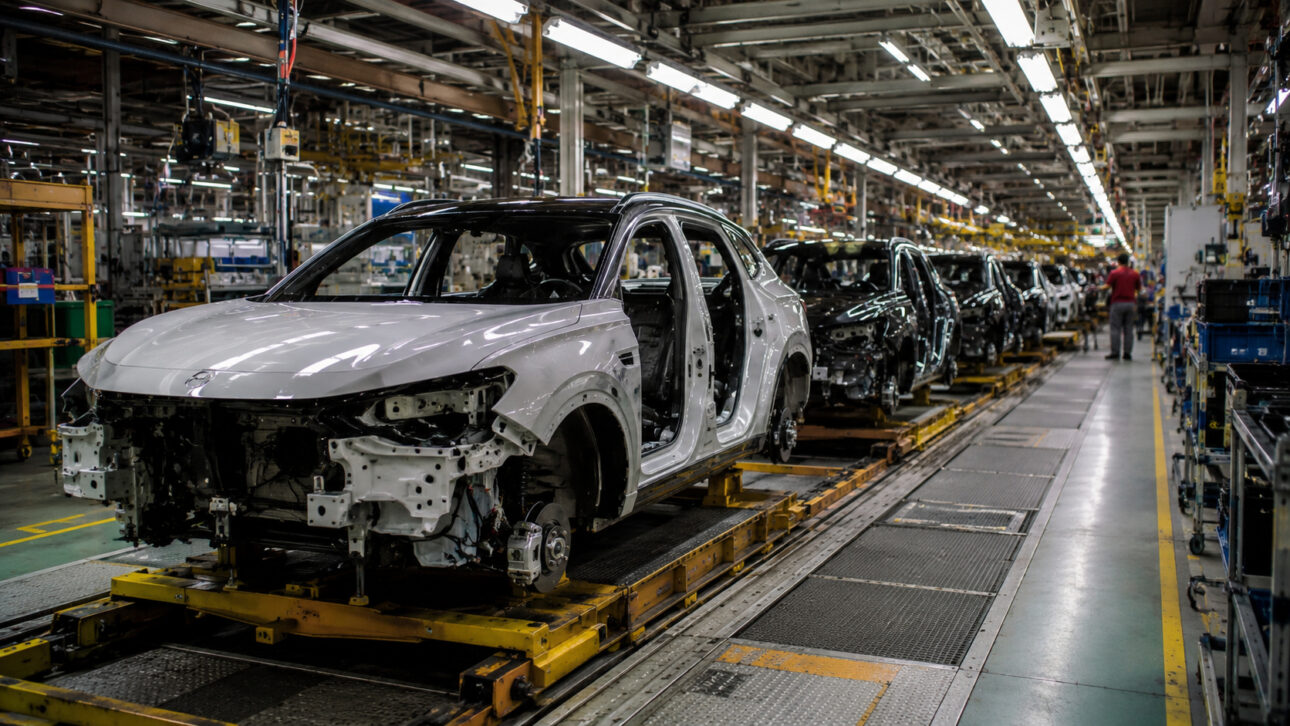
Nissan Motor and the Chinese Chery Automobile announced on Wednesday, June 3, 2026, a non-binding agreement to produce passenger vehicles in the United Kingdom, attracting attention from the European automotive sector. Manufacturing is expected to begin in the fiscal year 2027, at Line One of the Sunderland factory, in the northeast of England, and will be aimed at the British market. The update represents a new stage for Nissan’s industrial unit, which will remain fully owned by the Japanese automaker. This move demonstrates how traditional manufacturers and Chinese brands are seeking to reorganize their operations in the face of tariffs, supply chains, and new market disputes.
Technical agreement reinforces Sunderland’s strategic role
The change involves Line One of the Sunderland factory and, therefore, directly affects one of Nissan’s most important structures in the United Kingdom. The plant employs approximately 6,000 workers and has operated as the Japanese automaker’s central base since the 1980s. Over this period, the unit produced well-known models, such as the Qashqai and Juke crossover SUVs. The agreement, however, is not yet binding, which means the companies must advance in new stages before production. Even so, the decision increases Sunderland’s industrial weight within Nissan’s British strategy.
Talks between Nissan and Chery advanced before the announcement
The Financial Times reported in April 2026 that Nissan and Chery had started talks about automobile production at the Sunderland factory. Two months later, the companies’ announcement confirmed the advancement of negotiations and put the partnership in a more concrete phase. The move highlights Chery’s interest in manufacturing vehicles in Europe through existing structures. In this way, the Chinese company attempts to reduce logistical obstacles, strengthen supply chains, and get closer to the British consumer.
-
99Food Under Investigation by Brazilian Consumer Protection Agency for Lack of Price Transparency, Faces Potential $2.8 Million Fine

-
Race for data centers in Brazil increases pressure on critical energy

-
Growth without profit has become one of the most costly management mistakes in Brazil.

-
Anvisa blocks batch of antibiotic after unexpected discovery in sealed vial and also suspends clindamycin with impurities and saline solution used in intravenous application




Chinese strategy increases pressure on the European market
Chery executives stated, in April 2026, during an event in Paris, that the company sought to expand its vehicle production in Europe through partnerships with other automakers. The strategy allows leveraging already installed factories, reducing costs, and avoiding some of the impacts related to import tariffs. This scenario shows how Chinese brands are trying to accelerate their industrial presence outside Asia. At the same time, Nissan manages to expand the use of its British unit without giving up control of the factory.
Partnership reorganizes expectations for the automotive industry
The agreement between Nissan and Chery reflects an important change in how global automakers handle production capacity, regional presence, and competitiveness. Nissan maintains Sunderland as a strategic asset in the United Kingdom, while Chery gains a potential local base to serve the British market. This type of cooperation shows that the automotive industry is going through a phase of adaptation, especially in light of the Chinese expansion in Europe. Thus, the British factory may assume an even more relevant role in the coming years.
Production planned for 2027 keeps attention on next steps
The forecast for the start of production in the fiscal year 2027 maintains anticipation about which Chery models might roll out from Sunderland’s Line One. The companies have not yet detailed which vehicles will be manufactured, but they have already indicated that production will be aimed at the British market. The partnership, therefore, marks a strategic approach between a consolidated Japanese automaker and a Chinese manufacturer in international expansion.
In this scenario, could Sunderland become an even more important piece in the competition for space in the European automotive market?