Portuguese
  Spanish




Know The Steinway Tower, The Narrowest Building In The World, That Cost US$ 2 Billion And Became A Symbol Of Empty Luxury In Manhattan. An Architectural Icon That Faces The Ghost Of Empty Real Estate In New York.
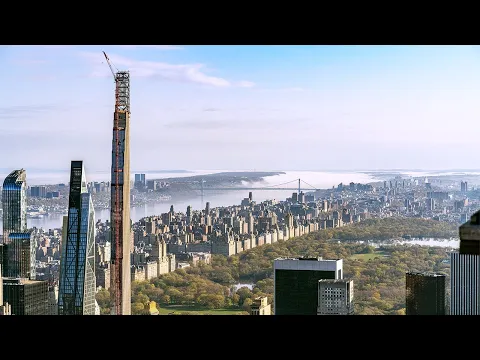
In the New York skyline, where skyscrapers have been competing for attention for over a century, one building stands out not for its absolute height, but for the boldness of its shape: the Steinway Tower, officially called 111 West 57th Street. This architectural colossus is recognized as the narrowest building in the world, with a width-to-height ratio of 1:24. But despite extraordinary engineering, billion-dollar investment, and a prime location on the so-called “Billionaires’ Row,” the tower faces a brutal irony: it is almost empty.
The project that aimed to attract billionaires and global investors has turned into a symbol of excess — and failure — of the luxury real estate market in the United States. Empty properties in Manhattan, especially in ultra-luxurious buildings, have become the new normal, raising questions about urban sustainability, inequality, and the future of major metropolises.
The Narrowest Skyscraper In New York
At 435 meters tall and only 17.5 meters wide at its base, the Steinway Tower was designed to be a combination of classic and modern. The building incorporates the historic Steinway Hall, the former showroom of the iconic piano brand, whose Beaux-Arts style facade was restored and integrated into the main project.
-
Detroit Microhouse Village Offers Former Homeless Residents Ownership After 7 Years: First 3 Tenants Receive Deeds

-
Brazilian Factory in Ivoti Produces 500 Modular Steel and Fiberglass Concrete Homes Following 2024 Floods, Securing $13 Million Contract
-
Brazilian Startup Develops Recycled Plastic Bricks, Cutting Construction Costs by 40% and Speeding Up Building by 90%

-
Tarcísio Opens New São Paulo Metro Line After 18-Year Wait, Offering Free Rides at 6 Stations and Aiming to Cut Commute to 23 Minutes for 633,000 Daily Passengers





The architectural design is by the prestigious firm SHoP Architects, while the construction was undertaken by JDS Development Group and Property Markets Group (PMG). The tower houses only 60 residential units, each occupying entire floors or large horizontal areas with panoramic views of Central Park and the city.
The extreme ratio of 1:24 — that is, the height is 24 times greater than the width — makes the Steinway Tower a unique case in modern civil engineering. The narrowest building in the world challenges not only architectural limits, but also the intense winds of Manhattan, using sophisticated counterweight systems to ensure stability.
The Cost Of Exclusivity: US$ 2 Billion
According to surveys by the New York Times and CNN Business, the estimated cost of the Steinway Tower exceeds US$ 2 billion, making it one of the most expensive residential projects ever built in New York. Each high-end unit was initially assessed at between US$ 20 million and US$ 60 million, with penthouses exceeding US$ 100 million.
This value would be justified, according to developers, by artisanal finishes, noble materials like marble, mahogany, and gold-plated bronze, and exclusive services like 24-hour concierge, spa, indoor pool, gym, and private underground garages.
However, the economic context has changed. The Covid-19 pandemic, followed by global inflation and a contraction in luxury investments, drastically affected the demand for ultra-expensive real estate. This was reflected in sales data for the tower, which has dozens of units without buyers, even after a partial opening in 2021.
Empty Properties In Manhattan: A Structural Problem
The Steinway Tower is not alone. According to a report by Douglas Elliman Real Estate, published in partnership with economist Jonathan Miller, the stock of unoccupied luxury properties in Manhattan reached record levels between 2022 and 2024. Buildings in the so-called “Billionaires’ Row”, such as One57, 432 Park Avenue, and Central Park Tower, are experiencing the same phenomenon: exorbitant prices, minimal occupancy.
The latest data indicates that about 45% of the units in the Steinway Tower remain empty or listed for resale at a discount, many of them priced 15% to 30% below the original price. Some penthouses have been withdrawn from listings due to a complete lack of offers.
This scenario highlights a dysfunction in the luxury real estate market: properties are conceived as financial assets rather than homes. Many units are purchased by foreign investors for speculation purposes, remaining unoccupied for indefinite periods. This creates a “vertical ghost town,” where sumptuous buildings coexist with empty streets.
Luxury That Does Not Pay: Maintenance Costs and High Fees
In addition to the acquisition price, living in a New York Skyscraper like the Steinway Tower involves monthly expenses that border on the absurd. Condo fees easily exceed US$ 10,000 per month, combined with property taxes and maintenance costs that discourage even the wealthiest.
According to CNN Business, maintaining the infrastructure — including high-speed elevators, vibration-resistant systems, security, full staff, and maintenance of common areas — requires a minimum base of active residents to be economically viable. With low occupancy, costs become unsustainable even for developers.
The Engineering Behind The Narrowest Building In The World
The Steinway Tower is not just a luxury item, but also a masterpiece of contemporary engineering. Its structural skeleton includes:
- A central core of reinforced concrete with a thickness greater than 1 meter;
- Side pillars with special metal alloys to withstand wind pressure;
- A damping system at the top of the building with movable counterweights (tuned mass damper) to prevent oscillations.
The facade alternates between mirrored glass and terracotta, creating a vertically segmented aesthetic that pays homage to the classic skyscrapers of the 1920s — but with 21st-century materials and technology.
The total height of 1,428 feet (or 435 meters) makes the tower the third tallest residential building in the world and the second in New York, behind only Central Park Tower. But it is the extreme slenderness that transforms the tower into a global phenomenon.
Steinway Tower and Urban Critique
Critics such as Michael Kimmelman from the New York Times, and experts from the Council on Tall Buildings and Urban Habitat (CTBUH), point out that buildings like the Steinway Tower represent a model of exclusive urbanism, focused on the few and ignoring the needs of the social fabric of the city.
While New York faces a severe housing crisis, with more than 60,000 people homeless, skyscrapers with dozens of floors remain dark at night, a portrait of growing inequality and the disconnection between the real estate market and society.
The tower, although beautiful and innovative, has become a symbol of this contradiction: a monument to speculative capital, more geared towards sovereign funds and foreign investors than to real residents.
A Giant Empty And A Global Lesson
The Steinway Tower, the narrowest building in the world, is a marvel of modern architecture and engineering. It represents the technical pinnacle of vertical construction — but also the practical limit of the real estate market aimed at the few.
Its cost of US$ 2 billion and the current low occupancy reflect a model that, although aesthetically stunning, is not sustainable. In the heart of Manhattan, the tower stands as a symbol of a paradox: absolute luxury and silent abandonment coexist on one of the planet’s most valuable pieces of land.
If New York wants to preserve its vibrant and inclusive identity, it will be necessary to rethink the role of these skyscrapers. And the world, keenly, watches the fate of this slender tower as a mirror of its own urban dilemmas.