Portuguese
  Spanish


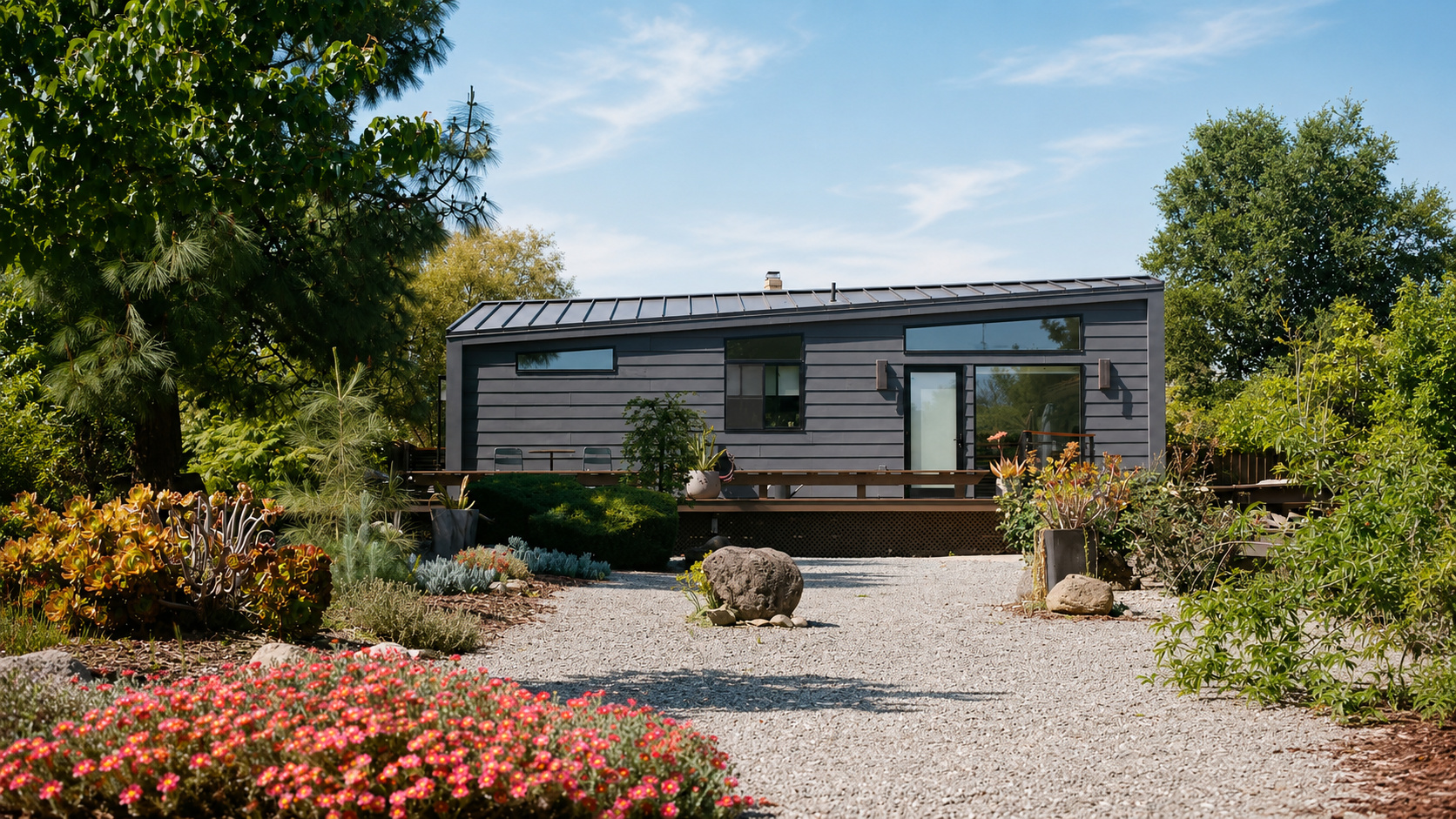

With modern design, cathedral ceiling, and compact structure, the 46 m² ADU offers quick installation, complete comfort, and an affordable alternative to expand housing or generate extra residential income.
Amid the housing crisis that has raised rental prices and made it difficult to purchase properties in various regions of the United States, a specific type of housing has begun to grow rapidly in the market: ADUs, short for “Accessory Dwelling Units,” small independent houses built in the backyard of existing residences. Within this segment, one of the projects that has gained the most attention in recent years is a 46 m² modular unit that arrives almost ready on the site and can be installed in just one day.
The model became known for transforming the concept of “backyard house” into something much more sophisticated than improvised annexes or traditional small outbuildings. The structure arrives with a kitchen, bathroom, bedroom, lighting, plumbing systems, and finishes already installed, drastically reducing construction time on the site.
The proposal gained traction mainly in California, a state facing one of the largest housing crises in the United States. With increasingly expensive land and growing demand for housing, companies began investing in compact industrialized houses that can be quickly installed in already occupied urban areas.
-
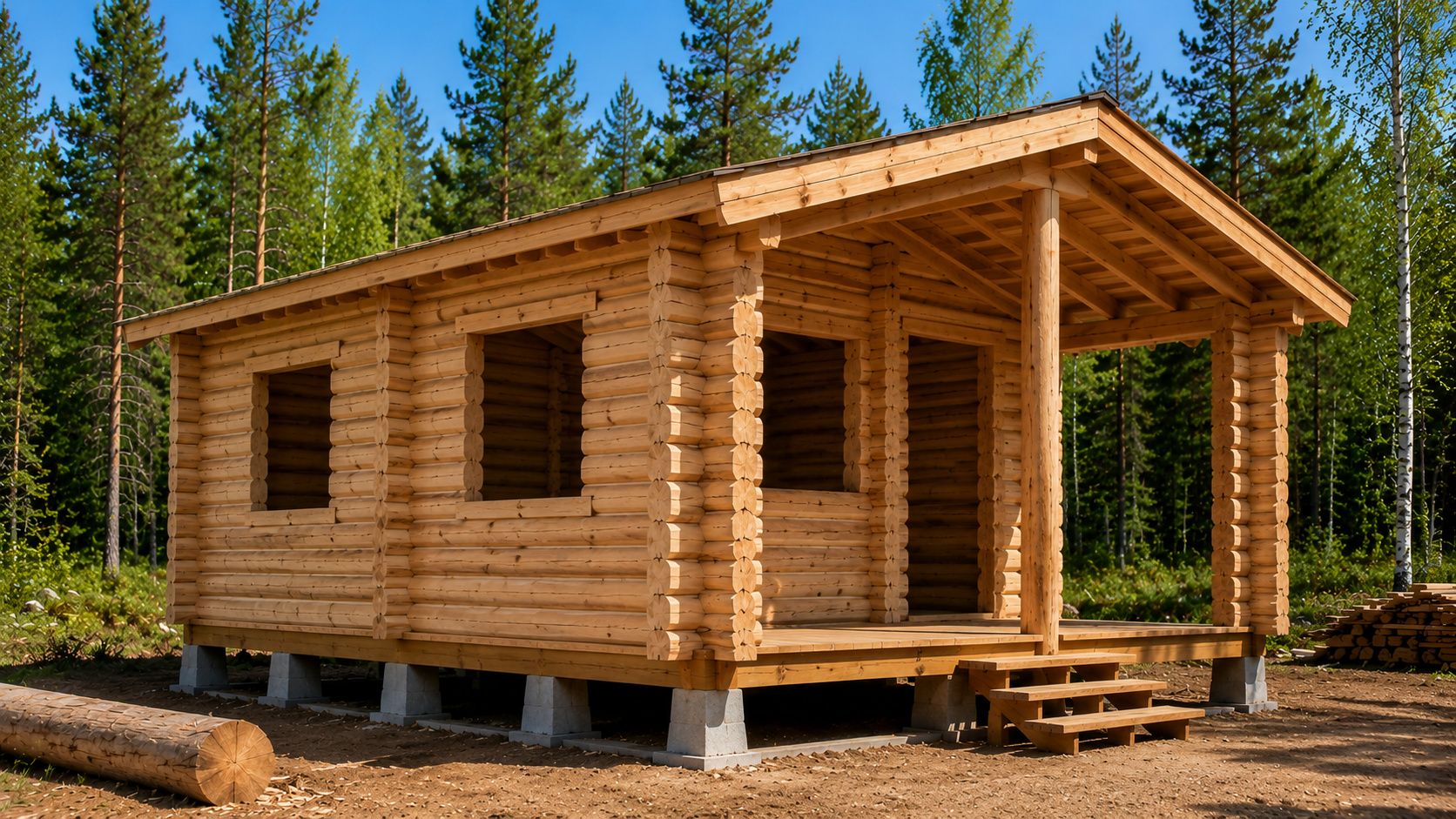
Innovative Project Demonstrates How to Build a Modular, Eco-Friendly Cabin Using Recycled Timber Logs

-
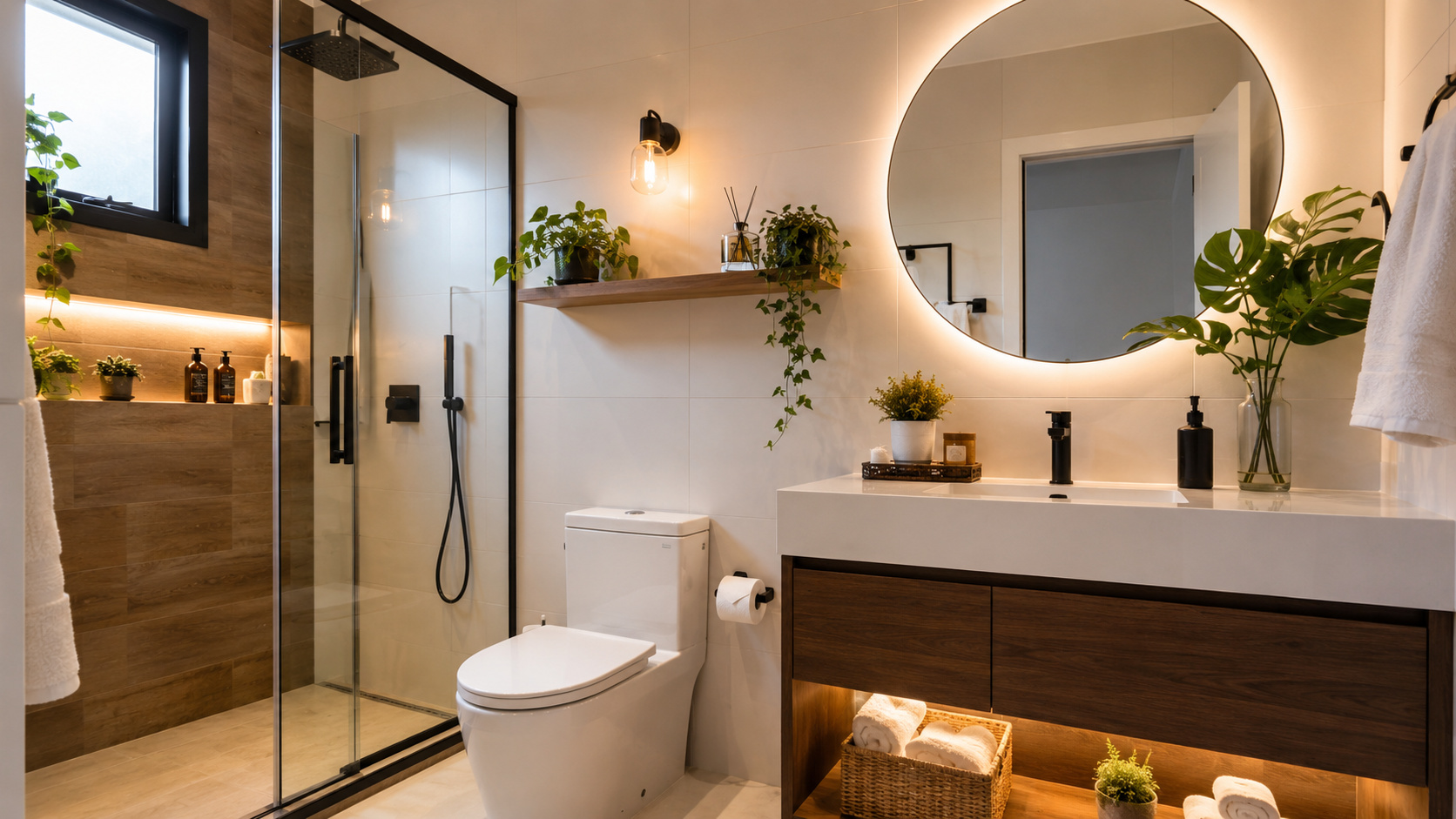
Transform Your Bathroom with Paint, Mirrors, LED Lighting, and Accessories for a Quick, Cost-Effective Makeover
-
Couple Converts 1925 Detroit Bank into Home, Earns $40,000 Annually on Airbnb

-
Tired of Seeing People Sleep in the Cold, London, Canada Opens First Modular Shelter for Homeless with 60 Cabins, Heating, Meals, and Dog Area


Modular house was created to transform backyards into new habitable areas without long constructions
The unit known as Abodu One was designed precisely to take advantage of already existing residential spaces. Instead of buying new land or starting a complete conventional construction, the owner uses part of the backyard to install a fully functional compact residence. According to information released by the company itself, the model has approximately 500 ft², about 46 m², including a bedroom, full bathroom, integrated living room, and equipped kitchen.

The big differentiator is in the manufacturing logic. The house is not built from scratch on-site. Much of the structure is produced in a controlled industrial environment before being transported to the site. This reduces a series of traditional construction problems, such as delays caused by weather, material waste, rework, and long finishing schedules. In practice, the backyard functions only as the installation point for the ready unit. Most of the work has already left the factory practically completed.
Structure arrives practically finished with kitchen, bathroom, and lighting already installed
Unlike many simpler prefabricated constructions, the Abodu One is delivered with a high level of interior finish. According to company materials, the unit already comes equipped with a complete kitchen, appliances, cabinets, lighting, and installed plumbing systems. The bathroom also comes almost finished, including coverings, sink, toilet, and shower area.
The proposal is more reminiscent of delivering a ready apartment than the traditional residential construction process. This significantly reduces the number of professionals needed on-site after the structure arrives. The model uses a cathedral-style high ceiling, a solution that helps to enhance the feeling of internal space despite the compact size.

Additionally, large windows and glass doors were designed to increase the entry of natural light and create visual integration with the exterior. According to the company, the goal was to avoid the claustrophobic appearance often associated with small modular homes.
Installation in just 1 day became one of the project’s biggest differentiators
The point that most caught the market’s attention was precisely the installation time. According to the company, the structure can be placed on the foundation in approximately one day. This does not mean that the entire bureaucratic process happens in 24 hours. There are still steps like licensing, site preparation, foundation, and infrastructure connections.
But the physical assembly of the house on-site is extremely fast compared to traditional construction. The module arrives transported by truck and is usually positioned with the help of a crane. After that, teams carry out electrical, plumbing connections, and final adjustments.

In conventional constructions, just the structural phase often takes weeks or months. In the industrialized modular logic, most of this stage has already been completed even before transportation. This model drastically reduces the visible construction period within the residential site.
Backyard home market exploded after changes in California’s urban laws
The growth of these modular units is directly linked to urban changes implemented in states like California. In recent years, local authorities have started to relax rules for the construction of ADUs on residential lots. The goal was to increase housing supply without relying exclusively on large real estate developments.
As a result, thousands of homeowners began transforming backyards into new independent living spaces. These units started being used in different ways: long-term rentals, Airbnb, housing for elderly family members, residences for adult children, or even complete home offices.
The economic logic also helped in the sector’s expansion. In many regions, the cost of installing a modular ADU became significantly lower than buying a new property. Moreover, the possibility of generating rental income turned these structures into a relatively affordable real estate investment for part of the American middle class.
Industrialized houses try to transform civil construction into factory production
The case of Abodu One represents a larger transformation within the construction industry. More and more companies are trying to transfer construction stages to controlled industrial environments. While cars, electronics, and various products have gone through decades of factory optimization, civil construction still heavily relies on artisanal processes done directly on-site.

Industrialized modular houses try to reverse this logic. Instead of dozens of professionals working simultaneously for months on-site, a large part of the structure is produced on an assembly line.
This can bring important advantages, including waste reduction, quality standardization, greater cost predictability, and shorter timelines. In the specific case of Abodu One, the proposal is even more aggressive because the house arrives almost completely ready, minimizing the final installation phase.
Compact model tries to solve a growing problem of modern cities
Besides the technological aspect, these small modular houses also reflect deep changes in the urban real estate market. In cities with extremely expensive land, building large isolated houses has become unfeasible for much of the population.
ADUs emerge precisely as a way to increase housing density without requiring large buildings or horizontal urban expansion. By using already occupied land, these structures can create new residential units utilizing existing urban infrastructure.
This reduces pressure on new expansion areas and can increase housing supply in already consolidated central regions. Experts point out that this model may become increasingly common in cities with high housing deficits and pressured real estate prices.
Compact modular houses can change the way people view urban housing
The growth of models like the Abodu One shows that the concept of home is beginning to change in several countries. For decades, the dominant idea of housing was associated with large, time-consuming constructions made directly on the land. Now, part of the market is starting to see houses as industrialized products that can be manufactured, transported, and installed much faster.

The trend also follows behavioral changes. Smaller families, remote work, and the rising urban cost are making many people reconsider the ideal size and format of housing. Instead of large properties that are difficult to maintain, there is growing interest in compact, efficient, and quick-to-install spaces.
The question that is starting to arise in the real estate sector is increasingly relevant: in the future, will building a house over months still be the dominant standard, or will ready-made industrialized homes transform housing into something similar to buying a factory product?