Portuguese
  Spanish


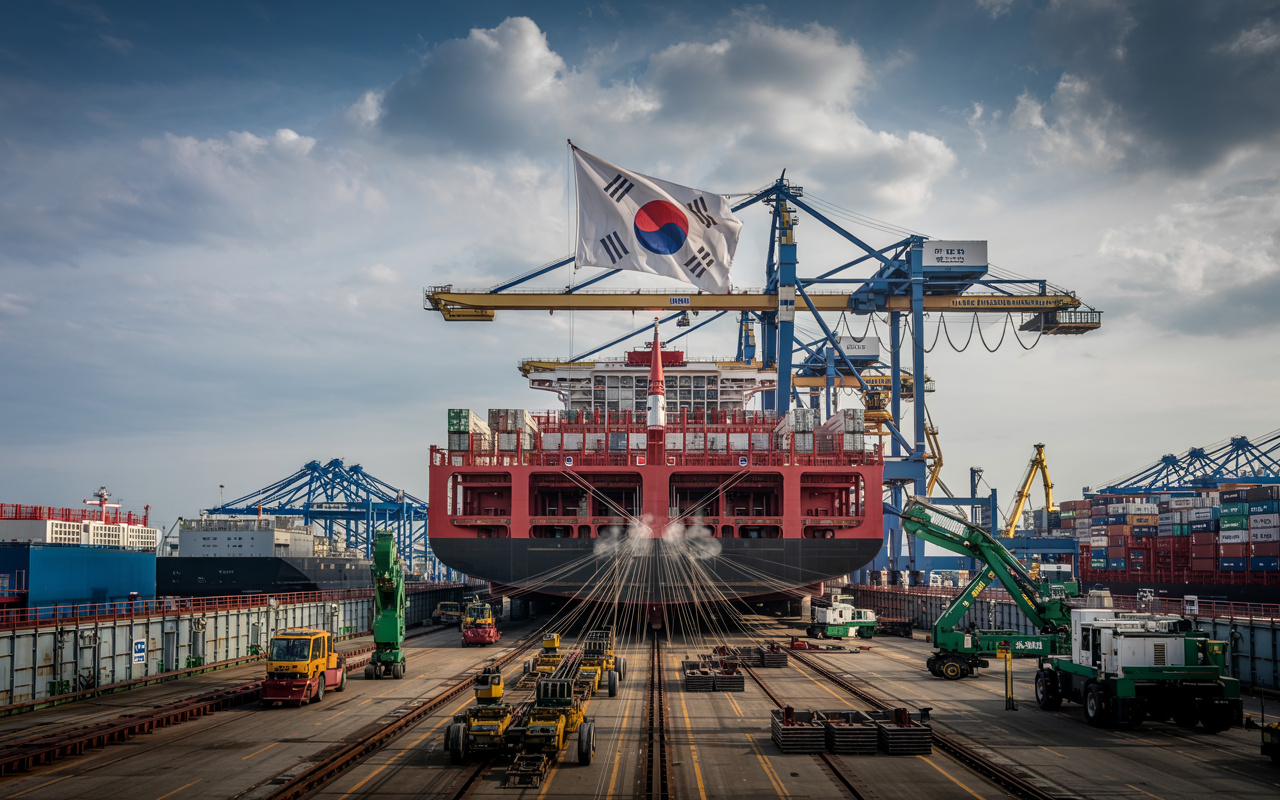

Bold Industrial Policy Transformed South Korea Into Global Leader in Shipbuilding, with Advancements in Technology, Exports, and Military Contracts.
In 2025, South Korea regained part of a crown it fiercely contested with China for years: global leadership in high-value shipbuilding. In the first half of the year, South Korean shipyards captured 25.1% of global market share in orders, a significant jump from 15% in the same period of 2024 — the lowest level in eight years. This recovery occurred in a challenging scenario, with a decline of over 50% in global orders for new vessels, showing that the country not only weathered the downturn but also attracted orders from strategic clients.
The highlight goes to Greek shipowners, who accounted for 65% of the new contracts signed with Korean shipyards, including 72% of tanker orders, 61% of container ships, and 80% of liquefied natural gas (LNG) carriers. This result reinforces South Korea’s image as a provider of complex, safe, and technologically advanced vessels.
Industrial Policies and High-Tech Shipyards
The leap of the Korean shipbuilding industry is not a matter of chance. Since the 1970s, the South Korean government has adopted industrial policies directed at the sector, with tax incentives, strategic financing, and long-term plans for fleet modernization.
-
North Korean Fiasco: Launch of the Largest Warship Ends in Sinking

-
While giant ships still burn heavy fuel and the maritime sector races against climate targets, Maersk and Vale are starting to bet on ethanol as a new route to reduce emissions at sea.

-
China begins construction of the world’s largest LNG ship, a 344-meter giant capable of supplying 4.7 million homes for a month, carrying 271,000 m³ of gas, and placing QatarEnergy in the largest naval order ever recorded in world history.
-
China is designing a container ship with a thorium nuclear reactor that will operate for 40 years without refueling, and the 25,000-container giant from Jiangnan Shipyard will cross oceans without emitting carbon in an industry that burns 300 million tons of fuel per year.


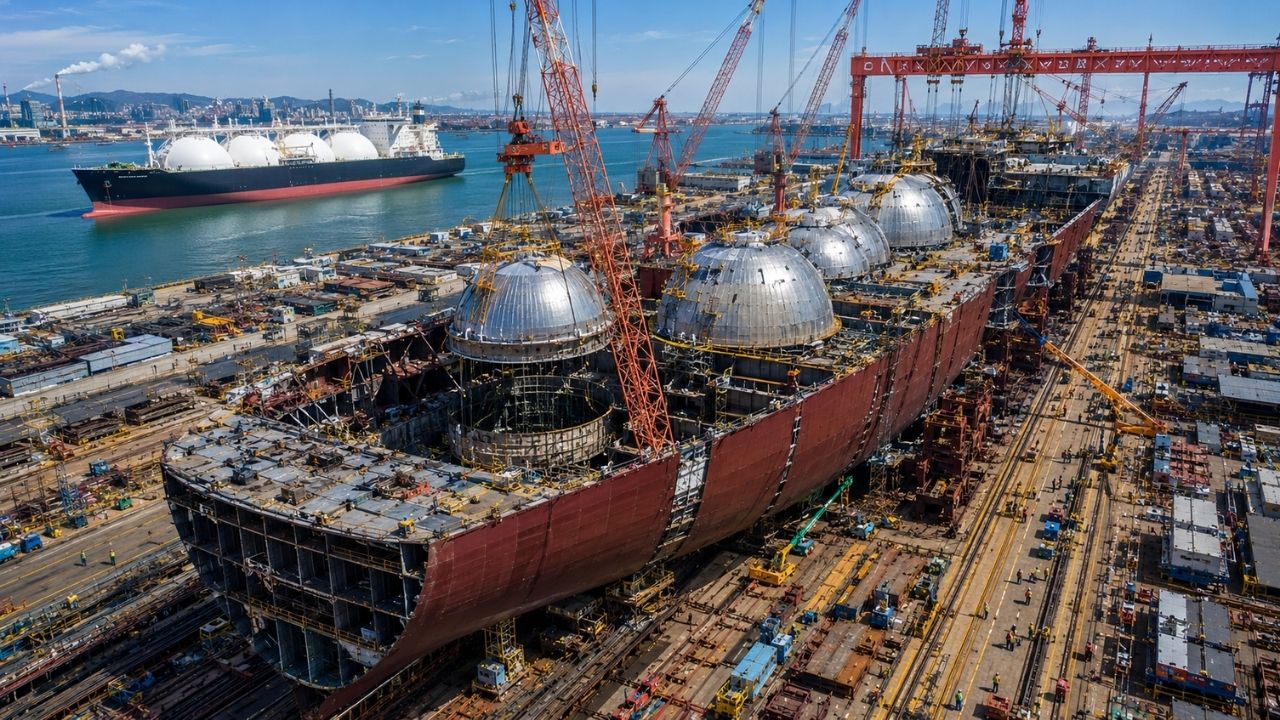

Today, giants like HD Hyundai Heavy Industries, Samsung Heavy Industries, and Hanwha Ocean form the backbone of this strategy, operating shipyards with a high level of automation, modular production, and advanced digitization.
These companies do not only compete on price but for dominance in high-value segments, such as next-generation tankers, large container ships, and specialized ships for LNG transport.
The bet is clear: to serve niches where technical complexity and safety requirements raise entry barriers for competitors, ensuring higher margins and loyal customers.
Numbers That Explain South Korea’s Leadership in Shipbuilding
The data for 2025 shows that Korean shipyards have again occupied a relevant space in the global scenario.
The container ship segment, for instance, accounted for 53.3% of the total CGT (Compensated Gross Tonnage) received by the country in the first half, with about 4.87 million CGT in new orders. In the LNG carrier market, Korea maintains a historic lead, accounting for two-thirds of the world fleet built in recent decades.

Even in the face of a decline in the total volume of global orders, Korea managed to secure strategic contracts, benefiting from factors such as international confidence in the quality of its vessels and the shift of orders previously made in China, affected by tariffs, sanctions, and trade tensions.
Ship Exports and the Strategic Partnership with the United States
The reach of the South Korean shipbuilding industry is not limited to maritime trade. The sector has also become an important component in military contracts and strategic agreements. A recent milestone was the completion by Hanwha Ocean of the repairs on the USNS Wally Schirra, a ship of the U.S. Navy — the first time a Korean shipyard has received and executed this type of service for the U.S. fleet.
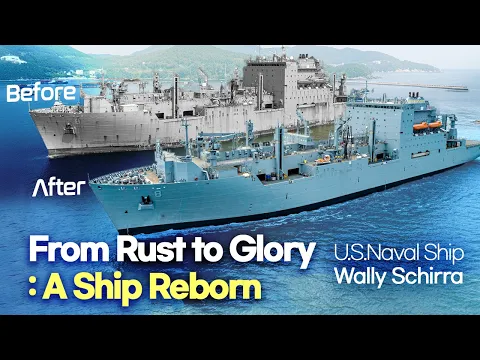
In 2025, the partnership advanced with the selection of HD Hyundai to perform maintenance on the USNS Alan Shepard, under the initiative “Make American Shipbuilding Great Again” (MASGA) by the U.S. government.
This cooperation reinforces the trust of the U.S. in Korea’s technical capabilities while highlighting the scarcity of production capacity in American shipyards themselves, pressured by competition from China.
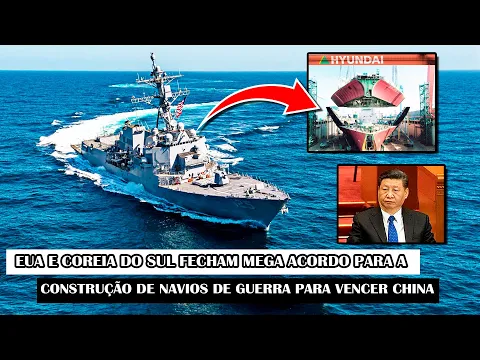
In addition to relations with the U.S., South Korea maintains export contracts for frigates, corvettes, and submarines with countries such as the Philippines, Indonesia, and Norway, consolidating its position as a reliable supplier of high-performance military vessels.
Forces Supporting South Korean Competitiveness
The success of South Korea in shipbuilding is supported by three fundamental pillars:
- Technology and Innovation — Digitization of processes, intensive use of artificial intelligence for production management, and modular construction that reduces delivery times.
- Specialization in Profitable Niches — Focus on high-value vessels, less susceptible to competition from low-cost shipyards.
- Integration Between Government and Industry — Long-term industrial plans, financial, and diplomatic support in opening markets.
These advantages allow Korean shipyards to not only survive the competition with China but also thrive in segments where quality and reliability are decisive.
Challenges and Risks for the Future of South Korea’s Shipbuilding Industry
Despite the advances, Korea faces significant challenges. Productive capacity is limited and does not allow for a quick response to large demand expansions, such as what the U.S. could transfer in the event of restrictions on China. Moreover, the sector is subject to the volatility of the global market, which can drastically reduce the number of orders during periods of economic crisis.
Another sensitive point is the dependence on external factors, such as tariffs, sanctions, and trade agreements, which influence competitiveness against Asian rivals.
There is also the environmental and regulatory risk: new international requirements for de-carbonization of the fleet compel shipyards to continuously invest in clean propulsion technologies and energy efficiency.
A Naval Power in the 21st Century
The trajectory of South Korea in shipbuilding is an example of how industrial planning, technological innovation, and strategic alliances can transform a country into a global leader in a highly competitive sector.
With billion-dollar contracts, leadership in specialized niches, and an increasing presence in the military market, Korea not only builds ships but also projects its influence on the geopolitical chessboard.
The big question is: will this model be sustainable in the coming decades, in light of China’s rise, regulatory changes, and growing pressure for greener vessels? Or are we witnessing a golden cycle that could lose strength if the global market changes course?