






 Portuguese
  Spanish
  5 min of reading
  0 comments



Brazil Expands Access To US Military Equipment While Cautiously Monitoring Sanction Risks That Could Impact Strategic Projects And The Defense Industrial Base. Billion-Dollar Program Involves Arms, Training, And Technical Support.
Brazil has been expanding military capabilities through Foreign Military Sales (FMS), the primary mechanism of the United States to transfer defense equipment and services to partner countries.
In 2023, the program moved US$ 80.9 billion, a historical record, and includes everything from the sale of cutting-edge systems to training, maintenance, and logistical support.
At the same time, according to a report published by CNN Brasil, Brazilian officials are closely monitoring signs of political tension between Brasília and Washington, fearing that potential sanctions could limit access to this channel and affect strategic projects.
-
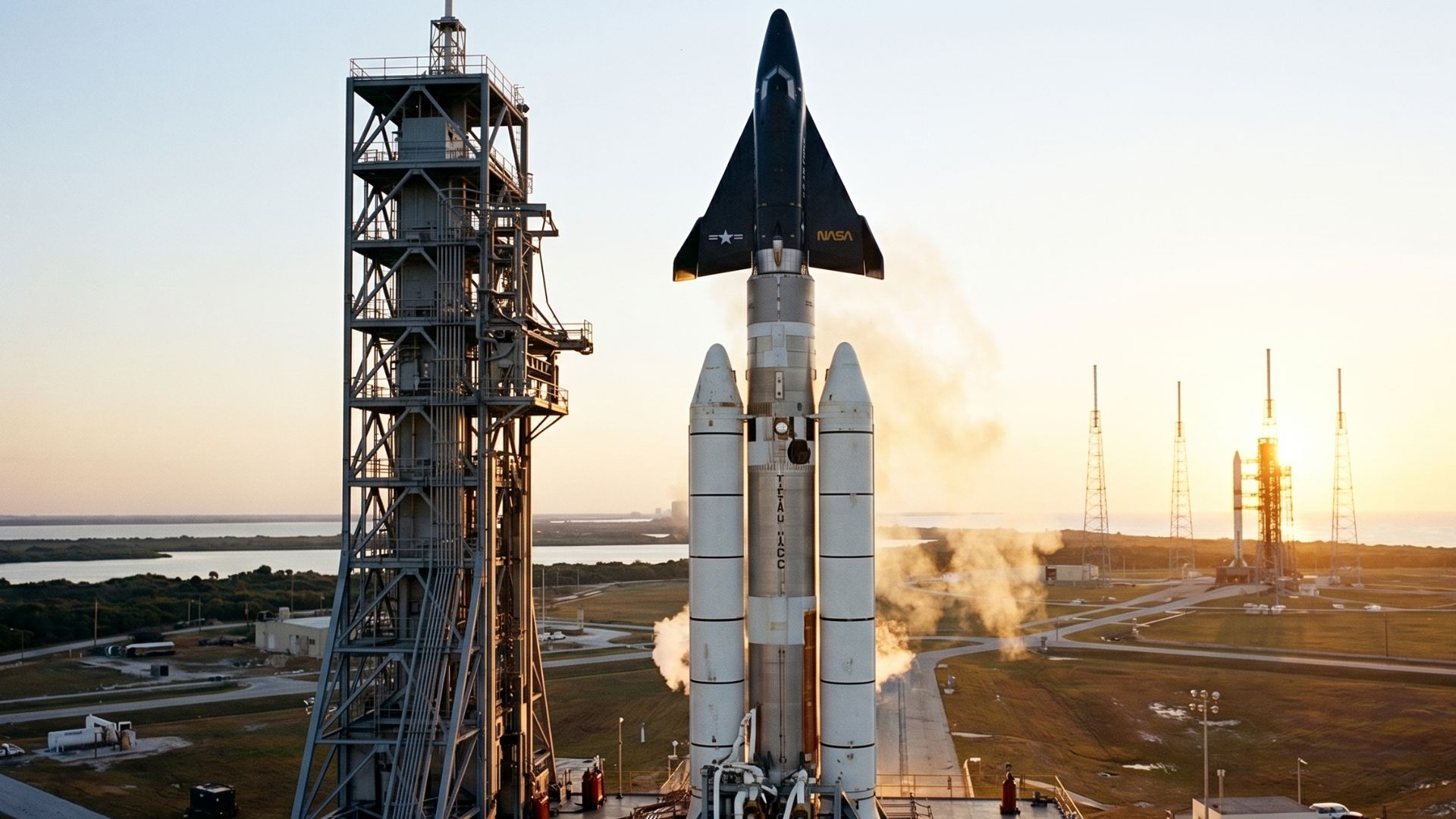
The military spaceplane that almost took the Cold War into orbit: Boeing X-20 Dyna-Soar was designed to re-enter above Mach 20, fly for up to 40 hours, land like a plane, and transform Titan rockets into a gateway to a new era of orbital warfare.

-
FAB bets on national drones and increases investments to strengthen the Brazilian aerospace industry

-
Six times, a luminous crescent the size of the Moon startled the Soviet sky at dusk: it seemed like a wave of UFOs, but it was a secret orbital weapon created to attack the United States via the South Pole and evade Cold War radars.

-
The United States government approved a potential sale of 100 portable Stinger anti-aircraft missiles to the Brazilian Army, in a package estimated at around 330 million dollars that still depends on negotiations between the two countries.



How The FMS Program Works
Created under US arms export legislation, FMS allows governments to purchase, with official mediation, new or used equipment, in addition to support packages such as technical documentation, parts, personnel training, and lifecycle logistics.
The logic is that of a “total package”: not just the asset, but the ability to operate it safely and reliably.
There are also pathways for acquiring surplus material from the US government, under more competitive financial conditions than those in the open market.
In practice, the process begins with a formal request from the partner country and advances to a Letter of Offer and Acceptance.
Only after this are values and schedules finalized, and deliveries, training, and support begin.
The stated goal is to strengthen interoperability with allies and, consequently, regional security.


Key Gains For Brazil
In recent years, Brazil’s participation in FMS has resulted in modernization of assets, incorporation of new capabilities, and training of personnel.
In May 2024, the Department of State approved the potential sale of 12 UH-60M Black Hawk helicopters along with engines, parts, training, and logistics support, reinforcing the country’s rotary-wing vector.
The estimated package includes, in addition to the aircraft, items for maintenance and the integration of doctrine and operational procedures.
An important front is anti-tank defense.
In 2022, the US authorized the potential sale to Brazil of up to 222 FGM-148 Javelin missiles and 33 launch units, including simulators and training support.
In 2025, the Army confirmed the authorization for signing the LOA concerning a batch of Javelins in the latest version, consolidating the acquisition via FMS.
There have also been advances in self-propelled artillery with the upgrade of M109A5 to the M109A5+ standard, an operation that involved parts, technical assistance, documentation, and instruction.
These armored vehicles enhance range and fire precision, as well as standardizing maintenance and supplies.
Beyond material, Brazilian military personnel have access to training and qualification at US centers, which standardizes procedures, improves flight and firing safety, and accelerates the implementation of new doctrines.
This training is a structural part of the program and usually comes coupled with acquisitions.
Sanction Risk Concerns Military
While operational gains are tangible, recent political context has heightened risk perception.
In July and August 2025, the US announced trade and sanction measures against Brazilian authorities and interests, opening a friction front that included broad tariffs on Brazilian products and sanctions on judicial figures.
The Brazilian government resorted to the WTO to contest the tariffs, and the discussion escalated diplomatically.
In this context, military sources expressed concern over the possibility — still unrealized — of restrictions on Brazilian access to FMS.
Experts and officials emphasize that a blockade would have a direct impact on the maintenance of platforms that depend on parts, software, and services of US origin, cascading effects on aircraft and vehicle availability.
According to Marcos Degaut, a doctor in International Security and former secretary of Defense Products, FMS is “absolutely crucial” for Brazil’s modernization and deterrence capacity, as it combines equipment acquisition and access to technology and training.
The expert also stresses that personnel qualification raises troop standards and, consequently, regional security.

Impacts On Industry And Strategic Projects
Potential sanctions limiting purchases, technical assistance, or re-exports of inputs from the US could pressure the Defense Industrial Base (BID) in Brazil.
Ongoing programs — ranging from armored vehicles to missile systems and rotary-wing platforms — incorporate components, software, and know-how from the US.
In situations of restriction, the industry would need to seek replacements, re-engineering, or new suppliers, which increases costs and delays schedules.
International experience shows that changes in the defense value chain require approvals, new testing, and doctrinal updates, processes that are typically long and costly.
Although there has been no unequivocal signal of Brazil’s exclusion from FMS to date, the environment is viewed as volatile.
On one side, the need for the US to preserve interoperability with relevant partners in the hemisphere.
On the other, the broader political and legal dispute, which includes tariffs and specific sanctions.
In this game, the current assessment in military sectors is that the continuity of ongoing cases and support contracts is critical to maintaining readiness levels and avoiding fleet cannibalization.
Regional Security And Interoperability
In addition to modernizing the inventory, FMS brings procedures, tactics, and maintenance closer to the standard used by allies, facilitating combined exercises, peace missions, and humanitarian support operations.
With aircraft, missiles, and howitzers in line with what is operated by Western forces, it becomes simpler to integrate supply chains, exchange lessons learned, and accelerate repairs.
For a country of continental dimensions, this technical convergence translates into shorter response times in emergencies, more efficient border surveillance, and greater deterrence capability.
Meanwhile, the daily agenda is not limited to acquiring material.
The value is also in lifecycle assistance — from introductory courses to software updates and critical component replacements.
It is this machinery that supports the availability of aircraft, armored vehicles, and communication systems, reducing dependence on improvised solutions and increasing budgetary predictability.
In a politically uncertain scenario, preserving this continuity has become an operational priority.
Given the benefits and risks, what should be Brazil’s strategy to safeguard access to FMS without relinquishing autonomy and predictability in its defense capabilities?






Be the first to react!