






 Portuguese
  Spanish


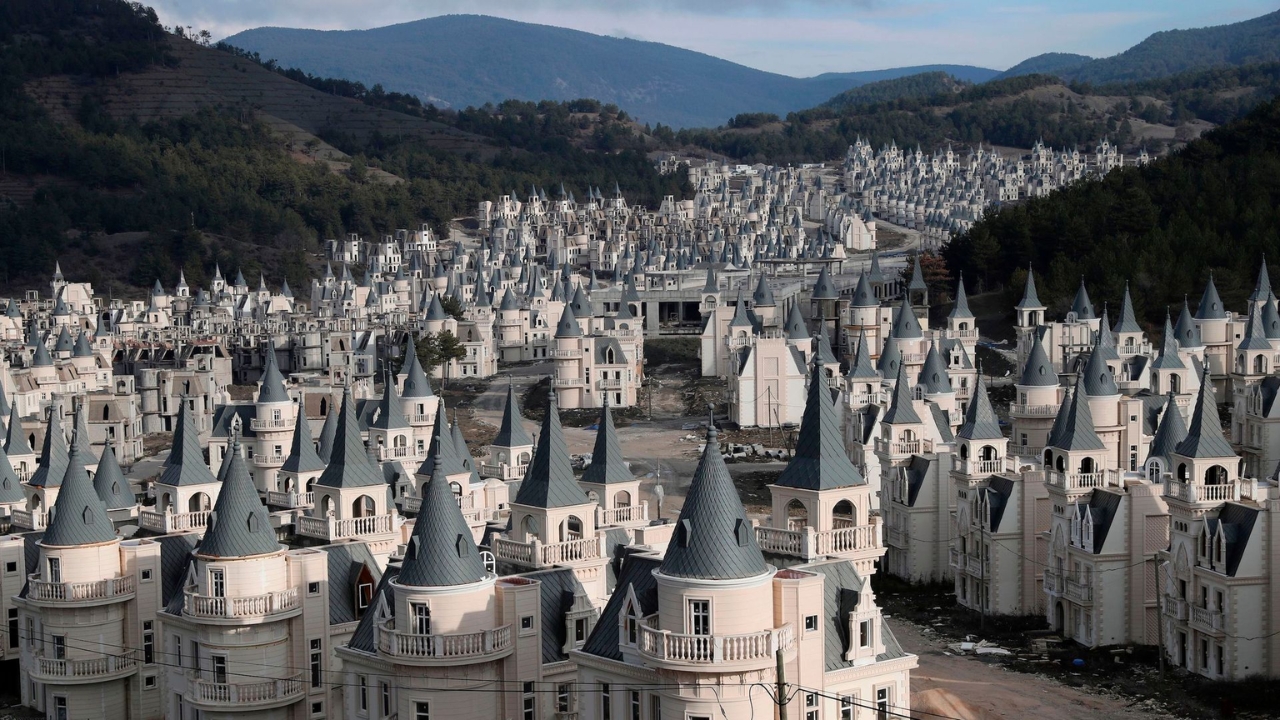


An Ambitious Luxury Project Valued at 200 Million Dollars Ended Surrounded by 587 Incomplete Castles, Turning a Real Estate Dream into One of the Most Desolate and Curious Landscapes of Modern Architecture
Amid the mountains of northwestern Turkey, a surreal scene catches the attention of those passing through the Mudurnu region: hundreds of identical castles rise side by side, forming a true ghost town valued at around US$ 200 million.
The project, named Burj Al Babas, promised to be one of the most impressive luxury condominiums in the country but ended up becoming a symbol of the Turkish real estate crisis and ambition that spiraled out of control.
The Birth of a Millionaire Dream
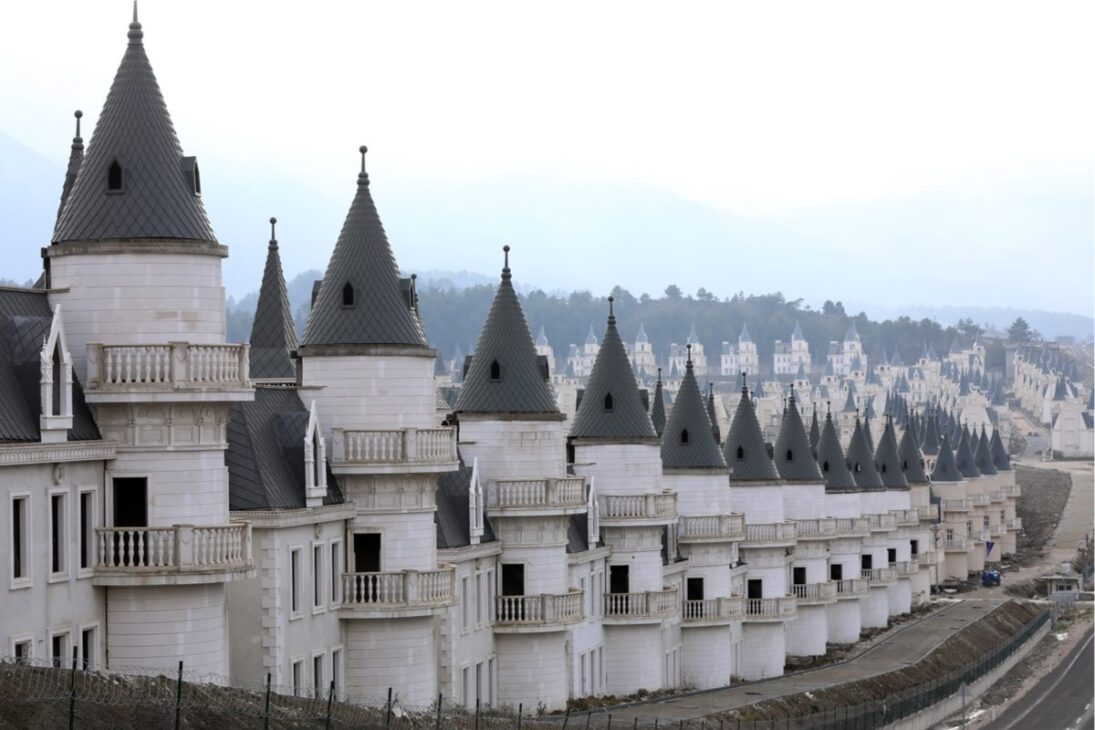
It all began in 2014, when the construction company Sarot Group announced a development inspired by French castles, featuring pointed towers, gothic windows, and white marble facades. The plan called for 732 luxury villas, each with approximately 325 square meters, thermal pools, and views of the mountains.
-
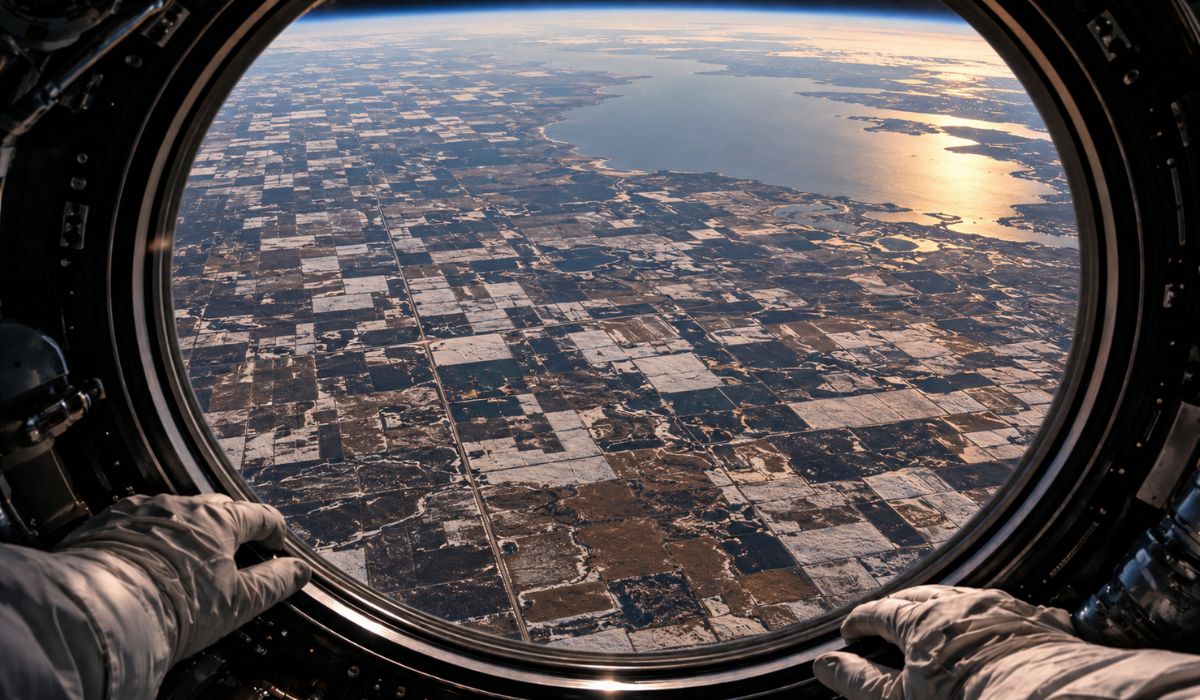
Seen from space, an astronaut captures in Canada a geometric carpet of crops drawn over the backdrop of a ghost lake that disappeared 12,000 years ago, was once larger than all the Great Lakes combined, and left a scar of fertile mud that still sustains agriculture.

-
Billionaire says the most valuable skill will help overcome job elimination caused by AI, following Bill Gates’ fears

-
A Dutchman created a ‘box’ that makes trees grow in the desert almost without water and without irrigation: the invention has already brought seedlings to dozens of countries and achieves up to 90% survival where common planting did not exceed 10%.

-
Abandoned warehouse hid a giant collection of rare computers, with over 2,000 artifacts from the 1930s to the 1980s.



The location was strategically chosen: near the Babas Kaplıcası hot springs, known for attracting Arab tourists seeking wellness. The target audience was investors from the Persian Gulf, interested in acquiring second homes with European charm at a lower cost in Turkey.
Sales began with enthusiasm. Each unit was advertised between US$ 370,000 and US$ 530,000, and the digital models depicted a luxury city complete with shopping centers, leisure facilities, and ornamental gardens.
For a brief moment, Burj Al Babas seemed to be a portrait of the economic success that the government wanted to showcase to the world.
The Crisis That Transformed Luxury Into Ruin
But the dream lasted little time. In 2018, the Turkish lira plummeted, and the country entered a severe financial crisis. Interest rates skyrocketed, purchasing power diminished, and many investors backed out of negotiations.
The Sarot Group, already facing debts, could not pay its bank loans. Construction was halted, and local workers began to leave the construction site.
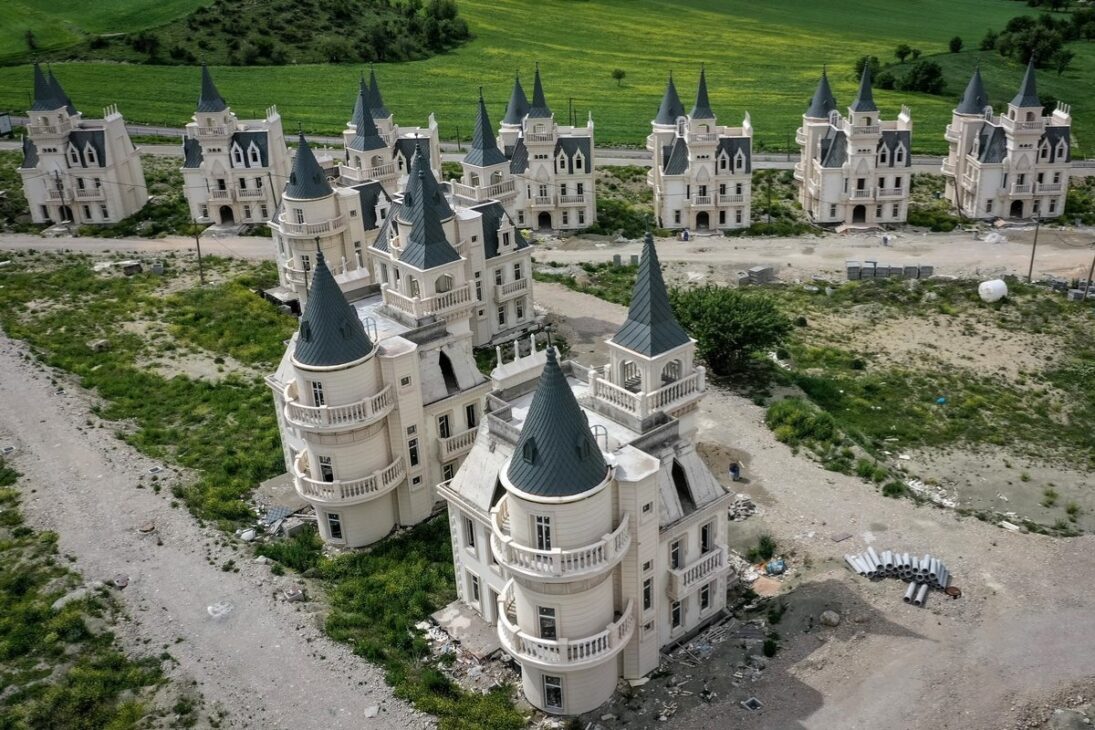
According to the newspaper The Guardian, the group even filed for bankruptcy, leaving 587 incomplete castles — without power, without water, and exposed to the rain and the elements.
In addition to economic problems, the project also faced strong environmental resistance. Residents of Mudurnu criticized the deforestation and the visual impact caused by the identical constructions, considered “an alien body” in the historical landscape of the region, famous for its Ottoman houses.
Today, the streets of Burj Al Babas are silent. The perfect facades hide unfinished interiors, and what would have been a symbol of prosperity has turned into a labyrinth of modern ruins, a reminder of the collapse of a luxury dream.
The Ghost Town That Still Awaits an Ending
Even though the project has been written off as lost, the ruins of Burj Al Babas still attract curious onlookers, photographers, and tourists seeking a landscape worthy of distorted fairy tales.
The site has become a popular spot on social media and appears on lists from Atlas Obscura and Architectural Digest as one of the “most surreal ghost towns in the modern world.”
There have been reports that part of the group’s debt was assumed by a Turkish state fund and that there is foreign interest in resuming the project, possibly converting the villas into a themed resort. However, as of 2025, no concrete plans for resumption have been confirmed.
Meanwhile, the hundreds of castles remain still under the sky of Mudurnu, witnessing the contrast between planned luxury and real abandonment. The sound of the wind among the towers is the only remnant of life in a place where no one ever came to live.


Burj Al Babas is more than a real estate failure; it is a mirror of the economic contradictions of modern Turkey: between the desire to flaunt grandeur and the reality of a collapsing market. And, ironically, perhaps its true value lies precisely in the melancholy it left behind.




