






 Portuguese
  Spanish


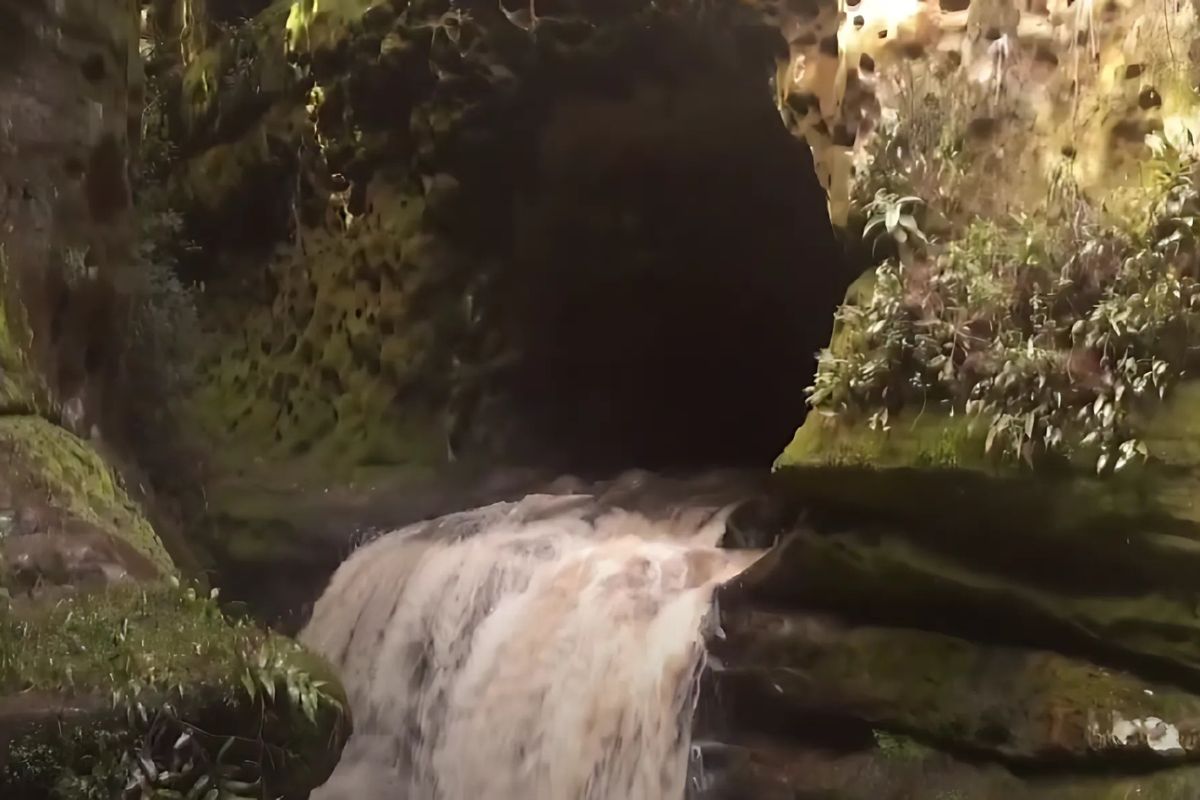

In The Heart Of Brazil, More Than One Giant Sinkhole In Brazilian City Stars In A Nature Show: Rivers That Disappear Beneath The Earth Only To Reappear Elsewhere. Meet Ponta Grossa (PR) And Other Places With These Impressive Subterranean Portals.
The image of an entire river being “swallowed” by a hole in the ground, only to mysteriously reappear kilometers ahead, seems like an adventure plot. However, this phenomenon, caused by a giant sinkhole in a Brazilian city (and in other karst regions), is an impressive geological reality that sparks fascination and curiosity.
In Brazil, with its vast geological diversity, there are places where nature has sculpted these portals to underground worlds. Discover the science behind the giant sinkhole in a Brazilian city like Ponta Grossa (PR), and explore other notable examples of these rivers that vanish and reemerge, revealing a spectacle of Earth’s dynamics.
The Geology Behind A Giant Sinkhole In Brazilian City And Its Mysteries
The formation of sinkholes and the disappearance of rivers are linked to karst topography, developed over soluble rocks such as limestones and dolomites. Rainwater, slightly acidic from absorbing CO₂ from the atmosphere and soil, chemically dissolves these rocks over thousands or millions of years.
-
Running 5 km Backwards in 30 Minutes: The Unusual Routine of Moisés, the “King of Reverse” from Brazil, Started as a Bet with a Friend

-
Woman Finds $1,200 Diamond Bracelet Hidden in $8 Goodwill Thrift Store Bag
-
Construction Workers in Germany Uncover Nearly Intact 29-Ton StuG III Tank Buried for 80 Years
-
Ohio Restaurant Owners Close for a Week to Take All 60 Employees on a Bahamas Cruise with Full Pay


This dissolution process, known as karstification, exploits fractures and other discontinuities in the rock, progressively widening them. Fissures evolve into conduits, galleries, and finally into complex cave systems, which can give rise to a giant sinkhole in a Brazilian city capable of “swallowing” rivers.
Sinkholes And Reemergences
A sinkhole is the point where a surface watercourse disappears totally or partially underground, like a natural “drain.” The water then travels through so-called underground rivers, flowing through a cave network. This journey can be extensive and labyrinthine.
After its hidden journey, the water returns to the surface at a point known as a reemergence. These discharge locations are crucial for ecosystems, and the interconnection between sinkholes and reemergences demonstrates the dynamics of karst hydrological systems. Studying this connection in a giant sinkhole in a Brazilian city is vital.
Ponta Grossa (PR): An Emblematic Example Of A Brazilian City With A Giant Sinkhole And Other Notable Karst Phenomena


The Sinkhole of the Quebra Perna River in Ponta Grossa (PR) is a local example where a river disappears only to reemerge kilometers later, aligning with the description of a giant sinkhole in a Brazilian city.
Formosa, in Goiás, located in the Central Plateau, is often cited for its karst phenomena. It houses the Escaroba Cave, a complete sinkhole-cave-reemergence system approximately 200 meters long with beautiful speleothems (currently closed to visitation), and the Buraco das Araras, an impressive collapse doline about 100 meters deep with a lagoon at the bottom.
Notable Examples Of Sinkholes And Impressive Underground Rivers Across Brazil
In addition to Ponta Grossa (PR), other locations in Brazil exhibit similar phenomena. In the Valley of the Peruaçu River (MG), a river travels 9 km underground through expansive caves. The Terra Ronca State Park (GO) features some of the largest cave systems in South America, with rivers like Angélica and Bezerra showing underground sections.
An interesting case is the Sinkhole of the Quebra-Perna River in Ponta Grossa (PR), developed in sandstones (pseudokarst), where the river disappears into cracks and flows through a system of underground conduits.


