






 Portuguese
  Spanish


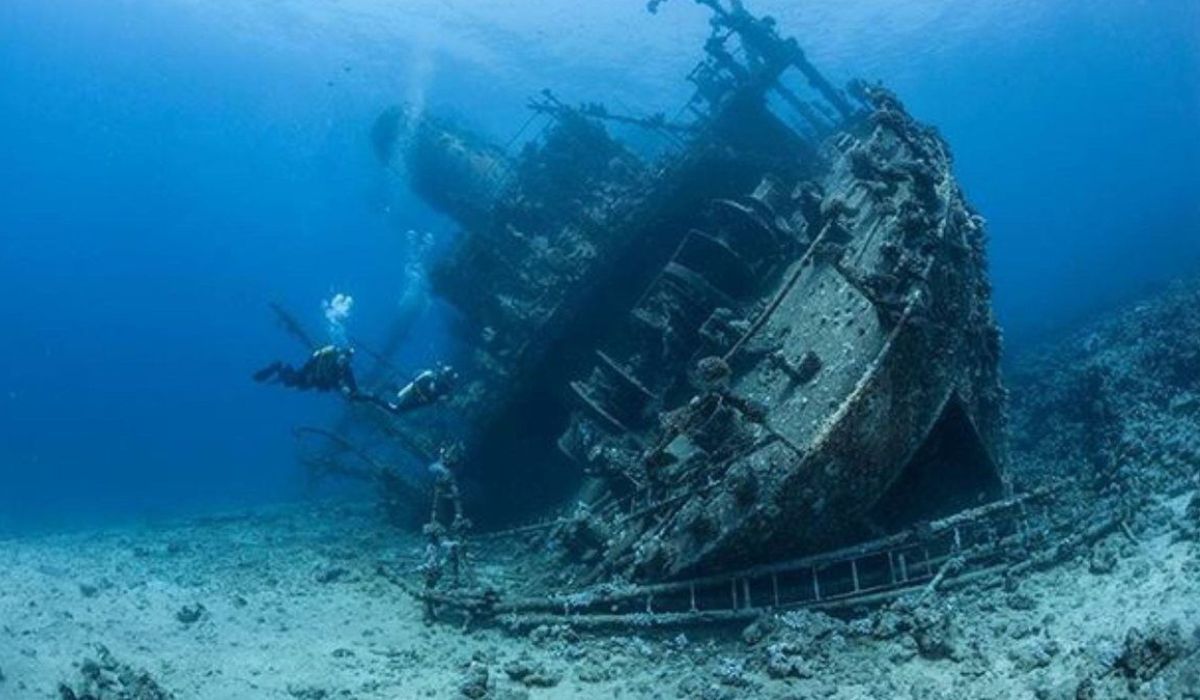


Sunken Reefs Offshore in Maranhão Concentrate Historical Wrecks, Marine Biodiversity, and Documentary Gaps That Challenge Researchers and Environmental Authorities, in a Protected Area Since the 1990s and Frequently Compared to the Famous Bermuda Triangle.
An area of reefs and shallow rock formations off the western coast of Maranhão gathers wreckage of vessels that sank over more than a century and has received, in popular and journalistic discourse, the nickname of “Brazilian Bermuda Triangle”.
The site is the Manuel Luís Marine State Park, a conservation unit created in 1991 and linked to the municipality of Cururupu, where navigation accidents formed a significant underwater archaeological site, in addition to an area of environmental interest.
Official reports and news articles often cite the existence of about 200 shipwrecks in the region.
-
Award-Winning Japanese Restaurant Reveals It Has Preserved Part of the Same Frying Oil for 66 Years

-
American Youth Transforms from Severe Obesity to U.S. Air Force Enlistment, Losing 90 Kilograms in Two Years
-
11-Year-Old Entrepreneur Sells 60 Homemade Sweets Daily, Mastering Cost Calculation, Social Media Promotion, and Client Negotiation Since Age 7

-
Peruvian Mountain’s 5,200 Aligned Holes May Unveil Ancient Indigenous Market for Corn and Cotton


However, technical surveys indicate that this number cannot be confirmed precisely, as some historical records are incomplete or nonexistent.
Even with this uncertainty, there is evidence of documented shipwrecks and identified submerged vessels, some accessible to specialized divers.
The Origin of the Comparison with the Bermuda Triangle
The association with the Bermuda Triangle, in the North Atlantic, refers to an area frequently mentioned in reports of disappearances of ships and aircraft between Florida, the Bahamas, and Puerto Rico.
One of the most well-known episodes is that of Flight 19, which occurred in December 1945, when five U.S. Navy planes disappeared during a training exercise.
Subsequent investigations attributed the case primarily to navigational error and adverse operational conditions.
According to the National Oceanic and Atmospheric Administration (NOAA), there is no scientific evidence that the Bermuda Triangle has a higher accident rate than other heavily navigated maritime regions.
The agency states that factors such as weather, ocean currents, and human error explain most of the reported incidents.
In Brazil, the analogy arose not from phenomena considered inexplicable, but due to the historical frequency of collisions with submerged natural structures in an area that, for a long time, was little known from a cartographic perspective.
Location and Characteristics of the Manuel Luís Parcel
The Manuel Luís Marine State Park is situated offshore, tens of nautical miles from the Maranhão coast.
Technical documents from the Ministry of the Environment describe the area as located about 86 nautical miles from the mainland, with Maiaú Island as a reference, and approximately 100 nautical miles from São Luís.
The conservation unit was created by State Decree No. 11,902, dated June 11, 1991, with an area of 45,237.9 hectares.
The delimitation encompasses reefs, ledges, and rocky banks that remain partially submerged, varying according to the tide and sea conditions.
These formations are known as “parcels”, a nautical term used to designate shallow natural obstacles that pose a risk to navigation.
This risk was greater in periods prior to the dissemination of detailed nautical charts and modern positioning systems.

Shipwrecks in Maranhão: Confirmed Records and Historical Gaps
The estimate of approximately 200 shipwrecks in the Manuel Luís Parcel appears repeatedly in reports and institutional communications.
However, technicians involved in the development of management plans and studies about the area emphasize that there is insufficient documentary evidence to confirm this total.
According to these surveys, it is possible that some of the older shipwrecks were never formally recorded or that documents have been lost over the centuries.
It is also possible that the widely disclosed number results from projections or repetitions without independent verification.
Despite this, there is consensus about the occurrence of accidents over time.
Technical studies indicate at least ten vessels with historical records and identifiable possible remnants on the park’s seabed.
The known wrecks are dated from the early 19th century to the second half of the 20th century.
The Wreck of the Freighter Ana Cristina
Among the most well-known cases is that of the freighter Ana Cristina, considered the most recent wreck attributed to the Manuel Luís Parcel.
The vessel sank in February 1984, after colliding with the reef while crossing the region.
According to specialized records on shipwrecks along the Brazilian coast, the ship departed from Areia Branca, Rio Grande do Norte, bound for Mungubá, Pará.
Onboard were 21 crew members and two passengers.
Currently, the remains of the Ana Cristina are cited as one of the points of interest for experienced divers.
The depth and sea conditions require specific technical preparation.
Navigation specialists point out that accidents of this type were primarily associated with the lack of detailed information about submerged obstacles and the technological limitations of the time.
Nautical Cartography and Maritime Signaling
Historical accounts indicate that the Manuel Luís Parcel only began to be systematically included in nautical surveys in the 19th century.
The most widely circulated version states that mapping occurred around 1820, conducted by a French hydrographer.
The records followed cartographic standards that were not always understood by navigators from other nationalities.
With the advancement of nautical cartography, the international standardization of charts, and the use of satellite navigation systems, collisions with the parcel have ceased to be recorded with the frequency seen in the past.
Currently, the region has maritime signaling, including a lightship, to alert navigators about the presence of the reefs.
Marine Biodiversity and Preservation Challenges
In addition to historical interest, the Manuel Luís Marine State Park is recognized for its marine biodiversity associated with the reefs.
Documents from the Ministry of the Environment highlight the presence of fish species and other organisms typical of reef environments.
This characteristic confers ecological importance to the area.
In February 2000, the park was recognized as a Ramsar Site, a title granted to wetlands of international importance.
The recognition reinforces the environmental value of the conservation unit.
Technicians and researchers, however, point to the need to expand scientific studies, inventories of underwater archaeological sites, and enforcement actions.
Among the concerns are pressures such as illegal fishing and unauthorized activities.


