Portuguese
  Spanish


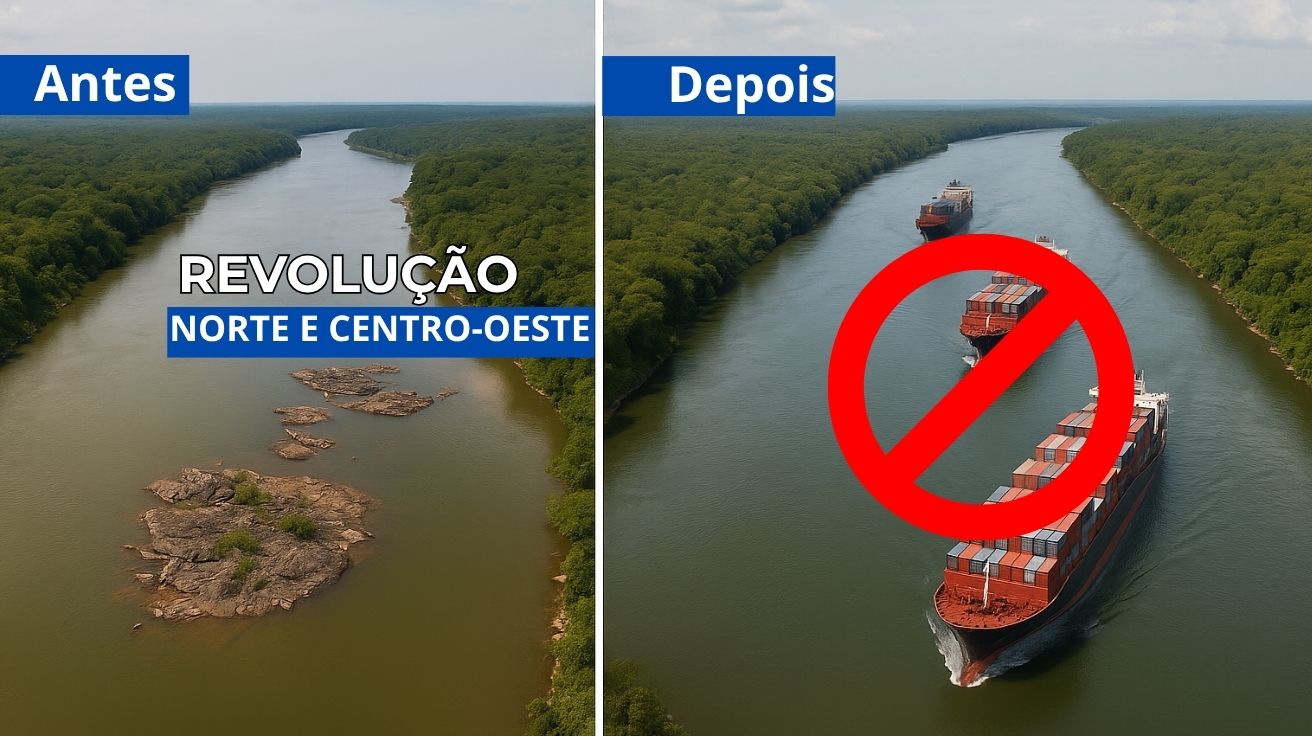

Planned Explosions in the Bed of the Tocantins River in Pará Generate Impasse Between Logistical Development and Environmental Conservation Affecting Endangered Species and Riverine Communities.
The Federal Court determined the conduct of an on-site inspection before the start of explosions at the Pedral do Lourenção in the Tocantins River, southeast of Pará, suspending the environmental license granted in May by Ibama for the dredging of submerged rocks.
The goal is to assess the social, environmental, and cultural impacts, ensuring that the action promoted by DNIT, funded by the New Growth Acceleration Program (PAC), does not harm endangered species and riverine communities.
The Public Prosecutor’s Office (MPF) filed a legal petition requesting the suspension, or even annulment, of the environmental license in the context of creating a waterway capable of accommodating large vessels.
-
Entrepreneur Sells Car to Launch Healthy Meal Business, Now Runs Mr. Fit with 880 Stores in 3 Countries and $40 Million Annual Revenue

-
End of an Era: Renault Plans Major Overhaul, Cutting Jobs to Compete with Chinese Rivals and Transform Engineering by 2027
-
Brazil’s Largest Grain Port Faces Delays in the Hinterlands, Missing Rail Link Costs Agribusiness Billions

-
Egg Prices Drop Due to Weak Demand as Poultry Producers Increase Purchasing Power


Among the risks identified are the destruction of habitats of the Araguaia river dolphin (Inia araguaiaensis), the Amazonian turtle (Podocnemis expansa), and the impact on the fishing activities of traditional residents.
The absence of prior consultations with riverine communities, as stipulated in ILO Convention 169, was also questioned.
Environmental License and the MPF
According to the MPF, the license was granted even without resolving judicial and administrative issues related to environmental viability.
Additionally, Prior, Free, and Informed Consultations (CPLI) with the impacted communities were not conducted.
In documents from the process, DNIT acknowledged at least ten riverine communities in the project’s area of influence, including the village of Santa Terezinha do Tauiri.
Nonetheless, the environmental report indicated that impacts on aquatic fauna and local fishing were classified as “not addressed” or “partially addressed”.
Federal Prosecutor Rafael Martins da Silva stated that the right to CPLI “was ignored.”
Therefore, the MPF requested the annulment of the Preliminary License (LP), the document that underpins the entire project.
Justice Decision on the Pedral do Lourenção
In a decision published on June 26, 2025, the federal judge ordered the <strong conduction of an urgent judicial inspection to analyze socio-environmental and cultural aspects.
The Ibama and DNIT are prohibited from initiating any material advancement in the works until the court rules on the suspension request.
So far, both Ibama and DNIT have reported that they have not yet been officially notified.
Both stated that upon being notified, they will be able to respond within the legal deadlines.
Environmental and Social Impacts of the Project
The explosion of rocks may affect aquatic ecosystems, compromising fish species and spawning areas.
The Araguaia river dolphin, recently recognized as a distinct species, has a restricted population.
The Amazonian turtle, at risk of extinction, may also have its nests threatened.
The change in water regime may alter artisanal fishing and impact the local way of life.
The village of Santa Terezinha do Tauiri directly depends on subsistence fishing.
Waterway and Economic Development
The PAC project aims to enhance logistics on the Araguaia-Tocantins waterway.
The removal of rocky barriers would allow the transport of large loads at a lower cost.
This advance, however, conflicts with the environmental and cultural preservation of the region.
Next Steps of the Process for the Tocantins River
Judicial Inspection: must occur before any action on site.
Official Notification: DNIT and Ibama must respond following formal receipt of the decision.
Final Deliberation: the court will assess whether to maintain, suspend, or revoke the environmental license based on the inspection.
There are currently no statements from community leaders or preliminary results from the inspection.
In light of the dilemma between expanding river infrastructure to enhance cargo transportation and protecting endangered species and the way of life of riverine communities, what should be the main criterion in the final decision of the authorities?