






 Portuguese
  Spanish


Hydraulic Works In Ceará Shortens The Route Of São Francisco Waters, Integrates Large Reservoirs And Invests In Automation To Enhance Supply Security, Reduce Losses And Serve Cities And Rural Areas Of The Ceará Semiarid.
In southern Ceará, a water infrastructure project changes the game of supply in the semiarid region.
This is the Salgado Branch, a strategic section of the São Francisco River Integration Project (PISF), designed to enhance the water security of 54 municipalities and reduce the risk of collapse during drought periods.
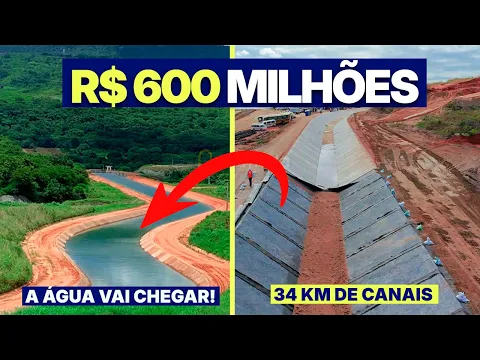
With a public investment of over R$ 600 million and a scheduled delivery for June 2027, the project is advancing with simultaneous fronts, field operators, and heavy machinery.
-
Instead of sending families far from the city, a project in Chile intentionally created incomplete houses on expensive urban land and left technical space for each to grow.

-
EPS duplex house is ready in up to 5 days without conventional pillars and beams: fair in Espírito Santo showcases sand made from mining waste, a 250 m² modular house assembled in 15 days, and technologies that can change the time, cost, and waste on construction sites.

-
Dubai will invest US$ 22 billion in sewage tunnels up to 90 meters deep, replacing pumps with gravity and replacing more than 100 old stations, in an attempt to save a city of skyscrapers, artificial islands, and rapid growth from an underground problem that has already overflowed into the streets.

-
The history of the Hercílio Luz Bridge involves controversies, love, and renewal: From its iconic construction to its reopening, it is a symbol of Santa Catarina.


Why The Branch Is Decisive For Ceará
The main function of the Salgado Branch is to shorten the path of water from São Francisco to the state’s large reservoirs.
Currently, the transfer occurs via the Ceará Water Belt (CAC) from the Jati reservoir.
With the new route, the flow journey will be about 150 km shorter, which tends to reduce losses, facilitate operation, and provide predictability to the system.
The reinforcement serves urban areas and rural communities historically subject to rationing, enhancing the resilience of supply in the Cariri and Jaguaribe regions, in addition to supporting the RMF via the recharge of Castanhão, the main reservoir in Ceará.
Extension, Layout And Connection To Existing System
The project combines a hydraulic extension of 34.3 km within a work corridor that totals about 36 km.
The branch derives from the North Axis of the PISF at the height of Jati (CE) and integrates to the CAC, responsible for distributing the transposed flows to different state basins.
This connection shortens the route to Castanhão and strengthens the chain of reservoirs that supports human supply, agricultural production, and economic activities in the semiarid region.
How Engineering Overcomes Difficult Terrain
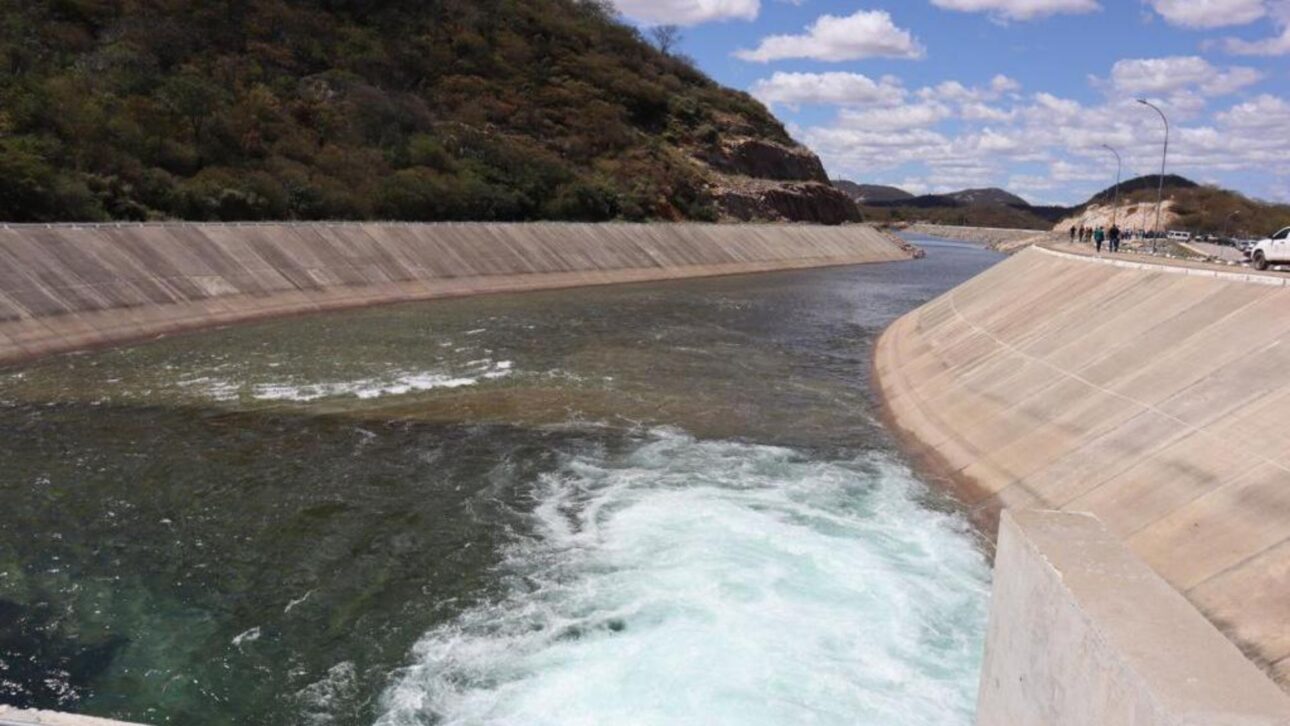
This is not a single canal.
The Salgado Branch is a mosaic of solutions: open channels, tunnels in crystalline rock, inverted siphons for crossing intermittent watercourses, aquaducts that span valleys and control structures such as spillways, bottom discharges, and water intakes.
In sections of rocky mass, excavations require explosives and constant geotechnical monitoring.
Aquaducts require high pillars designed to withstand weight, thermal variations, and wind action.
In addition to civil works, the hydromechanical and electromechanical assembly is progressing.
Metal gates, automation, instrumentation, and telemetry will allow monitoring of flow, pressure, and levels in real time.
The operational architecture will connect the branch to the control center of the transposition system in the Ceará territory, ensuring integrated command and quick responses to changes in demand or rainfall patterns.
Logistics And Management Of A Dispersed Construction Site
The layout spreads across remote areas from urban centers.
Therefore, execution depends on advanced bases with storage of cement, steel, gravel, and additives, as well as workshops and support for workers.
The main construction site, near Lavras da Mangabeira, serves as a coordination hub.
To speed up delivery, the adopted method is segmented construction: independent sections are executed in parallel by different consortia, with standardized processes, quality control, and oversight from the Ceará Water Resources Secretariat and the federal government.
Recurring audits monitor schedules, performance milestones, and contractual compliance.

Physical Progress And Deadlines: What Public Entities Say
Regarding progress, the numbers reported vary according to the source.
In June 2025, the Ceará government reported a 10.45% execution rate and maintained the delivery for June 2027.
The federal government, however, reported that by September 2025, the work surpassed 20% physical advancement, with over 220 pieces of equipment mobilized.
Despite the methodological differences, there is a consensus that the project is in the initial phase, but with completed milestones, such as partially excavated tunnels, erected aqueduct pillars, and concreted canal sections.
Conveyance Capacity And Planned Operation
The operation of the Salgado Branch was designed to transport up to 20 m³/s in project conditions.
This volume is sufficient to alleviate reliance on emergency transfers and make management more efficient throughout the year.
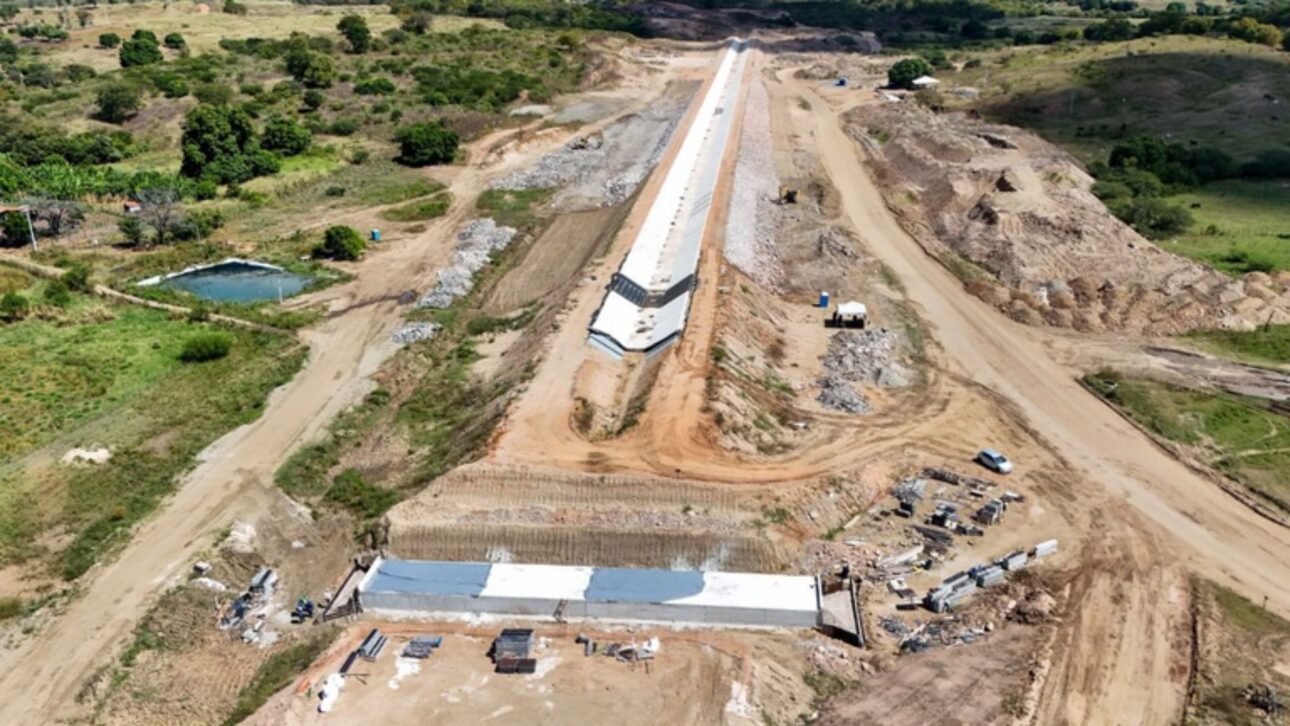
With the start of operations, the branch is expected to replace longer routes currently adopted by CAC, balancing the replenishment of reservoirs and increasing the regularity of water deliveries in the state network.
Social, Economic And Environmental Reach
The expected social impact is broad.
The branch was designed to benefit up to 5 million inhabitants in 54 cities, a number that in some official communications appears as 4.7 million.
In both scenarios, the reach is sufficient to reconfigure the water vulnerability situation, especially in locations still facing risks of shortages.
The security of delivery also interests the productive sector: irrigated agriculture, industries, and services tend to plan investments with more predictability.
In parallel, the reduction of routes and losses can mitigate pressures on local water sources and combat effects of desertification in sensitive areas of the semiarid region.
Funding, Governance And Transparency
The Salgado Branch is part of the New PAC, with a budget consolidated at over R$ 600 million.
Execution involves federative coordination between the Ministry of Integration and Regional Development and the Ceará Government, in addition to regulatory bodies.
Periodic reports, schedule reviews, and performance clauses attached to contracts make up the governance arrangement to reduce risks, provide transparency in public spending, and maintain the pace of service fronts in the face of climatic and geotechnical variations.
What Changes When Water Shortens The Path
With the branch in operation, Castanhão will start receiving water from São Francisco through a more direct route.
This reduces the system’s response time during critical periods and strengthens the resilience of supply in capitals, regional hubs, and rural areas.
In municipalities in the southern part of the state, such as Ipaumirim and Lavras da Mangabeira, the work is expected to improve the regularity of deliveries.
The technical expectation is that the combination of physical infrastructure, automation, and integrated management stabilizes the water regime and expands the safety margin for human consumption and economic activities.
If engineering is delivering connections, tunnels, and aqueducts, what should be the next priority to ensure that water reaches those who need it most in the Ceará hinterland with quality and fair pricing?


