Portuguese
  Spanish


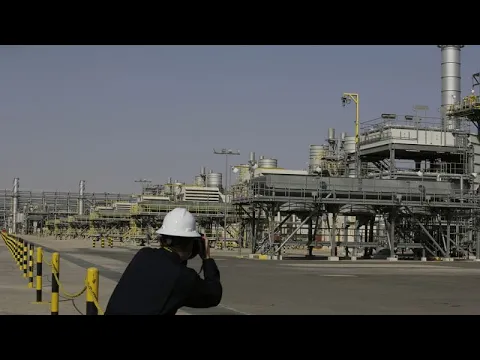
Opec+ Evaluates Increase in Oil Production Amid Historical Challenges and Seeks to Balance Prices and Global Participation.
The discussion about oil production has always occupied a central space in global energy strategies. From the beginning, the Organization of the Petroleum Exporting Countries and its allies, known as Opec+, have sought to act as a balancing force.
Currently, Opec+ is evaluating an increase in oil production, and this decision arises as a response to market pressures, demand evolution, and constant changes in energy geopolitics.
The Historical Trajectory of Opec+
Opec was founded in 1960 with the intention of coordinating export policies and prices among producing countries. Later, in 2016, Opec+ emerged, expanding its scope by including Russia and other allies. Thus, the group gained even more relevance amid the rapid transformations in the global market.
-
Qantas and Airbus Invest in Company Aiming to Convert Unsorted Household Trash into Jet Fuel

-
Brazil’s ANP Opens 86 New Oil Blocks in the Equatorial Margin, Expanding the Amazon River Mouth Frontier

-
OPEC+ Boosts Oil Supply by 188,000 Barrels per Day in July 2026, Leading to Price Drop from $112 to $89 per Barrel in Under Two Months

-
TotalEnergies Signs 20-Year Deal to Purchase 2 Million Tons of LNG from Alaska, Boosting Project Viability
Over the decades, Opec+ has alternated production cuts and increases to adjust the relationship between supply and demand. When the world economy slowed, as in the 1980s or during the 2020 pandemic, the group reduced production to sustain prices.
In contrast, when the global economy accelerated, they increased oil supply to avoid losing market share to rivals, such as the United States with its shale oil.
Thus, Opec+’s trajectory reveals an organization that has never acted in a static manner. On the contrary, it has always reacted to market signals, political crises, and energy transformations, reaffirming its role as a global regulator.
Opec+ Evaluates Increase in Oil Production in the Present
In recent years, the market has undergone significant changes. In addition to the strengthening of North American production, pressure from governments and consumers for more affordable prices has intensified.
In this context, Opec+ is evaluating an increase in oil production to ensure competitiveness and preserve market share.
Quotas have already grown by about 2.5 million barrels per day, which represents almost 2.4% of global demand. However, even with this increase, prices remain close to 70 dollars per barrel.
This level is mainly maintained due to the sanctions imposed against Russia and Iran, which restrict global supply and sustain prices.
Therefore, it is clear that increasing production alone is not enough to control prices. After all, external factors, such as regional conflicts, embargo policies, and even the advancement of alternative energies, influence the market as much as the volume of barrels offered.
The Dilemma of Balancing Price and Participation
The major challenge for Opec+ is to balance prices so they are advantageous without undermining competitiveness. If oil becomes too expensive, consumers migrate to renewable energies, and rivals gain market share.
If it becomes too cheap, producing countries lose revenue and compromise their domestic economies.
Thus, when Opec+ evaluates an increase in oil production, the decision is not limited to an economic calculation. On the contrary, it involves diplomacy, international politics, and long-term strategies.
In this way, the group needs to carefully analyze the risks and opportunities of each choice.
Historically, this dilemma is not new. In the 1970s, deep production cuts led the world to face severe energy crises.
In the 2010s, the rise of North American shale oil reduced Opec’s power to control prices.
Currently, the energy transition and the quest for decarbonization add another layer of complexity.
Perspectives for the Energy Future
Opec+ meetings always attract global attention, precisely because their decisions impact the global economy. Every additional barrel or cut influences everything from transportation costs to inflation indices in various countries.
Therefore, the group’s negotiations should never be seen as mere technical adjustments.
Currently, eight countries in the alliance are discussing online whether to authorize new increases in production for October. However, there is also the possibility that the group might pause increases, demonstrating how global economic uncertainty still limits definitive decisions.
Currently, Brent crude is trading at 68 dollars, a value above the minimum of 58 dollars recorded in April 2025.
If Opec+ approves new increases, it will begin to unwind cuts of 1.65 million barrels per day, originally planned to last over a year.
Thus, the group would signal that it prefers to act quickly in response to market pressures.
The Role of Opec+ in the Face of the Energy Transition
Another essential aspect involves the global transformation in the energy sector. The world is directing increasing investments toward sources like solar, wind, and biomethane.
Moreover, governments and consumers demand a reduction in dependence on fossil fuels, both for environmental reasons and for energy security.
Nonetheless, oil still accounts for almost one-third of the global matrix. Thus, any decision made by Opec+ continues to deeply impact the global economy.
When Opec+ evaluates an increase in oil production, it must consider not only the present but also the long-term effects in the energy transition process.
At the same time, producing countries heavily depend on oil revenue to sustain their national budgets.
For example, Saudi Arabia, Iraq, and Russia finance a significant portion of their public spending with this revenue.
Therefore, although they understand the need for economic diversification, these governments cannot yet give up oil.
In this scenario, Opec+ faces a paradox: it needs to maintain relevance in the present but must also prepare for a future where renewable energy will occupy an increasingly larger space.
The current debate demonstrates that Opec+ remains a central actor in the energy market. Even with the growth of North American production and the pressure from renewable energies, no other organization has such power to influence oil prices.
When considering new increases, the group sends a clear message to the world: it will continue to adjust its strategy to preserve relevance.
However, this decision also reinforces how managing oil requires balancing multiple factors, including geopolitics, economics, and energy transition.
Therefore, when Opec+ evaluates an increase in oil production, the decision goes well beyond the immediate.
It connects the past, marked by crises and adjustments, to the present, filled with pressures and dilemmas, and to the future, which demands innovation and adaptation.
Thus, Opec+ remains a symbol of how oil, even in times of change, still dictates the course of the global economy.