






 Portuguese
  Spanish
  3 min of reading
  0 comments


With Injection of Hundreds of Millions of Dollars and Direct Support to Companies, the American Government Accelerates Efforts to Build a National Supply Chain and Break the Chinese Monopoly on Essential Minerals.
The production of rare earths in the U.S. is expected to expand rapidly in the coming years. The Trump administration is intensifying efforts to develop the essential minerals industry in the country. The goal is clear: break China’s dominance in the global supply chain, a vulnerability considered urgent for national and economic security.
The Threat to National Security and American Dependence
Experts and lawmakers have been warning for years that American dependence on China for essential minerals represents a national vulnerability. The list includes 50 minerals, including 17 rare earth elements. These components are crucial for the manufacturing of smartphones, electric vehicles, wind turbines, missiles, and fighter jets.
The urgency of the situation became clear in April. At that time, Beijing imposed export restrictions, leading to a temporary halt in Ford’s vehicle production. An executive order by Trump in March stated: “Our national and economic security is now severely threatened by our dependence on mineral production from hostile foreign powers.”
-
China could reduce iron ore imports from 80% to 50% of consumption by 2030, while its share in global steel production falls from 52% to 46%, in a shift that could reshape the global market, says CMRG.

-
Brazil is sitting on one of the largest lithium reserves in the world, in the Jequitinhonha Valley, but national mining has almost become an appendage of China: 97% of the metal’s export goes to a single country, which also dominates refining.
-
Iron ore falls to 762 yuan in China as real estate sales decline and steel production hits lowest level since 2018
-
Brazil has minerals, clean energy, and a waiting market, but it could miss a billion-dollar opportunity if it doesn’t speed up the race for green minerals, while the steel industry seeks to reduce emissions.


A “Manhattan Project” for Minerals with Billion-Dollar Investment
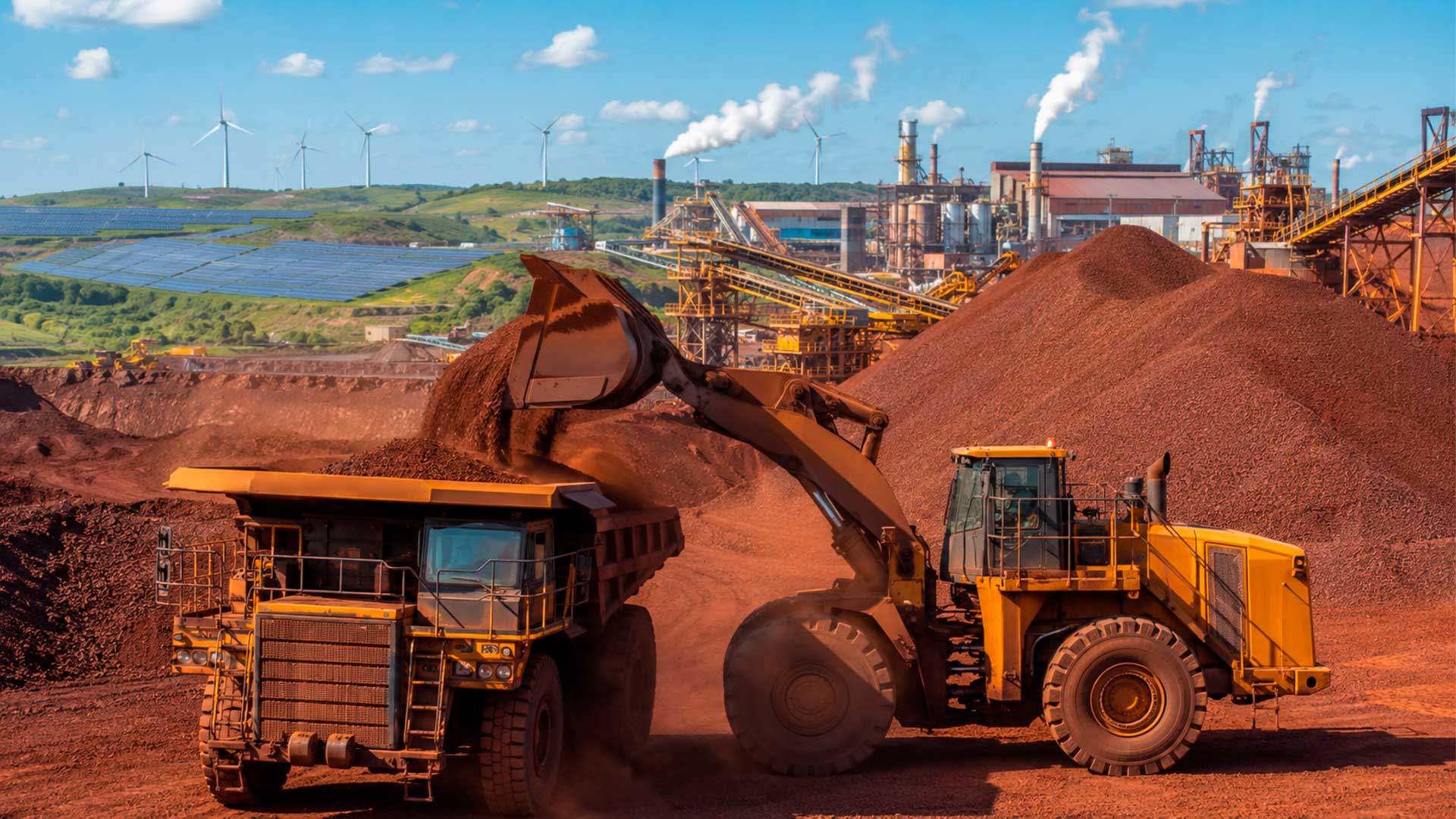
To reverse the situation, the federal government is injecting hundreds of millions of dollars into American companies. “This is the Manhattan Project for rare earths”, said Joshua Ballard, CEO of USA Rare Earth. The White House has prioritized revitalizing the national industry.
The Pentagon is investing US$ 400 million in MP Materials, the producer. The company also received a loan of US$ 150 million and a purchase guarantee for all the magnets produced at its new factory, with a minimum price fixed for a decade. Trump expressed confidence in the strategy, stating: “We’ll have many magnets in a very short time.”
The Industry’s Reaction and the Challenge of Competing with China
Companies in the sector view the support as a significant shift. Mark Smith, CEO of NioCorp, said that the U.S. ceded the industry to China over four decades. According to him, Beijing dominated the market by ignoring environmental concerns and using low prices to eliminate competition. Previous efforts by American companies failed when China flooded the market with cheap products.
Now, with the new support, the situation may change. NioCorp, for instance, secured up to US$ 10 million from the Pentagon. For Smith, a minimum price guaranteed by the government “removes the Chinese modus operandi.” Meanwhile, Noveon Magnetics, the only factory currently producing rare earth magnets in the U.S., is ramping up its production to 2,000 tons annually.
The Future of Production: Growing Demand and the Need for Deals
Despite the new investments, American companies are still far from meeting North America’s demand, estimated at 35,000 tons of magnets per year. This demand could double in the next decade. David Abraham, a rare metals expert, states that new mines in the U.S. are still years away.
For this reason, according to Abraham, “everyone agrees that the U.S. still needs to strike a deal with the Chinese.” American companies need more magnets and specialized rare earths than can be produced domestically in the short term. Derek Scissors of the American Enterprise Institute warns of the risk of Trump considering a deal with China a success, which he believes would not endure, keeping the threat to U.S. economic independence.






-

1 person reacted to this.